Books for kids, teens, & those who are young at heart

Category: Writing (Page 43 of 73)

What Taylor Swift Can Teach Writers by Jeff Chapman

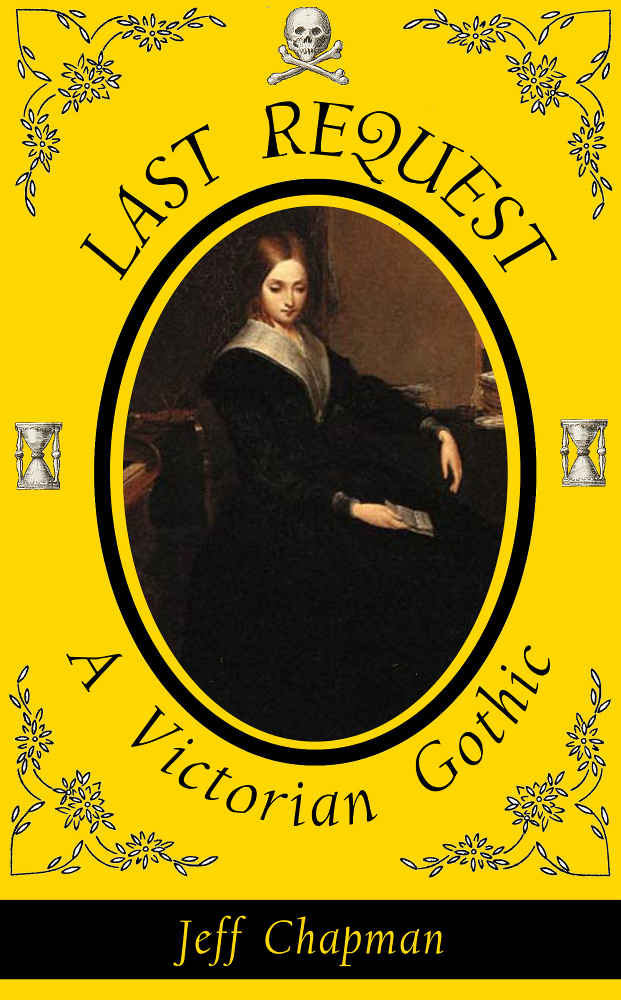
Jeff Chapman returns to the blog today to celebrate the release of his latest story, Last Request: A Victorian GothicHe brings us an enlightening and fun piece on storytelling. Welcome back, Jeff!

LastRequestCover621x1000What Taylor Swift Can Teach Writers

by Jeff Chapman

My daughters recently discovered Taylor Swift. You know what that means for me. I tried to interest them in U2, The Doors, or Mazzy Star but no luck. So, as I’m listening to Taylor Swift ad nauseum, the writer in me starts analyzing the lyrics. Why are these songs so popular? (I have to give Swift some praise here for writing songs that at least have some story to analyze.) Here’s a link to a Youtube video for “You Belong to Me,” one of her more popular tunes. It’s safe for work. Unless you’re a guy trying to maintain your macho credentials. In that case you should wait until you get home and everyone is asleep.

Let’s begin with a few observations on the video. As for the guy, if that’s the girl next door, why does he ever leave the house? And why did he close the curtains? And what self-respecting father would allow his daughter to have a bedroom window looking directly into a guy’s window? I would have that window bricked over so fast.

As for the story, we have a geeky girl (glasses, books, and studying) who has a crush on a very popular boy. He’s out of her league. It’s hopeless. But, his uber-popular cheerleader girlfriend is no good for him, doesn’t appreciate him. If he would take a serious look at geeky girl, he might understand that she’s the best girl for him. And that’s exactly what happens in the end.

So why is this song and others like it so popular? The story is every less-than-popular girl’s fantasy. Swift is doing something smart. She’s aligning herself with the majority of teenagers, putting words to the hopes and dreams of the masses along with a catchy tune. Writers often hear the mantra “write the stories you want to read.” The idea is that those stories will be your most impassioned work. We hear successful writers repeating that phrase as if it’s a formula for success. Is it? What if what you want to read isn’t what loads of other people want to read? Will you create great stories that no one reads? Maybe, instead of focusing inward, we should tailor (pun intended) our stories to resonate with the hopes and dreams of the masses. Something to think about.

Last Request: A Victorian Gothic blurb:

“For the love of God, cut my head off.” The last request in Uncle Silas’s will shocks everyone speechless, everyone except his favorite niece, Anna. More than death itself, the claustrophobic Silas fears a premature burial. Will her elders carry out his request? Anna is certain they will not. It’s up to her to do the right thing, even if it is a bit grisly. Armed with butcher knife and candle, Anna heads for the crypt underneath the church in the dead of night. All does not go according to Anna’s careful planning. 

Step inside a dark story in the tradition of the penny dreadful, at times humorous and horrifying, but don’t close the door behind you. Someone might lock you in. Last Request can be purchased on Amazon

Jeff_chapman-headshot-small-80x109About the Author:

Jeff Chapman writes software by day and speculative fiction when he should be sleeping. His tales range from fantasy to horror and they don’t all end badly. He lives with his wife, children, and cats in a house with more books than bookshelf space. You can find him musing about words and fiction on his blog or you can connect with him on Twitter (@JeffChpmnWriter), Facebook, Goodreads, or his blog.

Jeff’s latest title is Last Request: A Victorian Gothic, available for your Kindle at Amazon. At times horrifying and humorous, Last Request follows a young girl’s attempt to carry out her late uncle’s curious request.

Magnetic Poetry for National Poetry Month

April is National Poetry Month, and one of my favorite forms of poetic expression is the magnetic poetry set on my refrigerator. It’s fun because anyone who stops by my kitchen can play and it’s always anonymous, so no need for self-consciousness to hinder your creativity. And here’s the latest set of poems:

  • a giggle is the voice of the soul  (to this I say, “Giggle on!”)
  • freeze picture moon spark  (this is somehow evoking a very interesting image in my mind)
  • genius on little man  (a bit hippieish, but I can appreciate the sentiment)
  • believe in angel s but know whisper s come from the dark shadow s  (note to self: stay out of dark places)
  • keep a spider brain warm  (because nobody likes cold spider brain)
  • some want bird taste fruit  (when I really think about this one, it can mean so many different things…)
  • to a certain woman that s you  (oh, me…why thanks)

How have you celebrated National Poetry Month? (Did you even know we had a National Poetry Month?)

A No-Nonsense Approach to Revision by Patrick Scalisi

My writing/editing buddy from college Patrick Scalisi graciously agreed to guest post on the blog today, and with great advice on the dreaded (at least if you’re me it’s dreaded) revision. Be sure to check out his book coming later this year from Hazardous Press. Welcome, Patrick!

A No-Nonsense Approach to Revision

by Patrick Scalisi

Editing is often a dirty word among writers. I myself have often used the axiom that creating is more fun than correcting, which is to say that revising one’s work is less thrilling than the sheer adventure of crafting a new story from scratch.

Like it or not, though, revision is an essential part of the writing process, the method by which you make your work truly shine. I’m not going to lie and say that editing isn’t an arduous, frustrating and time-consuming process. It is. But editing also lets you put your best self into the world when your book, short story or poem finds its way onto a bookshelf or someone’s e-reader.

As a professional editor for the past 10 years, I’ve had the opportunity to collaborate with writers whose work has been both very rough and very polished. Here are some insights I’ve gleaned that can help make the editing process as fruitful as possible.

Edit both on screen and on paper. Almost everyone does their writing on computers and tablets, so the inclination is strong to edit on these devices as well. For a first run-through, editing on screen can be a good idea. But make sure to print your work and edit on paper as well.

While science is still on the fence about whether our eyes can better interpret text on paper versus on screen, most studies agree that our brains work differently based on the medium we’re reading. This difference is important. Often, you’ll catch errors on paper that you missed on screen and vice versa. So no matter what you’re writing, make sure to integrate a paper edit into your revision process.

Eliminate Unnecessary Words. Your word processor’s extended search-and-replace feature (often Ctrl-F in Windows or ⌘-F on a Mac) lets you easily find problem words — like adverbs — that can weaken your manuscript.

During the revision process, I like to do a document-wide search for “ly.” This lets me identify most of the adverbs and evaluate each one to see if it’s really necessary or if it can be replaced with a stronger verb.

In addition, this list from writer Juliet Madison is extremely helpful in identifying and replacing other trouble words like “very” and “almost.”

Get HONEST opinions from people you trust. At some point, you’re going to want to share your work with someone else to get an outside opinion on the story / novel / poem’s strengths and weaknesses. These people are often called “beta readers.” Choosing beta readers, however, can be just as tricky as finding a stronger verb to replace that adverb.

Beta readers should, above all else, be someone that you trust to give HONEST feedback. Surrounding yourself with yes-men who tell you that the work is “perfect” and “not to change a thing” does a disservice to you as a writer because you’re not receiving the constructive criticism you need to make the work as strong as possible.

You’ll notice I used the term “constructive criticism.” A good beta reader will tell you what he or she both liked and disliked about your work. The very best beta readers can also offer suggestions on how to fix existing problems.

So, who makes a good beta reader? In short, anyone who isn’t going to sugarcoat it for you. Parents and siblings are often a bad choice, but some writers have such strong relationships with their families that they can count on mom or dad, brother or sister to say what they liked and what they didn’t about the work. Friends who read a lot are also viable candidates.

It’s also important that you emphasize to your beta readers that their honesty won’t affect your relationship. Make sure you mean this, too. The truth is that writers have to develop thick skin to deal with rejection, critical reviews and more. Steeling yourself for feedback from your beta readers is a good place to start.

One of the best pieces of advice that I ever got from a writing teacher is to treat each sentence like a painting that you want to make as perfect as possible before moving on to the next one. A collection of these “paintings” form paragraphs, chapters, entire works whose aim is to captivate your readers. Revision is a critical part of the writing process and the one that will ultimately make your work as rewarding as possible for both creator and audience.

IMG_9509(1)About the Author:

Patrick Scalisi is a journalist, magazine editor and author from Connecticut. He has published fiction in several magazines and anthologies, including The WillowsNeo-opsis, Shadowplay and Penny Dread Tales Vol. 1. Pat also edited The Ghost Is the Machine, a bestselling anthology of steampunk-horror stories from Post Mortem Press. His debut book, The Horse Thieves and Other Tales of the New West, will be released this year from Hazardous Press. Visit Pat online at patrickscalisi.com or facebook.com/patrickscalisi.

Erin Albert Author of The Prophecy on the Editorial Process

One note before we get to the guest post: Just wanted to remind you all I’ll be signing Elixir Bound at Bank Square Books in Mystic, CT tomorrow from 2-4 p.m.! And now back to the show…

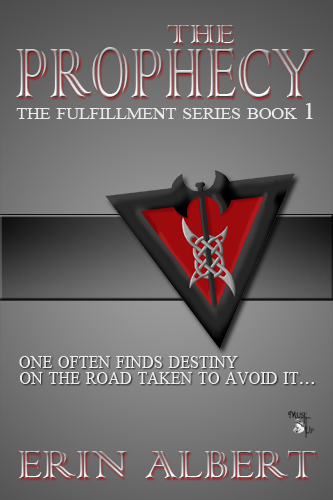
Returning guest Erin Albert and I both have a lot in common. Aside from being short and writing YA fantasy, we also both have experience working with books as an author and an editor, which I think gives us an insightful look at the book editing process. Let’s give Erin a big welcome as she shares what it was like editing her YA fantasy The Prophecy.

theprophecy333x500When I first got my contract on The Prophecy, I thought I had submitted a pretty tight manuscript. I am, after all, a grammar freak. Given that, I honestly had no idea what to expect from my editors. My publisher, MuseItUp Publishing, assigned Katie Carroll and Susan Davis to be my content and line editors, respectively.

I received an email from Katie about a month or so after returning my contract. That day, I happened to be at a carnival and couldn’t see her changes from my phone. I spent the rest of the afternoon distracted. Upon arriving home, I raced to the computer to see what comments she may have made. Imagine my surprise when I noted she made nearly 100 comments on the first chapter alone. Talk about a reality check!

I poured through her notes. In the process, I learned a great deal about the publishing process. I discovered adverbs—my near and dear friends—receive no love in the writing world. When I studied as an English major, my professors encouraged the use of adverbs. But Katie told me to take out as many as I possibly could. Oh, my heart ached as I chopped adverb after adverb. Next, she mentioned my point of view shifts—those subtle moments when I’m in one character’s head but show a brief thought from another character’s. I learned to recognize the times I made those slips and correct them.

Katie and I went back and forth on edits for several months, and each time, I watched my story transform, getting better and better. When Susan took over, I again had no idea what to expect. The work Katie and I had done appeared complete, yet the line edits came back with even more corrections. Susan showed me I overuse certain wording like “she knew” and “she saw.” I watched in wonderment as the story improved yet again.

Thanks to Katie and Susan, I learned a great deal about myself as a writer and about the writing world in general. I’ve taken those lessons and combined them with my own grammar freakishness to become a line editor myself. And my personal writing has made leaps and bounds. I am about to enter my second editing cycle with Katie and Susan for The Outlanders, sequel to The Prophecy. I hope I’ve addressed the problems they discovered the first time, but I’m sure a host of new changes will present themselves this second time around. I will continue to grow, hopefully improving with each round. And that’s really the biggest lesson I learned from my editors—never stop honing your craft. Never hang up your hat and say, “It’s the best it will be, and I have nothing left to learn.” You always have something left to learn. Your work can always be better. So, don’t shy away from the assistance of others. Instead, embrace it and watch your mind expand.

The Prophecy blurb:

Growing up on a small farm in the kingdom of Vanguard, seventeen-year-old Layla Givens lives a deceptively tranquil existence. But her carefully constructed life quickly falls apart when she’s abducted by a religious zealot who proclaims her The Fulfillment of an ancient peace prophecy and whisks her away to marry her greatest enemy.

Wilhelm, Prince of the Ethereals, is reluctant to meet his new bride. He’s grown up believing Vanguards are evil, an enemy to fight and fear…not love. Can he set aside his prejudices and work alongside Layla to bring lasting peace after centuries of war?

Nash, a loner who has never fit in, carries a huge secret, one big enough to destroy both kingdoms. When he accidently meets Layla, he’s no longer content to live in the shadows, but he must resist his growing attraction—for her safety and for the longevity of the two kingdoms.

When Nash’s secret is revealed, a firestorm sweeps through both realms, with Layla at the center. Now she must choose between duty and desire while the fate of two nations hangs in the balance.

Purchase The Prophecy at the MuseItUp website, Amazon, Barnes & Noble, Kobo, and other ebook retailers.

TheOutlanders_ErinAlbert_AuthorPhotoAbout the Author:

Erin Albert is an author and fitness trainer.  Since she picked up Morris the Moose Goes to School at age four, she has been infatuated with the written word.  She went on to work as a grammar and writing tutor in college and is still teased by her family and friends for being a member of the “Grammar Police.”  In her free time, Erin enjoys acting, running, kickboxing, and, of course, reading and writing.

Find Erin online on Twitter (@ErinAlbertBooks), on Facebook, at her website, or on Goodreads.

The Liebster Award Take Two

liebster-awardWhen I saw that my writing buddy Meradeth Houston had nominated me for the Liebster Award, I had a rush of deja vu. Sure enough I went back in my archives and saw that I had been given this award before…by none other than Meradeth! (She must really like my blog. 🙂 ) But that was like a year and a half ago and the questions were different, so I’ll take another crack at it (although, I’ll admit I stole some of 11 facts from last time). And I have been retroactively nominated by Mary Waibel and J.Q. Rose, so make sure to check out Mary’s blog and J.Q.’s blog.

Here’s how the award works. The Liebster Blog Award translates to “the beloved” or “the dearest.” The award is given as a way to celebrate smaller blogs. (Only blogs with under 200 followers can be awarded.) Before you accept the award, there are a certain set of tasks you must complete. The first is to reveal 11 facts about you, answer the 11 questions asked by the blogger who nominated you, and then create 11 questions for the bloggers you nominate to answer.

So my 11 facts are:

  1. My favorite Harry Potter book is Goblet of Fire.
  2. I used to be a puzzle magazine editor and now edit books.
  3. When I was three years old, I told everyone I was a boy because I wanted to play baseball for the New York Yankees.
  4. My elbows are double-jointed.
  5. I once pierced my own belly button.
  6. The last book I read is Jennifer A. Nielsen’s The Shadow Throne.
  7. I have really weird dreams all the time, some of them lucid.
  8. My favorite artist is Vincent Van Gogh.
  9. I could eat pizza every day.
  10. I totally have a crush on Hook from Once Upon a Time.
  11. Many of the characters in Elixir Bound were based on real people (including myself!).

And here are the questions Meradeth asked me to answer:

1. What do you like best about your personality?

My stubbornness is both a blessing and a curse (it’s probably the main reason why I haven’t quit writing), but I have learned “not to cut off my nose to spite my face” (as my mother used to say I always did).

2. What’s the best piece of advice you ever received?

Dare to get excited, even when you might get let down. We could all get hit by a marshmallow truck tomorrow. ~Laurie Halse Anderson

3. What does it take for a book to stay with you long after reading it?

A book that manages to surprise me in some way.

4. If you could tell an author that you admire one thing, what would it be?

“I wish I had written that.”

5. Who is one person who always makes you happy?

The Boy…even when he makes me angry, sad, or so frustrated I want to punch something (not him!), he brings so much joy to my life it makes me happy.

6. What was the best birthday you ever had?

My 30th birthday was pretty perfect. My family and a few close friends took a boat ride through the Thimble Island in Long Island Sound that ended with the sunset. It was summer, the breeze was cool, good food and drinks, I had my favorite people with me, and I didn’t have to do a single thing other than enjoy myself.

7. What drives you to share your thoughts about books on social media?

I hope that by sharing books I enjoy, other people will find books they, too, enjoy.

8. What’s the best thing an author ever said to you?

Never give up because you might be on the one yard line, and you just don’t know it. ~Donna Gephart

9. What do you consider the ideal length for a book in terms of the number of pages?

No ideal number. Enough pages to tell the story that needs to be told.

10. What fictional character do you most resemble?

Well, I guess that would be the one in Elixir Bound that I based on myself. 🙂

11. If you could give the person reading this an uplifting message, what would it be?

“Find you magic!”

So now I must make my nominations…and I nominate you, dear reader. Any blogger out there who would like to participate, just leave a comment here and I’ll include a link to your blog here. You can just answer the same questions posed above.

I’ve got fabulous bloggers Christopher Mannino, Suzanne de Montigny, and Marie Laval to take up my offer of being nominated for the Liebster Award. And I’ll be happy to add any other bloggers who would like to play (instructions in the comments)…just let me know in the comments. 🙂

« Older posts Newer posts »

© 2026 Katie L. Carroll

Theme by Anders NorenUp ↑