Books for kids, teens, & those who are young at heart

Tag: first amendment

The Slippery Slope of Letting the Government Decide What We Read: Call Congress to Vote NO on H.R. 7661 & S. 4925

Currently, four different book banning bills are under consideration in Congress: H.R. 7661, S. 4925, H.R. 2616, and H.R. 8705. I’m encouraging everyone who supports the right to read to contact their representatives in the House and the Senate to oppose these bills. You can use 5calls.org to contact Congress on this matter or find your Congress members’ information here.
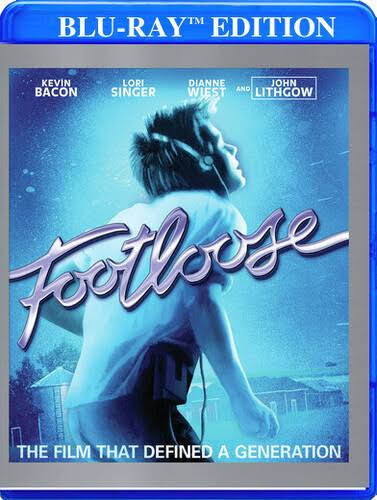
Let’s start with two similar bills, House bill H.R. 7661 and Senate bill S. 4925, also known by the misleading name of “Stop the Sexualization of Children Act.” These bills would block funding for schools that include materials with “sexually orientated material,” “gender dysphoria or transgenderism,” or “lewd or lascivious dancing.” (Anyone else getting flashbacks to Kevin Bacon dancing in Footloose?)

This bill is a book banning bill that is an attack on LGBTQ+ people and public education. It would allow the government to decide what materials are in our schools, and it would strip parents and children of their First Amendment right to choose what students read. It would also contribute to the underfunding of public education.

Students deserve to have books that enrich—not restrict—their access to the full range of knowledge and ideas that reflect the diversity of our country. Even if the Constitution allowed for this type of censorship, the vague and misleading wording of these bills show that the government has no business in deciding what our children read because they are bad at figuring out what books belong in schools.

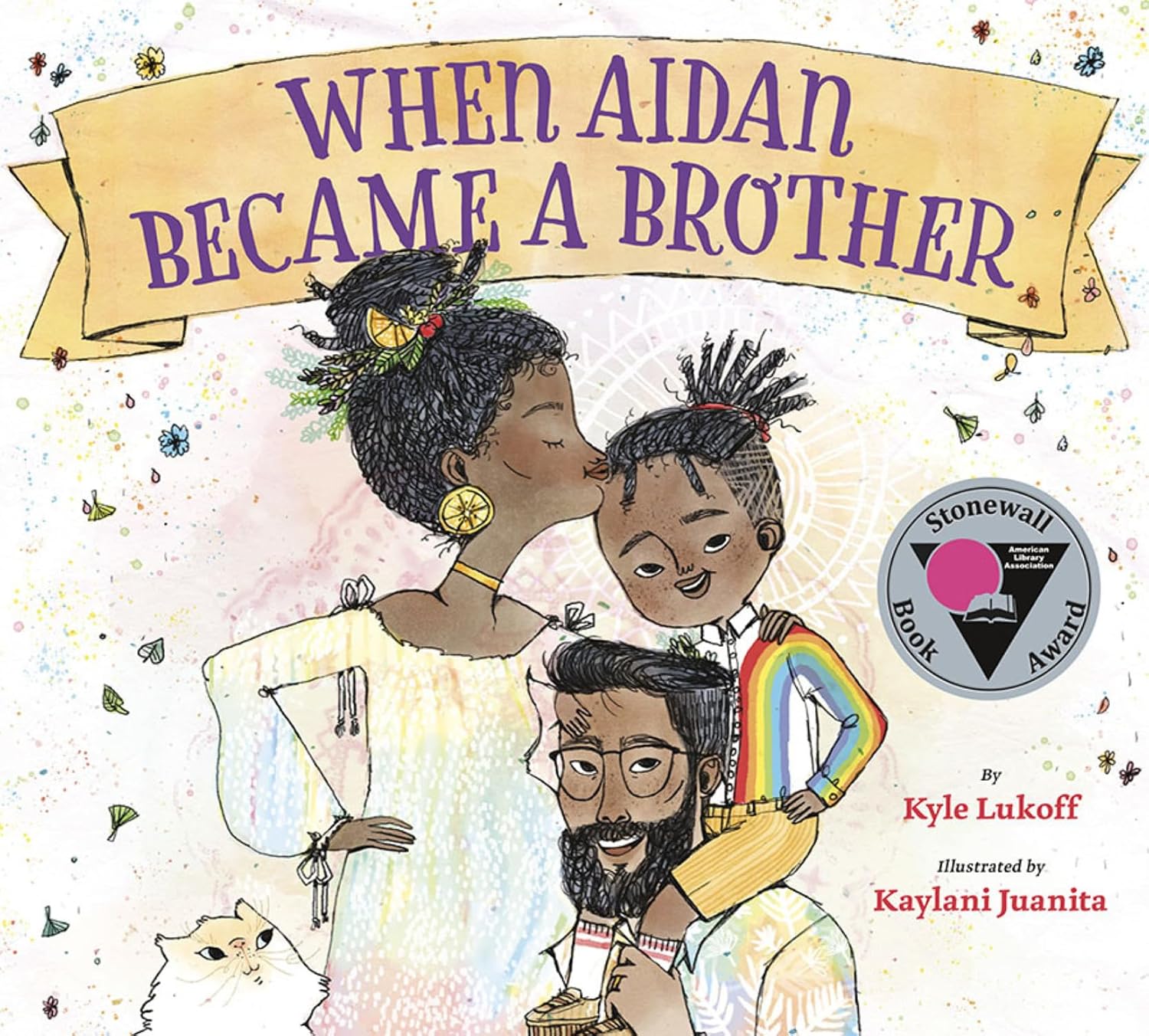
The most obvious book bans that would result from these bills are books with transgender characters. Books that would be targeted include Award-winning picture books like When Aidan Became a Brother, written by Kyle Lukoff and illustrated by Kaylani Juanita, which is about a transgender boy who is about to become a big brother. Award-winning nonfiction that tells the true stories of real children, like American Teenager: How Trans Kids Are Surviving Hate and Finding Joy in a Turbulent Era by Nico Lang, would also be banned.
Interpretations of this bill could extend these bans to less obvious targets. The picture book Itty-Bitty Kitty-Corn, written by Shannon Hale and illustrated by Leuyen Pham, is a story about friendship and being true to yourself. This book has already faced book challenges in Texas because the kitty character wishes to be a unicorn.

@katielcarrollauthor

Efforts to ban the picture book Itty-Bitty Kitty Corn and books that use the singular “they” are ridiculous. #bookban #singularthey #bookcensorhip #picturebooks #bookbanning #bookbanningiswrong #schoollibrary #childrenslibrary

♬ original sound – Katie L. Carroll Author

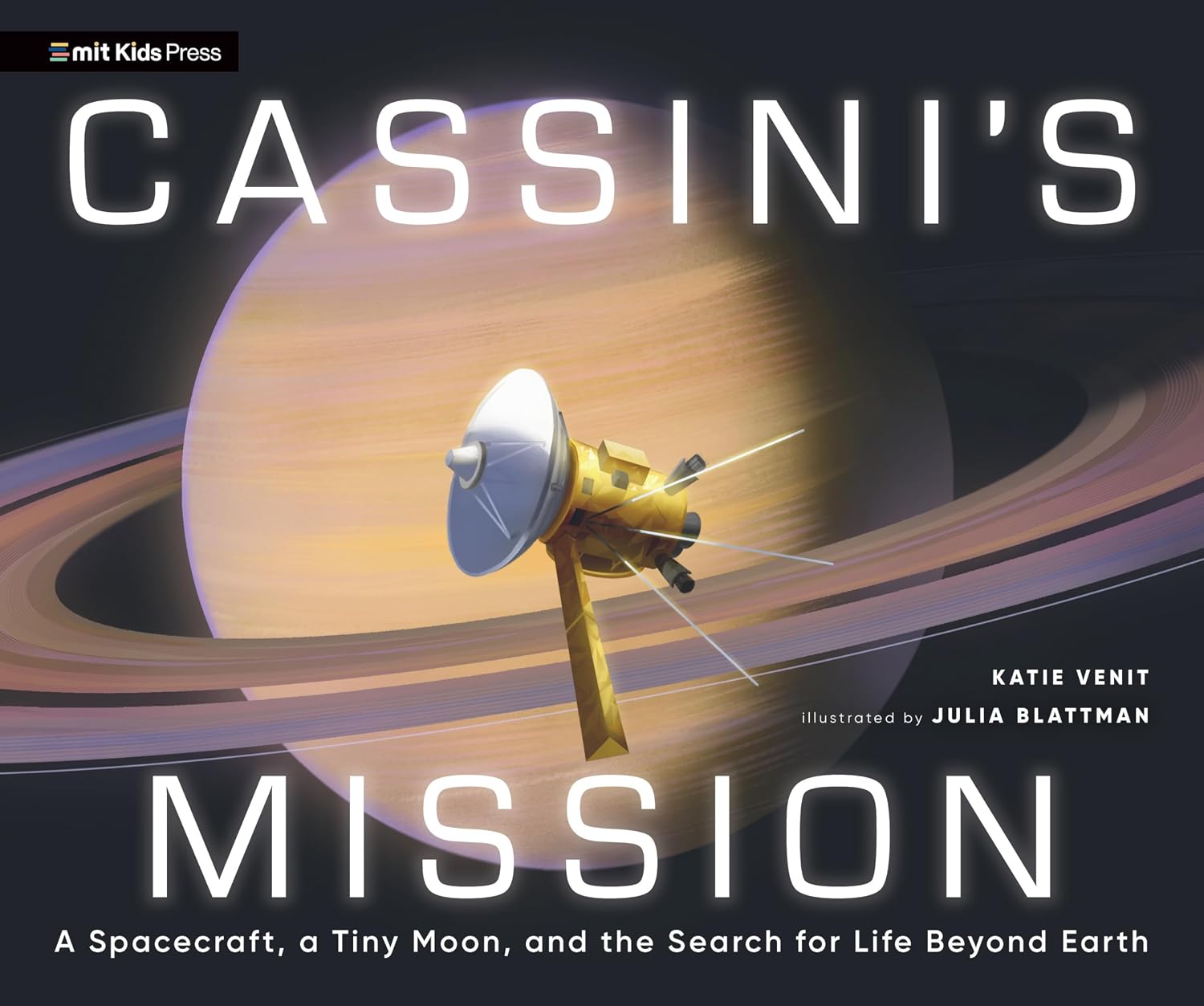
Pronoun usage could also come under fire. Let’s consider the nonfiction book Cassini’s Mission: A Spacecraft, a Tiny Moon, and the Search for Life Beyond Earth, written by Katie Venit and illustrated by Julia Blattman. Why would a fact-based book about a space mission be banned by these bills? Because, as explained in an author’s note at the end of the book, she/her pronouns are used for Cassini because that’s the pronoun the scientists often used for the spacecraft.
Under H.R. 7661 and S. 4925, books like these could be banned from all schools. If a school keeps any of these books and countless others that would be targeted by this law, funding would then be pulled. Instead of threatening schools with book banning laws, public education would be much better served if we made sure that every school has a certified media specialist. These are the teachers whose literal job it is to decide what books are in school libraries.

When we tell kids that books with characters like them don’t belong in our schools, we are also telling them that they don’t belong in our schools. If we really want to protect children, we protect all children. That starts with some of our most vulnerable ones who are part of the LGBTQ+ community. We must not let H.R. 7661 and S. 4925 become a law in our country. Contact your representative today and tell them you do not support these bills. Find Congress members here or use 5calls to tell them to oppose these bills.
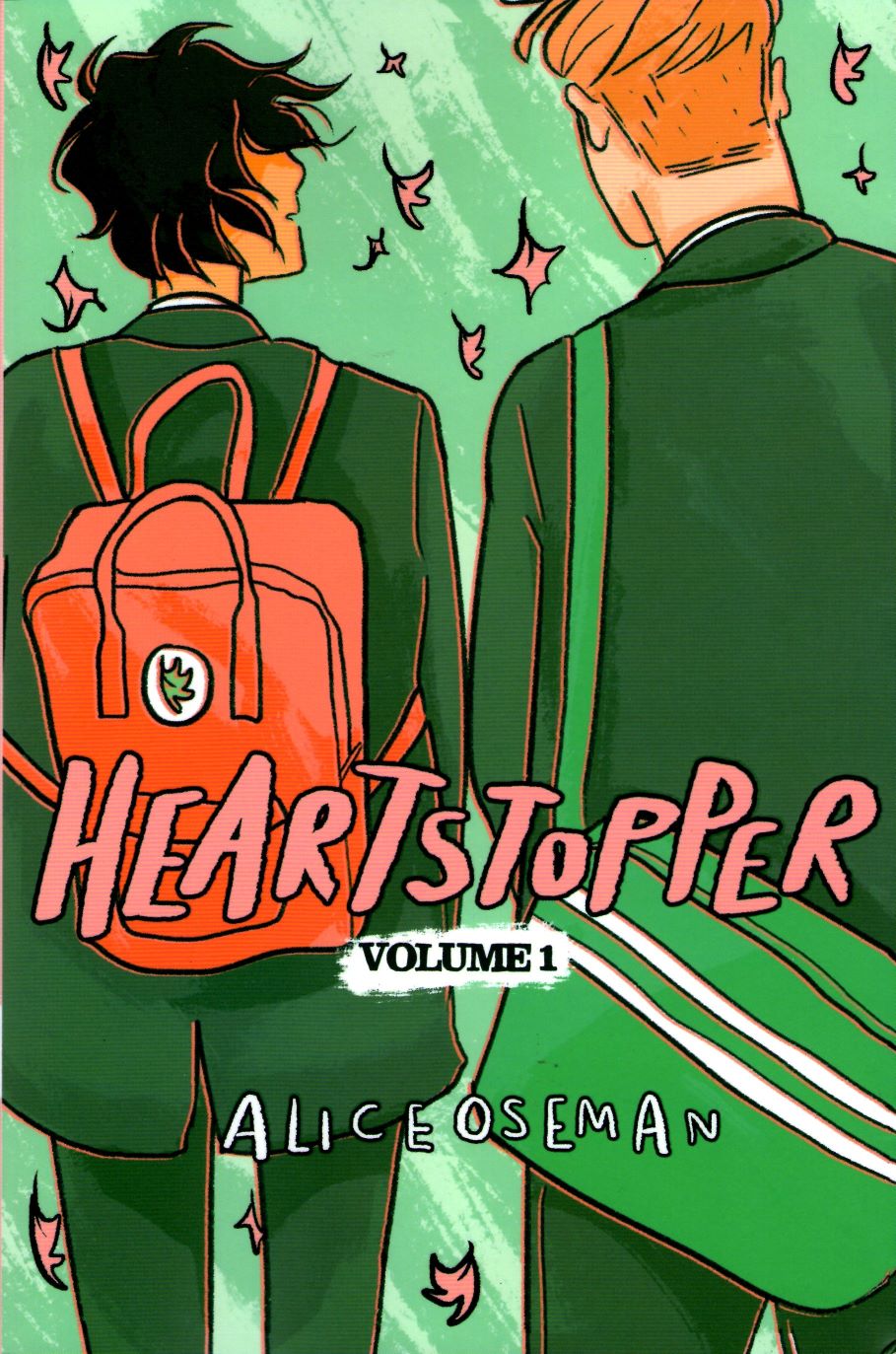

Heartstopper by Alice Oseman Should Not Be Banned From Middle School Libraries

[UPDATE: Pleased to report that the books were not removed from school libraries. You can read about the decision in this article “Milford superintendent opts to keep ‘Heartstopper’ series on middle school library shelves.”]

Yesterday, I read the article “Milford schools reviewing popular ‘Heartstopper’ books after fielding parents complaints” and learned that parents were challenging the inclusion of these books in middle school libraries. The initial challenge was denied and the books were kept in the libraries, but parents appealed that decision and a more intense review is being conducted by the administration. A final decision has not been made on the fate of these books in middle school libraries.

I wrote a letter to share my views on the book challenge, which I’ve shared with the superintendent, school board members, local media, and across my social media pages. I think it’s important that parents and authors who are against book bans share their voices. Here is my letter:

As a parent of three children, including a middle school student, that attend Milford Public Schools and an award-winning author of children’s book, I do not think that the young adult graphic novel series “Heartstopper” by Alice Oseman should be banned from Milford middle schools.

The bestselling books series is about two boys, ages 14 and 16 in the first book, in England who meet at school and fall in love. The books have also been adapted into an Emmy award-winning Netflix series.

One of the parents challenging the book series said, “We would never ask for a book to be banned.” Yet this parent has requested that the books be pulled from middle school libraries.

According to the American Library Association, a book challenge “is an attempt to remove or restrict materials, based upon the objections of a person or group” and “a banning is the removal of those materials.” A book ban is exactly what this parent is calling for.

The objections to the book include the use of curse words, the use of slurs to bully a gay student, and discussions of mental health, eating disorders, and puberty. I have read these books and they deal with all of these topics in the context of a beautiful story of love and friendship that centers LGBTQ+ characters. I have recommended these books to my middle schooler.

Books are a safe way for children and teens to approach difficult topics, like bullying and mental health. The MPS guidelines say, “Library collections are curated with the goal of stimulating growth in critical thought and enhancing the overall educational program.” Library media specialists work with the district to provide books that “represent diverse points of view…to enable all patrons a safe space with which to view themselves as well as to elevate empathy for others.” This is exactly what the “Heartstopper” books do.

Though the characters in the “Heartstopper” books may be slightly older than middle schoolers, it is common for kids to read about older characters. Middle schoolers read the “The Hunger Games” series by Suzanne Collins where the main character is 16 in the first book. In language arts class this year, my middle schooler read “The Compound” by S. A. Bodeen, which also features a 16-year-old main character. These books also deal with difficult topics like war, nuclear attacks, and surviving in a violent world.

[The next paragraph originally started with the following sentences: “Every parent has a right to take a book out of their own child’s hands. What a parent doesn’t have is the right to take a book out of every child’s hands.” I have now edited to what is surrounded by * below.]

*Many parents think they have a right to take a book out of their own child’s hands. What I want to say to that child is you, too, have rights. You can read about your right to read in this toolkit put together by the National Coalition Against Censorship. Even when a parent makes a choice to take a book out of their child’s hands, it certainly doesn’t give them the right to take it out of every child’s hands.*

It would be a disservice to students to remove the “Heartstopper” books from middle school libraries. I am asking the superintendent not to ban these books and allow my middle schooler to have access to these books at the school library.

Katie L. Carroll

© 2026 Katie L. Carroll

Theme by Anders NorenUp ↑