Books for kids, teens, & those who are young at heart

Tag: Authors Against Book Bans

The Slippery Slope of Letting the Government Decide What We Read: Call Congress to Vote NO on H.R. 7661 & S. 4925

Currently, four different book banning bills are under consideration in Congress: H.R. 7661, S. 4925, H.R. 2616, and H.R. 8705. I’m encouraging everyone who supports the right to read to contact their representatives in the House and the Senate to oppose these bills. You can use 5calls.org to contact Congress on this matter or find your Congress members’ information here.
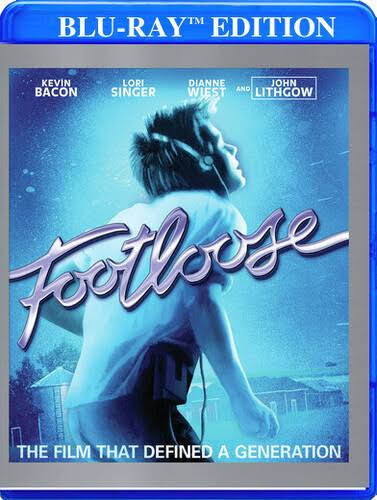
Let’s start with two similar bills, House bill H.R. 7661 and Senate bill S. 4925, also known by the misleading name of “Stop the Sexualization of Children Act.” These bills would block funding for schools that include materials with “sexually orientated material,” “gender dysphoria or transgenderism,” or “lewd or lascivious dancing.” (Anyone else getting flashbacks to Kevin Bacon dancing in Footloose?)

This bill is a book banning bill that is an attack on LGBTQ+ people and public education. It would allow the government to decide what materials are in our schools, and it would strip parents and children of their First Amendment right to choose what students read. It would also contribute to the underfunding of public education.

Students deserve to have books that enrich—not restrict—their access to the full range of knowledge and ideas that reflect the diversity of our country. Even if the Constitution allowed for this type of censorship, the vague and misleading wording of these bills show that the government has no business in deciding what our children read because they are bad at figuring out what books belong in schools.

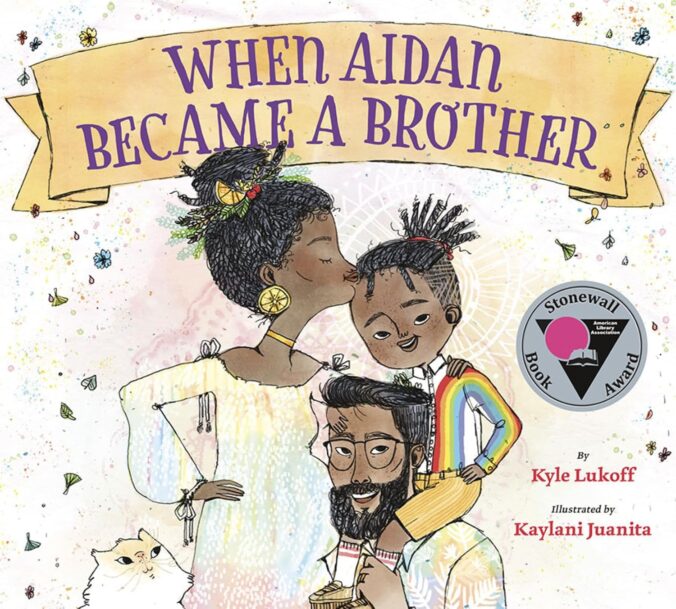
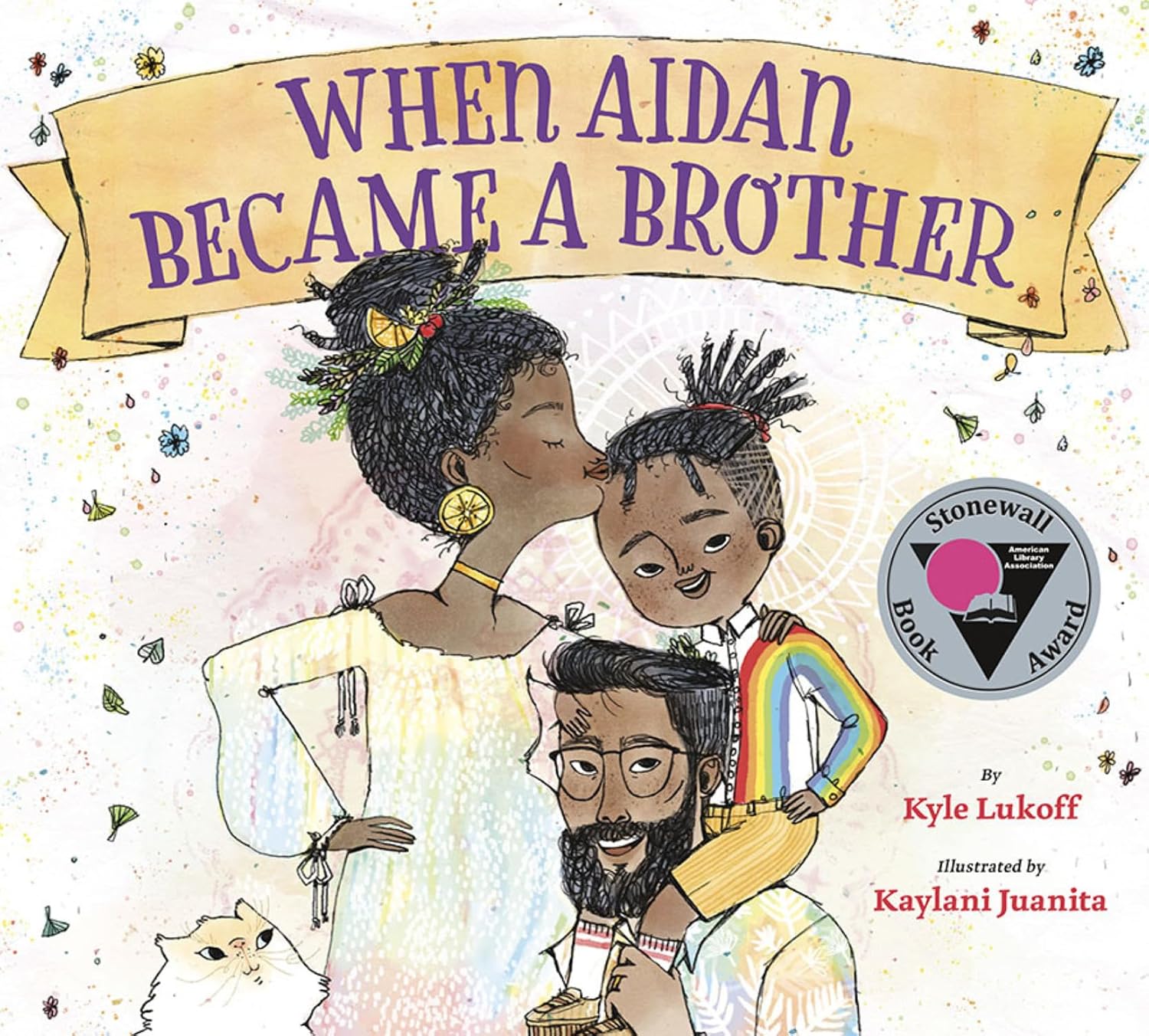
The most obvious book bans that would result from these bills are books with transgender characters. Books that would be targeted include Award-winning picture books like When Aidan Became a Brother, written by Kyle Lukoff and illustrated by Kaylani Juanita, which is about a transgender boy who is about to become a big brother. Award-winning nonfiction that tells the true stories of real children, like American Teenager: How Trans Kids Are Surviving Hate and Finding Joy in a Turbulent Era by Nico Lang, would also be banned.
Interpretations of this bill could extend these bans to less obvious targets. The picture book Itty-Bitty Kitty-Corn, written by Shannon Hale and illustrated by Leuyen Pham, is a story about friendship and being true to yourself. This book has already faced book challenges in Texas because the kitty character wishes to be a unicorn.

@katielcarrollauthor

Efforts to ban the picture book Itty-Bitty Kitty Corn and books that use the singular “they” are ridiculous. #bookban #singularthey #bookcensorhip #picturebooks #bookbanning #bookbanningiswrong #schoollibrary #childrenslibrary

♬ original sound – Katie L. Carroll Author

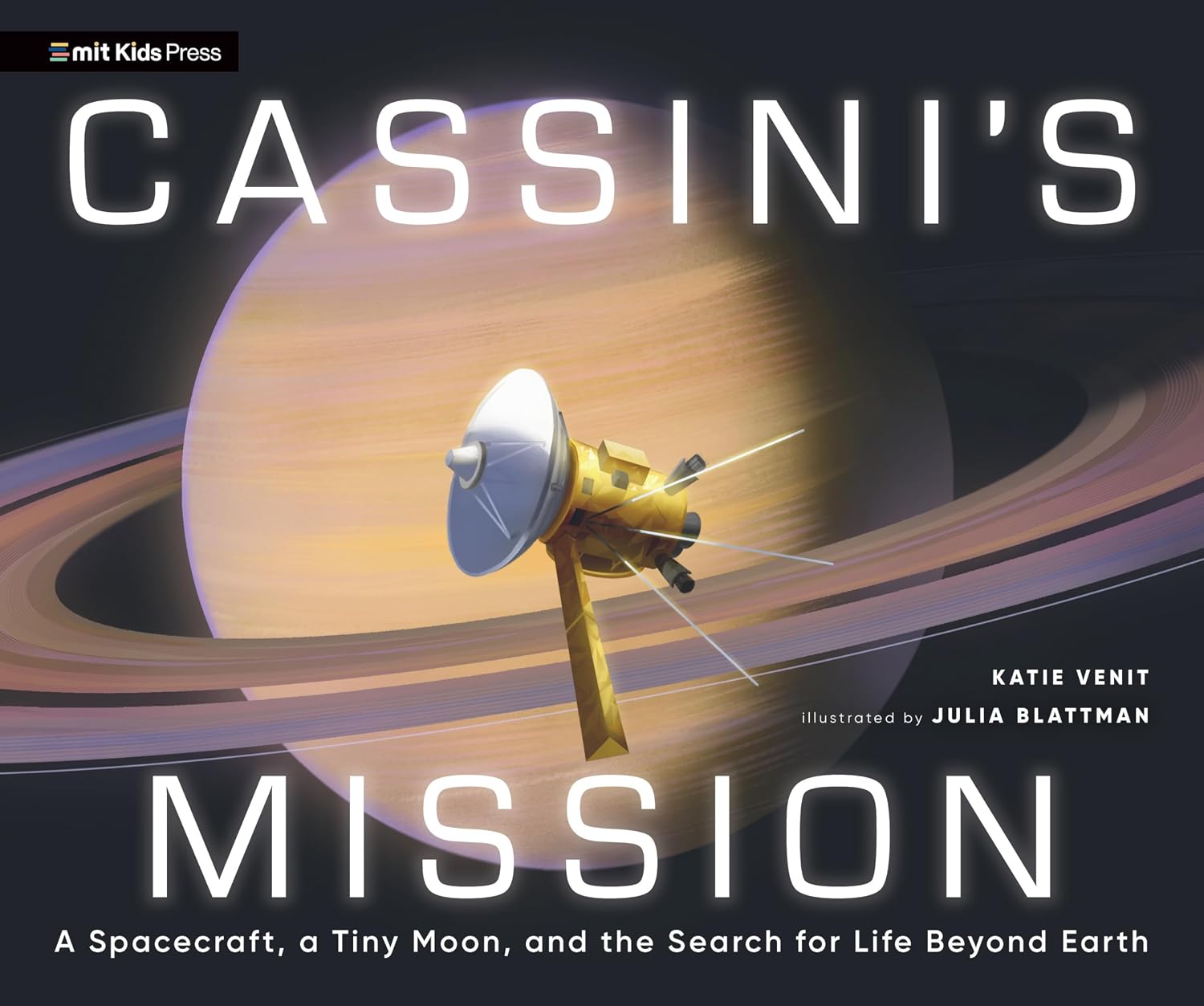
Pronoun usage could also come under fire. Let’s consider the nonfiction book Cassini’s Mission: A Spacecraft, a Tiny Moon, and the Search for Life Beyond Earth, written by Katie Venit and illustrated by Julia Blattman. Why would a fact-based book about a space mission be banned by these bills? Because, as explained in an author’s note at the end of the book, she/her pronouns are used for Cassini because that’s the pronoun the scientists often used for the spacecraft.
Under H.R. 7661 and S. 4925, books like these could be banned from all schools. If a school keeps any of these books and countless others that would be targeted by this law, funding would then be pulled. Instead of threatening schools with book banning laws, public education would be much better served if we made sure that every school has a certified media specialist. These are the teachers whose literal job it is to decide what books are in school libraries.

When we tell kids that books with characters like them don’t belong in our schools, we are also telling them that they don’t belong in our schools. If we really want to protect children, we protect all children. That starts with some of our most vulnerable ones who are part of the LGBTQ+ community. We must not let H.R. 7661 and S. 4925 become a law in our country. Contact your representative today and tell them you do not support these bills. Find Congress members here or use 5calls to tell them to oppose these bills.
“Whatever the [redacted] I Want” for Writing & Life in 2025

It’s that last day of January 2025. I haven’t written a 2024 writing or reading wrap-up. My partner traveled a lot this month, so that meant lots of solo parenting on my part. We finally took the Christmas tree down this week. The world is a mess, and my brain is feeling that way, too. It’s a chaotic start to the year!

And to throw you all for a loop, my current work-in-progress is a novel for adults. It’s tentatively called Sunflowers at the End of the World and it’s a cozy dystopian novel about joy. Yes, that feels like a contradiction, but it’s all plays into my theme for 2025. Which is…

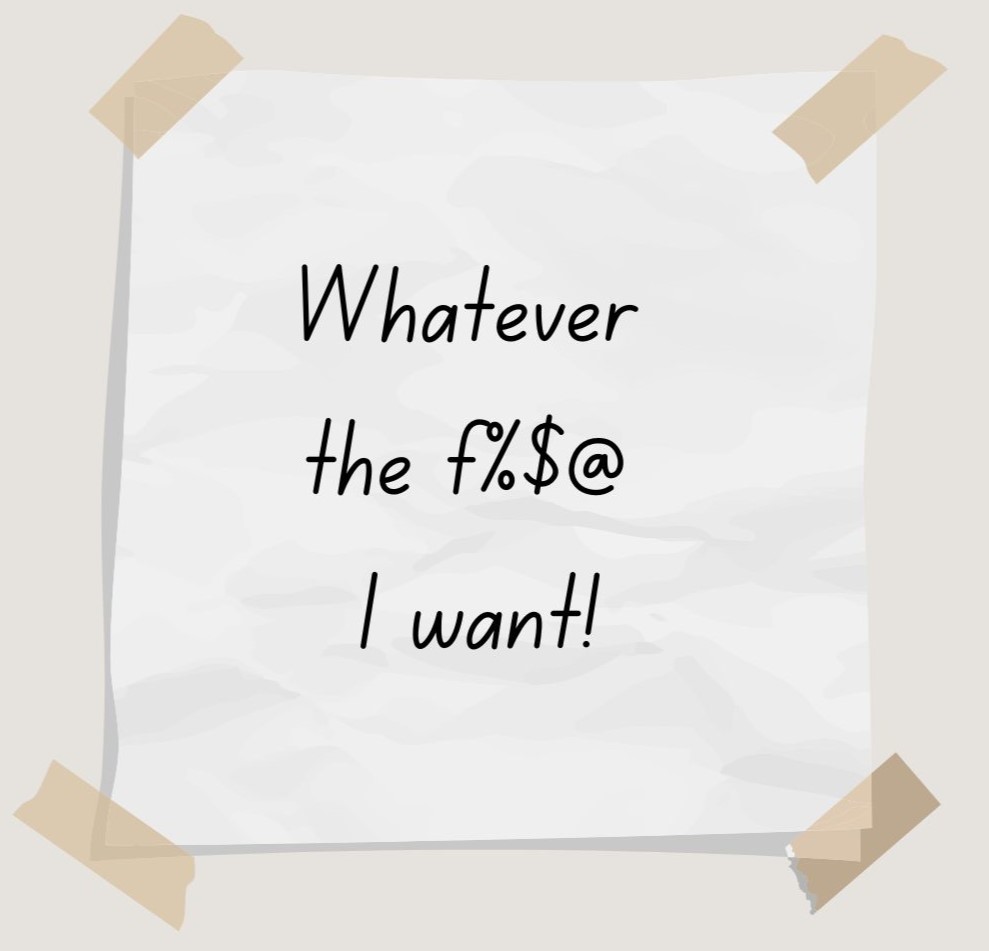
“Whatever the f%$@ I want!”

That’s not to say I’m shirking my responsibilities or being frivolous. I’m simply choosing to use my precious time and energy on the things I want to do. That means working on writing projects I’m passionate about, even if they deviate from my previous plans. That means leaning into causes that I’m passionate about. That means staying informed but also taking steps to filter out what and how much I consume when it comes to current events.

My work as an author, as a Board Member for my local library, and as a member of Authors Against Book Bans puts me in a position to double-down on protecting access to books and information in the face of a government who is actively trying to dismantle these things. This is one of the foundational principles of U.S. democracy, and I’m ready to fight for it.

There are a lot of other horrific things the U.S. government is trying to do, but I personally can’t fight them all without burning out. I also don’t have the know-how or resources to fight on every front. I’m picking a few and devoting myself to them. I’m also actively letting my Senators and other government officials know how I feel about the many issues plaguing the country. I’m finding 5 Calls a helpful tool for this.

I can’t and won’t try to do all the things. But there is a lot I can and want to do. I’m going all-in on those things and filtering out the rest.

What’s your word, mantra, or theme for this year? What causes are you fighting for?

A Guide to Standing Up to Book Bans for Banned Books Weeks

Earlier this year, I stood up against book banning in my town when a few parents challenged the inclusion of the Heartstopper graphic novels by Alice Oseman in middle school libraries. I spoke and wrote about this experience across all my social media accounts and sent letters to school officials and my local media outlets. You can read my open letter and find links to some of the news coverage sparked by the attempted book ban in my post “Heartstopper by Alice Oseman Should Not Be Banned From Middle School Libraries.”

While the book ban attempts in my town were defeated, there are many towns across the United States where this is not the case. The American Library Association just released their “2024 Preliminary Book Ban Data.” It shows a small decline in book challenges from 2023, but the numbers were still way ahead of the numbers prior to 2020. This data is pulled from reported instances and media coverage, but all book challenges and bans are not given these, so the numbers don’t give the whole picture.

The ALA also noted that data doesn’t take into account soft censorship. They stated, “Additionally, instances of soft censorship, where books are purchased but placed in restricted areas, not used in library displays, or otherwise hidden or kept off limits due to fear of challenges illustrate the impact of organized censorship campaigns on students’ and readers’ freedom to read. In some circumstances, books have been preemptively excluded from library collections, taken off the shelves before they are banned, or not purchased for library collections in the first place.”

They shared this data ahead of Banned Books Week, which is happening right now. But the fight against book bans shouldn’t only be talked about one week of the year. Book challenges happen all the time, and there are ways to combat them.

  • Get educated about books challenges. Here are some good places to start: ALA Banned & Challenged Books, Banned Books Week, Authors Against Book Bans.
  • Be Proactive. Write an email to school administration saying you trust the professionals (i.e. school librarians and teachers) to select books for school libraries, even if there are no book challenges in your area. Find out what the policies are in your communities. Show support to your public librarians by mentioning how you appreciate the Banned Books or Pride Week displays. Read banned books, and not just the classics. Check out the banned books lists and support the living authors who are being affected by these bans.
  • Pay attention and make your voice heard. I was alerted to the book challenges in my town when I happened to come across an article from a local newspaper on my Facebook feed. Then I went to work to educate myself (I had already read the books in question and had lots of resources at hand), so I could respond quickly and share my voice in support of the books. So often, it’s the would-be book banners that have the loudest voice, and those of us in favor of freedom of reading need to be loud as well.
  • Volunteer or run for office in your community. This one’s a bit harder as it usually means a significant time commitment. But if you do have the ability and time, positions that support schools and libraries include running for a Library Board or Board of Education position or volunteering for your local library group (often called Friends of the Library).

Also, read this Book Riot article by Kelly Jensen “How to Fight Book Bans in 2024.”

© 2026 Katie L. Carroll

Theme by Anders NorenUp ↑