Books for kids, teens, & those who are young at heart

Category: Writing (Page 55 of 73)

Meet Philip Coleman Author of The Master’s Book

I’m guest posting over at Meradeth Houston’s blog with tips and techniques for keeping continuity between books in a series; a topic close to my heart as I’m currently writing the second Elixir book, Elixir Saved.In my stead Muse author Philip Coleman, author of The Master’s Book, which comes out this Friday (check out my Goodreads review), is holding down the blog fort. (And I haven’t forgotten about making my big announcement about Elixir Bound. Stay tuned later this week for it, along with a giveaway!)

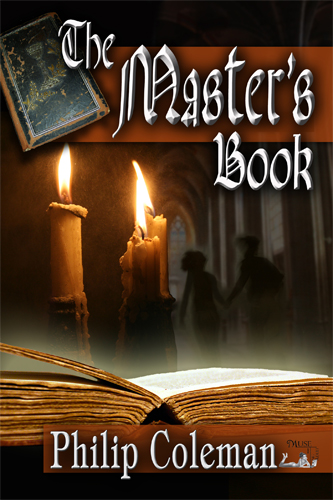
The_Master's_Book_333x500What made you want to become a writer?

I suppose it started in the beginning with reading. Even as a child I used to narrate to myself how I felt in certain situations, or imagine stories based on my favourite fictional characters. Then the cares of adulthood put it to the back of my mind for a long time until…well, you’ll see further on.

What inspired you to write The Master’s Book?

I had had a couple of attempts at writing fantasy with only partial success and decided I wanted to try writing a contemporary young adult novel with a real setting for a change. Brussels was the obvious choice for me, despite its reputation for boring EU bureaucracy. I lived there for three years when my children were around the ages of Sean and Maeve in my story. This isn’t to say that Sean and Maeve are modeled on my children; simply that being in Brussels with my son and daughter gave me a glimpse of the city through their eyes. It was a very rich and formative time in their lives, when they were exposed to a lot of new experiences. Among these was the experience of interacting with (stunningly beautiful) children of racially mixed marriages in their school. This was the inspiration for Stephanie, the other main character in the book. And, finally, Brussels and its hinterland are such a rich mix of the modern, the medieval and just about every era in between. This factor became the other big piece in the jigsaw of ideas.

What one book do you wish you had written?

Definitely Philip Pulman’s His Dark Materials trilogy. Not that it’s my favourite book (I have lots of favourites). It’s just that it’s such a rich story, with so many moments of action, horror and high emotion, all held together by one of the most wonderful characters ever created in children’s literature. In fact, the last chapter, which takes place in the Oxford Botanic Garden, inspired my first attempt at writing a novel: a fantasy set in an imaginary botanic garden. Maybe I will return to that idea some day, now that I know much more about the craft of writing!

At what moment did you truly begin to feel like an author?

I suppose it was when my second attempt at a novel got to a second reading with Usborne (and then with Chicken House). It didn’t get any further (and probably shouldn’t have) but it encouraged me to keep going.

What is your favorite part of the writing process? What is your least favorite part?

Some scenes just spring from the page with very little effort and this is always exciting. You know what the characters are going to say and you can imagine all the little gestures that bring the scene to life. Such a scene in my story was the one in the Museum of Musical Instruments. This is when writing is most rewarding. As for the least favourite part of the process, that’s probably when you’re trying to bridge from one pivotal scene to the next without losing the pace of the story; that’s really hard work. And then, of course, there’s proofreading, at which I am so bad.

What is the single best piece of advice you have for aspiring authors?

Can I have two? They would be: (1) don’t be shy about you’re writing – put it out there for praise and criticism; and (2) don’t give up on any account.

What is next for you in your writing career?

I started a sci-fi novel before I got the contract from MuseItUp for The Master’s Book and I would like to come back to that at some stage. However, right now I am working on a sequel to The Master’s Book. Not that I’ve been asked to or anything; it’s just that I had an idea for a sequel that would centre around Belgium’s connection with the Rwandan genocide.

What is something funny/weird/exceptional about yourself that you don’t normally share with others in an interview?

Oh gosh! Isn’t writing fiction crazy enough? Well, I was asked something similar at a workshop I attended a few weeks ago and the best I could come up with was that I was involved in the location hunt for Saving Private Ryan (which is true – that very violent opening scene was, in fact, filmed in Ireland and not in Normandy).

And here’s the fun part…below are three list of words from the magnetic refrigerator poetry set…if you so choose, please write up a little piece of poetry or prose from these words. You can also do this from the perspective of one of your characters!

That’s a great idea for a workshop exercise! Tricky! In the end, I chose to write this as an episode in my story.

I reached out for my phone. The screensaver read 3.16 a.m. I rubbed my eyes and tried to get back to sleep but I couldn’t.

Sean, what’s nagging you?

Then I remembered. Yesterday I’d asked Stephanie to a movie and she’d said “Yes”…

And then what? How should I behave? Will she let me kiss her?

My mouth felt dry, with a bitter taste. I needed a drink. I pushed off the duvet, put my feet into my slippers and headed down to the kitchen, where I flicked on the light and went to open the fridge.

Those word magnets were there, the ones Dad was always messing with. Sometimes I liked playing games with them myself. When no-one was around I’d make up cheeky sentences with them and then play dumb afterwards when Mam asked who’d done it.

The magnet with the word “girl” had been placed a little separate from the rest. Was that Dad’s idea of a joke? Or Maeve’s? Whoever hed done it, they made me think of Stephanie again.

I placed it even further apart from the others. I ran my finger down the vertical lines of the other word magnets. Stopping at the word “beautiful”, I put that beside “girl”. Then I saw the word “hot”. Maybe that was a better description, even though I blushed at the thought. Still, I put it to one side as well.

I picked out more magnets: “black” (of course), “strong”, “funny”, “precious”, “sweet”…

My finger paused at “gentle”. No way! What about “angel”? Certainly no way!

Somebody had put “love” and “sex” side by side – maybe Dad again? I hesitated over them, blushing even more. I couldn’t screw myself up to put them beside the others.

I pushed all the magnets I’d separated out into a tight cluster and stared at them for few seconds. Then, just as I went to open the fridge I saw the magnet with the word “cliché”, buried in a long row of others. I blushed yet again.

What are you doing Sean? What do you think Dad’ll say if he sees what you’ve done? Get a grip.

Hastily, I jumbled all the word magnets into one big messy cluster, then opened the fridge, seized a water bottle and went upstairs.

The Master’s Book blurb:

In 1482 Mary, the last Duchess of Burgundy, lies on her deathbed in a castle in Flanders. She is only 24. In her final moments she makes a wish that, 500 years later, will threaten the lives of a boy and a girl living in Brussels.

The Master’s Book is the story of Sean, an Irish teenager, just arrived in Brussels to a house that is also a crime scene. Together with Stephanie, his classmate, he finds an illuminated manuscript, only for it to be stolen almost at once.

Where did this manuscript come from? Who was it originally made for? Is there a connection with the beautiful tomb Sean has seen in Bruges? Above all, why does someone want this book so badly that they are prepared to kill for it?

Part thriller and part paper-chase, this book is aimed at boys and girls of twelve and over. The Master’s Book is available for pre-order at the MuseItUp bookstore.

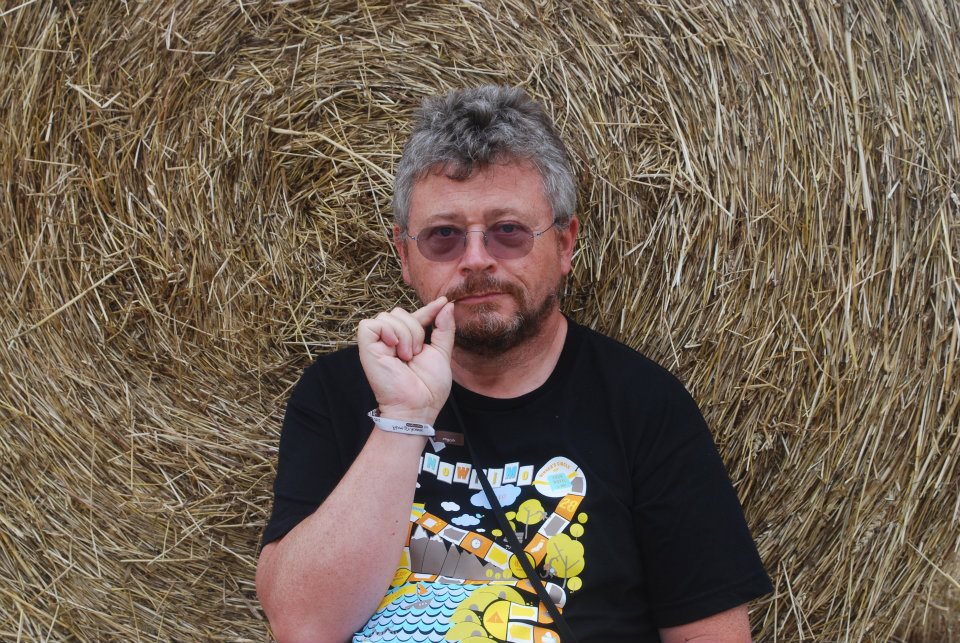
544591_10150928316203152_216655409_nAbout the Author:

Philip Coleman has worked as a biologist for most of his life—in Ireland, Belgium and now in Switzerland. Having been an avid reader all his life, he took up writing only in 2006. This is his first published novel. He drew his inspiration for the story from the period he spent working for the EU in Brussels. He has a grown-up son and daughter (who were roughly the same ages as Sean and Maeve during the time in Brussels but otherwise aren’t a bit like them at all!). He now lives in France.

Funny Talk with Author Anna Staniszewski

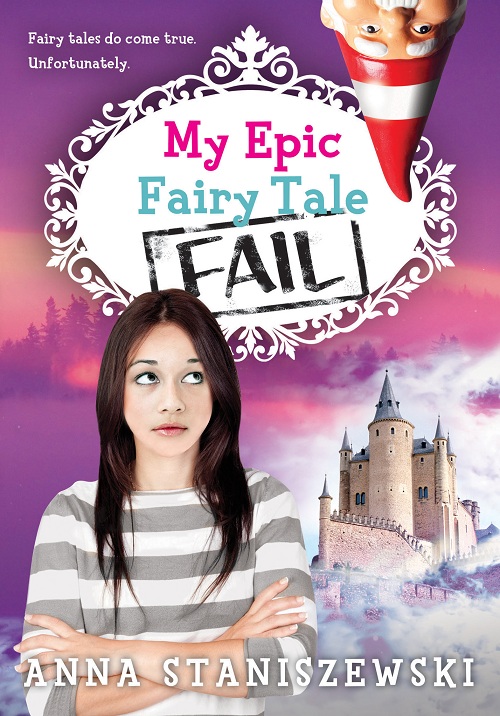
Congrats are in order for guest poster Anna Staniszewski as her middle grade adventure My Epic Fairy Tale Fail releases today! Happy book b-day and welcome to the Observation Desk.

My_Epic_Fairy_Tale_Fail_Final_Cover_RGBBreaking Down Funny Dialogue

If you think about where we find humor in real life, you’ll notice that a lot of it comes through in conversation. When we recap real-life events to friends, for example, we often highlight not only what people did, but what they said, what we said, and what we would have said (if we weren’t such wimps).

It makes sense that, given how much time we spend talking to, about, and at each other, we’d see a reflection of that in novels. So how does knowing this help with writing funny dialogue?

Let’s break it down based on what I said above.

What people say:

You can help your characters’ personalities shine through by showing us how they react verbally to the situations you put them in. The more outrageous their reactions, the more potential for humor. If you find a character seems to be hanging back in a scene, try to get them to chime in more. The result might surprise you.

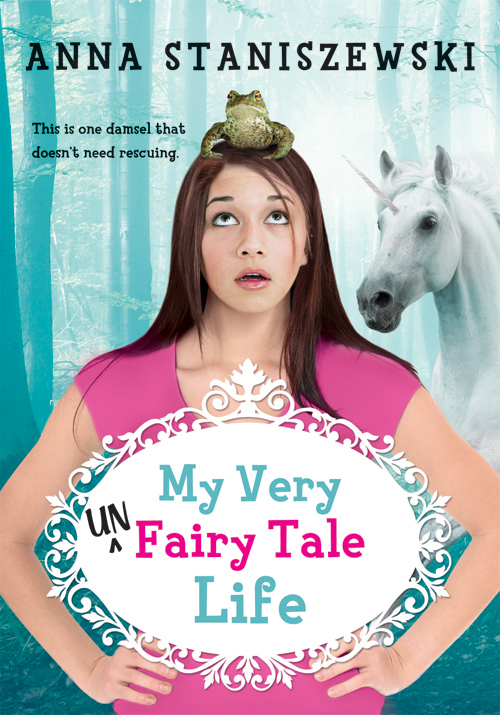
What people don’t say:MyVeryUnFairyTaleLife_CVR.indd

On the other hand, we can learn quite a bit about characters by what they don’t say. If Grandpa keeps insisting that he’s a happy duck—while he’s wringing a duck’s neck—we know there’s more going on than he’s admitting. And if the characters are saying one thing and doing the exact opposite, that can be downright hilarious.

What people wish they could say:

You know when you’re too polite or too chicken to speak your mind? Well, there’s good news. Characters aren’t in control of their editing mechanisms; you are. You can make your characters say anything you want! Maybe a normal person would be too afraid to speak up in a particular scenario, but your characters shouldn’t be too normal. They should be interesting, and interesting people say and do things the rest of us might not.

So when it comes to funny dialogue, by all means, use real life examples to help you make dialogue feel authentic. But remember that you’re not writing about real life; you’re writing about the appearance of real life, which means that the rules of the real world don’t necessarily apply.

My Epic Fairy Tale Fail and the first book in the series, My Very Unfairy Tale Life, are available in paperback and ebook on Amazon, Barnes & Noble, Powell’s, and other book retailers.

Anna_StaniszewskiAbout the Author:

Born in Poland and raised in the United States, Anna Staniszewski grew up loving stories in both Polish and English. She was named the 2006-2007 Writer-in-Residence at the Boston Public Library and a winner of the 2009 PEN New England Susan P. Bloom Discovery Award. Currently, Anna lives outside of Boston, Mass. with her husband and their adopted black Labrador, Emma. When she’s not writing, Anna spends her time teaching, reading, and challenging unicorns to games of hopscotch. You can visit her at www.annastan.com.

Muse Chat and Elixir Bound Teaser News

Elixer_Bound_200x300Just a quick informative post today. I’ll be participating in a live chat with other Muse authors over at Coffee Time Romance on Thursday night at 9:00 (EST). I hear there will be giveaways and other fun stuff! This will be my first live chat as an author, so it should be interesting. Love for you all to stop by.

Also, I have some news about Elixir Bound, but I’m not sharing yet. So now that you are all annoyed with my ambiguity, what’s your favorite way to break good news? Stayed tuned for a guest post on Wednesday by author Gayle Krause about her new novel RATGIRL: Song of the Viper.

Priscilla Brown author of Nothing But Love

Today Elixir Bound is being featured on Juniper Grove, complete with a giveaway of the book. In the meantime, fellow Muse author Priscilla Brown is visiting all the way from across the world to discuss her humorous contemporary romance Nothing But Love (check out my Goodreads review).

NBLcoverPriscilla, what made you want to become a writer?

Encouraged initially by a wonderful English teacher in high school, I’ve always enjoyed language and playing with words.

What inspired you to write Nothing But Love?

A real-life couple’s unusual meeting circumstances stayed in my story bank, and this became the first scene in Nothing But Love. Also, for the main location I wanted to use an isolated weather-beaten setting.

At what moment did you truly begin to feel like an author?

Cheekily, when my first magazine article was published, long before I started to write fiction; this ‘author feeling’ suffered several dents until I received my first acceptance from MuseItUp.

What is your favorite part of the writing process? What is your least favorite part?

I would rather edit, self-edit and work with a publisher’s editor, than produce new text. My least favorite, as I believe applies to many authors, is the dreaded synopsis.

What is the single best piece of advice you have for aspiring authors?

Never bin any writing—characters, scraps of dialog, descriptions—and read through them when you’re stuck. One or more from this story bank may spark a new narrative or fit perfectly in an ms that’s giving you trouble.

What is next for you in your writing career?

Editing my next contracted ms for MuseItUp, and interrogating my story bank for the missing middle of a novel for which I’ve written the beginning and ending.

And here’s the fun part…below are three list of words from the magnetic refrigerator poetry set…please write up a little piece of poetry or prose from these words. 

The brain attic was full with this ghost idea, page after page, for book use one day.

Nothing But Love blurb:

Being almost run over by Alistair is Cassandra’s introduction to life in the fun lane. Both fresh out of inappropriate relationships and jobs, each is novelty value for the other. But the exes are pulling tricks to be reinstated. So can Cassie’s passion for crafting silver jewelry and Al’s for woodcraft keep them fed? And is this fizzing too-much-too-soon chemistry suitable for the long haul?

Nothing But Love is available from the MuseItUp Publishing bookstore and Amazon.

VLUU L100, M100  / Samsung L100, M100About the Author:

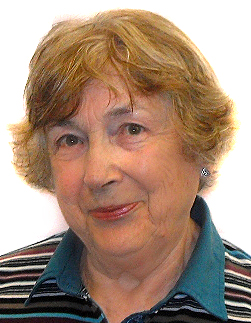
Priscilla lives in regional New South Wales, Australia; her district is well-supplied with cafes in which she does much llistening, observing, scribbling and keeping up the caffeine.

Confessions of an Author: Rejection

Confession #4: Rejection might be the one thing that makes me quit this whole business of publishing.

Rejection. It’s something every author faces time and time again. It’s fear inducing, debilitating, soul sucking.

I think for most authors the writing journey begins in a blissful place. Inspiration strikes. You decide, I’m a writer…or at the very least, I’m going to write something worthy of publication. You write, and write, and write. Probably a lot of bad stuff, but you’re not aware of how bad it is; in your blissful ignorance, you keep going. Maybe even stumble upon some good writing.

You begin sending your work out, probably before it’s really ready for mass consumption. But again, you’re ignorance keeps a buffer around you. Publishers reject you. No worries! They don’t know what they’re doing; they just passed up on the next J.K. Rowling. They’ll regret it one day. Maybe one rejection has some encouraging words. That’s the thing you latch on to. The ego of the innocent feeds off of it.

Then reality hits. You realize, maybe my work’s not that good. I need to actually…ahem…revise! Those people who rejected you might actually know what they’re talking about. Still, you persevere. Okay, rookie mistakes. Buck up and keep improving.

You work, work, work at creating, honing, revising. Your writing benefits from all the hard work. Maybe you join a critique group, get some positive feedback and productive criticism. You begin to thrive as a creative person. You feel like your work is actually ready for mass consumption…and just maybe others will think so too.

With your improved knowledge of writing, you realize it’s a good idea to study up on the business side of publishing as well. You learn how to write an effective query, target your submissions, what your looking for in an editor or agent. You check and double check that you’ve spelled all the names right, that the grammar in your letter is perfect, you have the right sample pages included. You hit send (or if you’re doing it the old-school way, apply the correct postage).

Now comes the waiting. The incessant checking of emails/mailboxes. The nail-biting. Commiserating with writer friends over the process of having stuff out there. Then the rejections start rolling in. You try to focus on a new project. Keep your mind off the hole your email inbox is burning in you brain.

Your stomach is in a constant state of queasiness. You starve yourself, too sick to eat, and then gorge yourself on chocolate and caffeine. More rejections roll in. Time limits pass, and you get rejected by query expiration date, no reply required.

Sure a lot of good stuff happens along the way. Meeting other writers, forming great working relationships and personal ones you keep forever. A few close calls with a dream agent or editor. But there’s still so much rejection.

Even if you land a publishing contract, it might not be what you were always hoping for. You sign with a small press or decide to self-publish or get a low advance. Maybe you did land a great contract, but then the big reviewers don’t like your book or ignored it all together. Maybe your sales fall short of expectations; you don’t reach as many readers as you hoped. Your option book doesn’t get picked up.

Rejection, rejection, rejection. The old death by a million paper cuts (and you don’t even use real paper to write anymore!). And it hurts. Gives you days where you’re not sure if you can keep going, deluding yourself into thinking you can make it as a writer. Keeps you from revising because it’s just going to be crap anyway, no matter how much you work at it.

I guess a lot of writers don’t even make it to this point. They gave up back a handful of paragraphs ago after the first rejections. What keeps you going? Your love of a character, the way you can escape into a world you’ve created, an insatiable need to succeed, the fact that you’re a glutton for punishment.

Whatever it is, you keep going. Right…it’s worth it to keep going? The punch in the stomach with that email that sends you into a downward spiral. “Thanks for thinking of us, but we’re going to have to pass on that manuscript you’ve spend months, years, decades working on. The one that you poured your soul into. The one that has blood marks on it from where your heart leaked all over it. Yup, that one. It’s not good enough for us. Don’t worry, publishing is a subjective business. It’s not personal.”

Yet every single one of those rejections is personal to you. The story you wrote is deeply personal. You maybe even put more work into that than you did into your own life.

So what do you do when you’ve traveled down every single path you could find and came up with dead ends? Well, I guess you start over. Get a spark of inspiration. Feel the tingle of a new story…of hope…in your fingertips. And you do it all over again. Right, you do it all over again. You’re a writer. That’s what you do.

What kinds of rejections have you faced in your writing career? And what keeps you going back for more?

« Older posts Newer posts »

© 2026 Katie L. Carroll

Theme by Anders NorenUp ↑