Books for kids, teens, & those who are young at heart

Category: Writing (Page 23 of 73)

Why Is It Taking Me So Long To Write The Second Elixir Book?

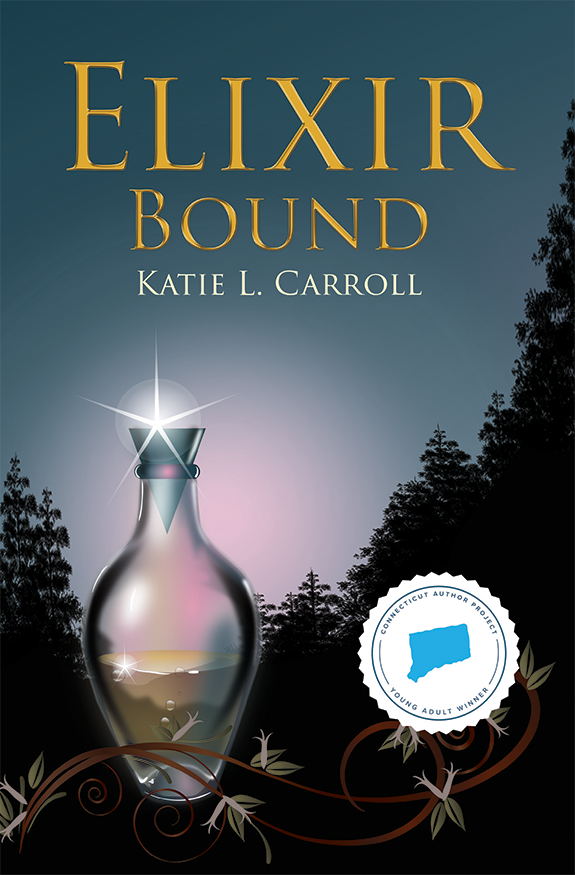
It’s been over four years since the ebook version of ELIXIR BOUND came out and over three years since the paperback version released (so forever in terms of publishing a companion novel). I’m sad to report that I’m only about 2/3 finished with the draft of the companion novel ELIXIR SAVED. And even once the draft is done, I’ll still need to revise and such. So why exactly is it taking me so long to write the second Elixir book?

Well, it’s complicated (isn’t everything!?). For starters, there are the less-than-stellar sales stats of BOUND. I wasn’t expecting a best-seller or anything, but it’s been hard to press on with a second book when the first has low sales. So, yeah, I’ve worked on other projects in between. And, no, I don’t write for the sales or the money, but the validation of selling books doesn’t suck.

There’s also life. I have kids and do freelance work (and blog). I like reading books and watching TV and getting out every once in awhile to do grown-up things. Writing novels is an important part of my life and I’ve gotten more consistent with actually, ya know, writing, but it doesn’t always take top priority.

Then there’s the fact that I’m not a very fast writer. Even when I’m in a good flow and I’ve been writing consistently, my word counts are just not that high. I’ve done a lot of things with the drafting of SAVED to try and speed up the process. I mapped out all the scenes I still need to write. I’ve set timers in order to write without editing myself for that set amount of time. I did a modified NaNoWriMo in November to try and finish this draft.

And now I’m here on the blog writing about how I’m not writing the book. Blah, blah, blah, wah, wah, wah! I know…but all those reasons I mentioned above are not the main reason why it’s taking me so long to write ELIXIR SAVED.

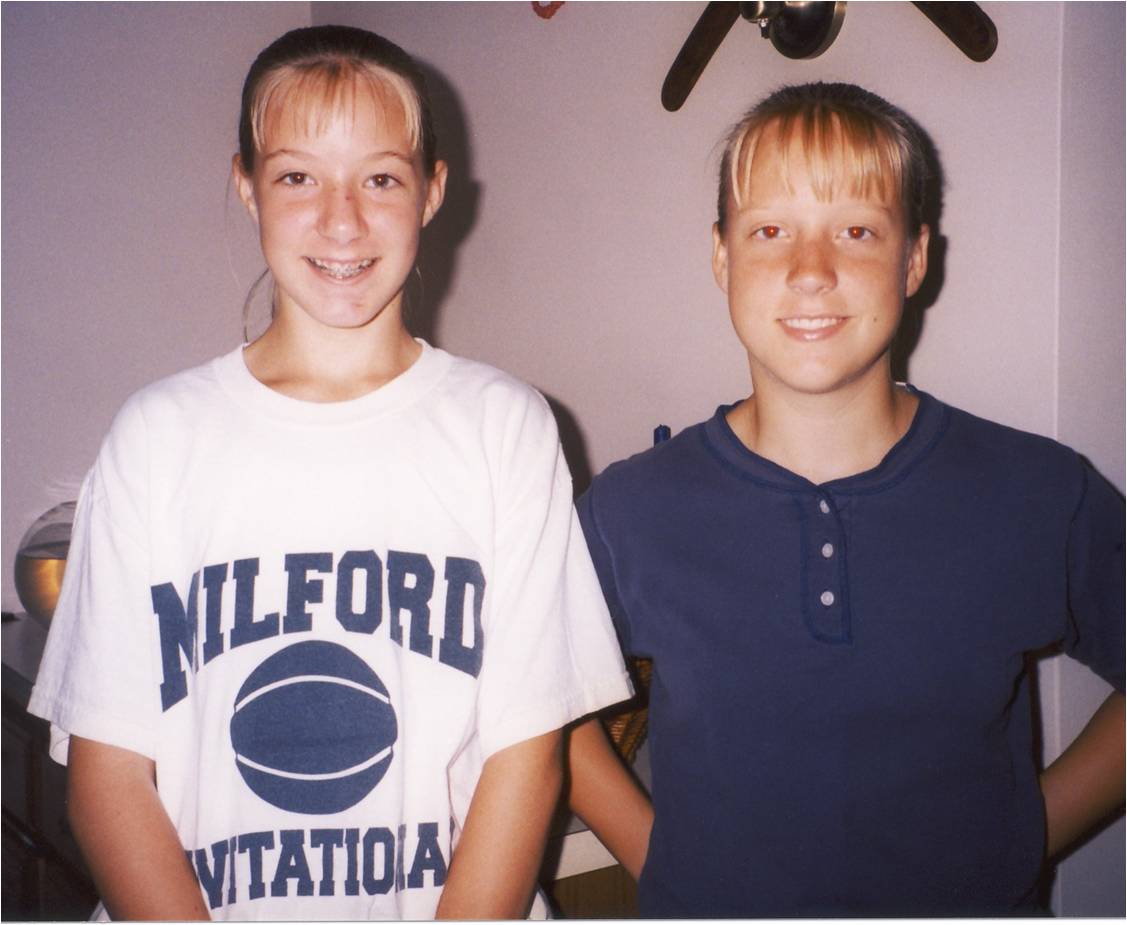
The real reason why it’s taking me so long to write the second Elixir book is because one of the main characters is based on my sister Kylene, who passed away at the age of 16. My intention when I wrote BOUND was to give Kylene a fantasy adventure of her own. I started the book in her POV (point of view), but it was too damn hard to write, so it ended up in the POV of her sister. It’s been almost 15 years since she passed away and it’s still hard to write this story, her story. It feels so presumptuous and impossible to do her justice in what are ultimately my words. It’s emotionally draining and terrifying.

But it’s a story I know I have to tell…eventually. It would be far worse for me to never tell it than to have a hard time doing it.

So I keep reminding myself that I’m not writing from Kylene’s POV. That’s impossible. Only she could do that. Instead, I’m writing from the POV of a character that’s inspired by Kylene. It may seem like a small distinction, but it makes all the difference in be being able to persist in drafting this novel. Though it doesn’t necessarily make it easier.

It’s a process that refuses to be rushed. I do my best to push myself to continue the task, but I’ve come to realize it’s just gonna take time. I’ll keep slowly working on it (while I also work more efficiently on other novels) and one day it will be done. Well, as done as any book ever is.

Thank you to anyone who’s read ELIXIR BOUND and/or inquired about a follow up book. It coming…one of these years!

March #InkRipples: Tropes Are All In The Execution

Join Kai Strand, Mary Waibel, and Katie L. Carroll (that’s me!) for March #InkRipples, which is all about tropes.

Love ’em or hate ’em, tropes are an integral part of storytelling. Even if you’ve never heard the word before, you’re sure to have come across them in books, movies, or television as they are a useful and ubiquitous part of storytelling. For my intents and purposes, here is a link to a good definition of trope (though there are other meanings to the word, this is the definition I’m working with here). If you know the saying about there not being any new stories to tell, only new ways to tell them, this is largely referring tropes.

Some common ones include love triangles, the chosen one, star-crossed lovers, good vs. evil, and instalove. You can get really specific when it comes to tropes, but these are very common ones you’ll see all the time. They are definitely eye-roll inducing when they are super obvious, but I would argue that it’s almost impossible to avoid them in storytelling. There really are only so many basic stories out there to tell.

For me, it’s all about the execution. Think about Harry Potter. On a really basic level, it’s a chosen-one story, which has been done a million times before. So what about the Harry Potter books makes them so special? It’s the way they are told, it’s the characters, it’s the details, it’s the magic (both literal and figurative). All those things elevate it beyond the trope and make it unique. The Harry Potter stories are a chosen-one story, but they are a chosen-one story as only J.K. Rowling could have told it.

Which brings me to another saying we have in writing…write the story only you can tell. It doesn’t so much matter if at its surface, it’s a story we’ve all heard before, it’s about the way you tell it. And you are the only one who can tell that particular story. Tropes exist because they help inform a reader (or watcher, etc…) about what to expect in a story. Use that to subvert those expectations; or take that trope and add a unique bend to it; or embrace the tried-and-true aspects of the trope but use beautiful, lyrical language in doing so.

#InkRipples is a monthly meme created by Katie L. Carroll, Mary Waibel, and Kai Strand. We pick a topic (March is all about tropes), drop a ripple in the inkwell (i.e. write about it on our blogs), and see where the conversation goes. We’d love to have you join in the conversation on your own blogs or on your social media page. Full details and each month’s topic can be found on my #InkRipples page.

Middle Grade Adventure PIRATE ISLAND Is Going To Be A Book!

Last week brought you my big baby news, and as promised, this week I’m bringing you book news. I’ve decided to jump into self-publishing, starting with my middle grade adventure PIRATE ISLAND in the fall. So this year I’ll be bringing a human baby and a book baby into the world!

This is a move I’ve been considering for awhile now, and I’m really excited about the level of control I have over the process. I’m not setting an exact release date yet because I’m working on a bit of a learning curve and doing much of it myself. And with the (human) baby coming in July, I want to make sure I give myself enough time to get everything done right.

I did hire illustrator Susan Tait Porcaro to do an original piece of artwork for the cover. (No way I was tackling that myself!) She’s a fellow contributor to THE GREAT CONNECTICUT CAPER, and her illustration was a household favorite. It’s been very exciting working with her on a concept and seeing a few early sketches.

How can you help, you ask? (And even if you haven’t asked, I’m going to tell you ;).) Well, I’ll be looking for bloggers/readers/writers/anyone to help with the cover reveal in a few months and of course to help spread the word when the book releases. I’m working on getting ARCs (advanced review copies) set up, so I’ll be looking for reviews as well. I’ll be doing a pre-sale for PIRATE ISLAND, so, ya know, you can pre-order the book when that happens. And I’m going to finally put together an author newsletter, so you can subscribe to that soon for my latest book news.

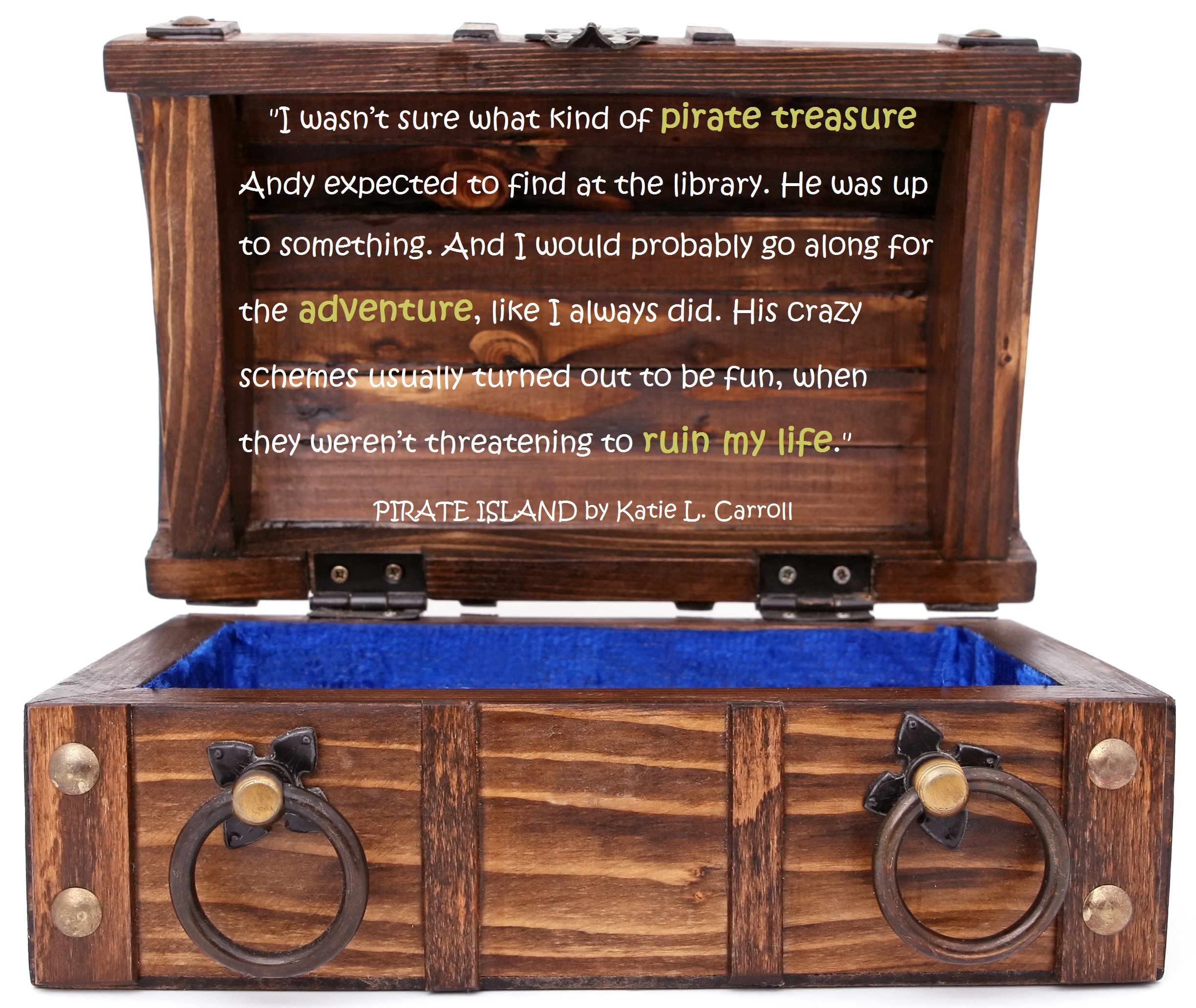
I’ll have a lot more details about PIRATE ISLAND and the self-publishing process in the coming weeks and months. I’ll leave you with a little teaser from the book.

Timeless with a Twist from Sharon Chriscoe Author of RACE CAR DREAMS

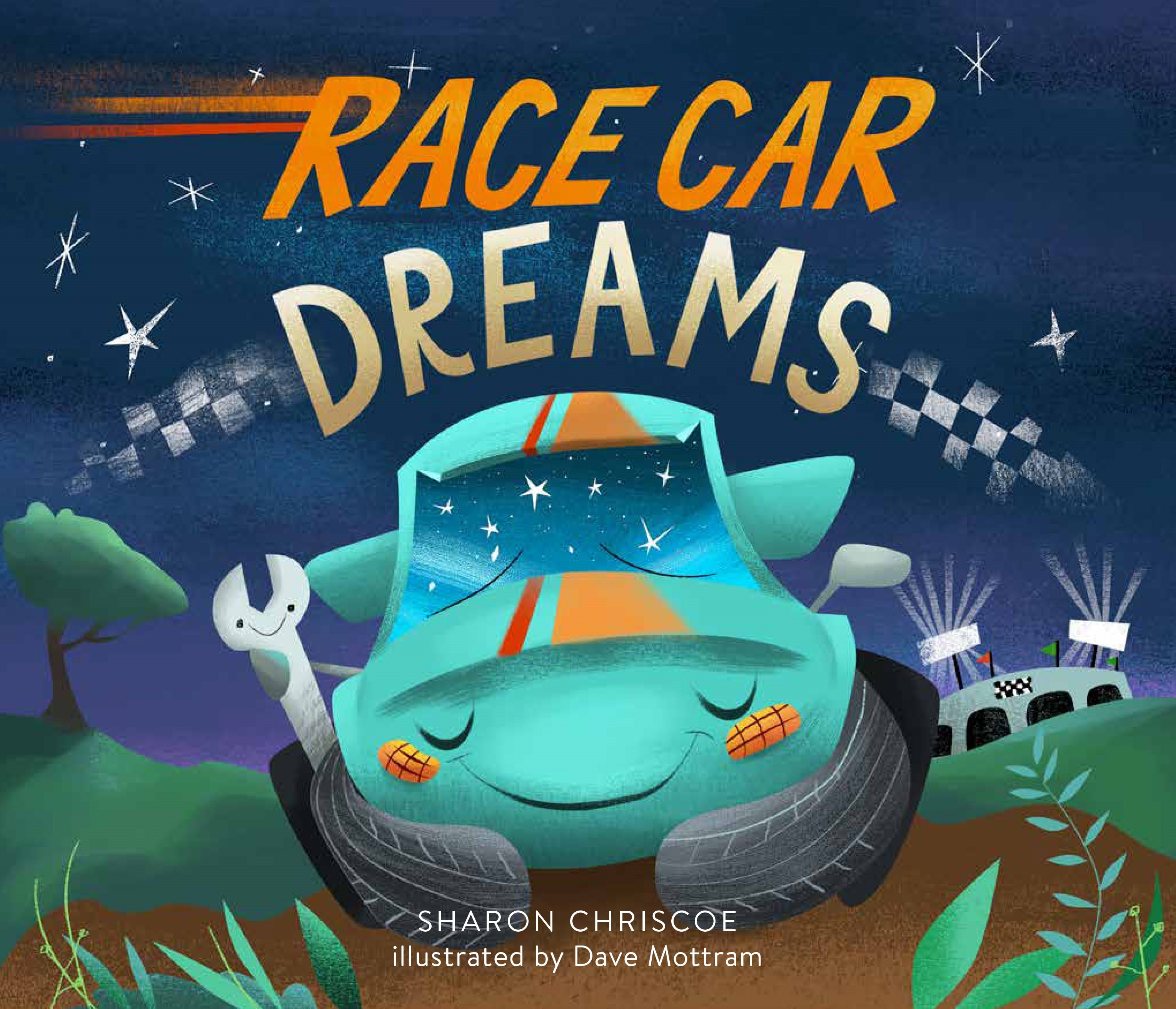
I’m very excited for today’s guest on the Observation Desk is the author of the picture book RACE CAR DREAMS. The boys got this one for Christmas and love it! Sharon is doing a one-day Amazon giveaway on Wednesday, so make sure to check out my Twitter (@katielcarroll) or author Facebook page on Wednesday for details on that. Welcome, Sharon!

Timeless with a Twist

by Sharon Chriscoe

Thanks for having me, Katie! When I think about my favorite children’s books, one simple word comes to mind:

Timeless.

A book that will not only hold up to reading after reading, but also generation after generation. A book that can be a treasured gift passed down through a family line or holds special memories of days gone by.
Some of my all-time favorite children’s books are: The Velveteen Rabbit, The Little Engine That Could, Corduroy, Little Bear (series) and Goodnight Moon. Each of these books has one special quality in common. They are timeless. No matter if they were read in the 1920’s or in 2017, their message is still important and needs to be shared, and loved.
Today’s market is in some ways very much the same as it has always been. Classics are still as popular as ever. Children or animals are the most common main characters. And friendship, love, perseverance, and bedtime routines are always hot topics.

However, like most other things, books are evolving. One example of how children’s books are evolving is when an author adds a twist to the story. By adding twists to their book, the author brings something fresh and new to their story and in return making it a timeless treasure that will enlighten children for decades.

Children’s book twists can take place in a classic plot, such as Mary Had A Little Glam by Tammi Sauer, or Goldilocks and The Three Dinosaurs by Mo Willems, in where both authors use a familiar fairy tale but change the plot, setting, or point of view. These books are called fractured fairy tales.

Other examples of a twist can be by portraying unusual characters, such as Lady Pancake and Sir French Toast by Josh Funk, where the main characters are yes . . . just as the title suggests, a lady pancake and a sir French toast. Or The Day The Crayons Quit by Drew Daywalt, a story told from the point of view of a box of crayons.

Theme is also an effective way to add a twist to your book. In Be A Friend by Salina Yoon, the theme is friendship and acceptance. But the twist is that Salina uses a mime to tell her story. Dennis, her main character, never speaks a word, yet the ‘reader’ hears every one.

Another example of a twist can be seen in my picture book, Race Car Dreams. The twist combines both an unusual character and its theme, where a little race car does the same bedtime rituals as a child. This enables children to see themselves in the book’s little Race Car as he prepares to settle in for a good night’s sleep. By imagining that race cars also wind down their engines with a bath, a good story, and a full tummy, children are both soothed and entertained, and drift happily off to dreamland.

So, the next time you’re looking for a new picture book idea, let your mind wander and see where the twists take you–and you might find yourself writing a timeless book of your own!

RACE CAR DREAMS blurb:

After a day at the track of zipping and zooming, a race car is tired and ready for bed. He washes his rims, fills his tummy with oil, and chooses a book that is all about speed. All toasty and warm, he drifts off to sleep, he shifts into gear . . . and dreams of the race!

Find RACE CAR DREAMS at Amazon and Barnes & Noble.

About the Author:
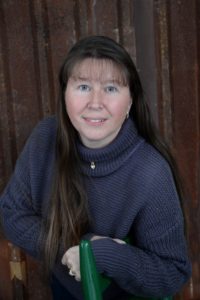
Sharon Chriscoe may not vroom around a race track, but she does zip and zoom around in a bread truck with her husband, Ricky. Fueled with fresh bread, snacks, and writing tools, Sharon has made this her mobile office! She and her husband live in Pilot Mountain, North Carolina. They have three children and one grandchild, as well as an assortment of dogs, cats, bunnies and occasionally a groundhog. In addition to RACE CAR DREAMS, she is the author of BULLDOZER DREAMS (Running Press Kids, 2017) and FIRE TRUCK DREAMS (Running Press Kids, 2018), and THE SPARROW AND THE TREES (Arbordale Publishing, 2015). She is also a contributor to several magazines such as Highlights High Five, Highlights Hello, and The Old Farmer’s Almanac for Kids. She is a member of The Society of Children’s Book Writers and Illustrators and is a graduate of The Institute of Children’s Literature. She is represented by Jessica Sinsheimer of the Sarah Jane Freymann Literary Agency. To learn more about Sharon, her books, and future events, visit her website: www.sharonchriscoebooks.com.

February #InkRipples: Tackling Common Misconceptions About Genre

In February, join the conversation as Mary Waibel, Kai Strand, and Katie L. Carroll talk genres for this month’s #InkRipples posts.

There are lots of ways to define genre in literature (see the dictionary definition of “genre” or the Wikipedia entry on “literary genre”). For our intents and purposes of today’s discussion, let me specify by saying that when I’m talking about genre, I mean as they are defined in modern publishing, not necessarily limited to genre fiction (which contains certain popular genres) but sticking to fiction.

Specifically, I want to address common misconceptions about genre. If you’ve ever done any research on genre yourself, you’ll see it can be quite contentious, so I don’t expect everyone to agree with me here. Let’s dig right in…

Misconception 1 – Age Categories Are Genres

One key to understanding genre is to know what it’s not. I often see people refer to YA (young adult) as a genre. It’s not, no more than adult fiction is a genre. YA is a category that designates a target age range for its readers and will center around characters of that age group. That’s not to say that readers out of the target age range won’t enjoy those books (you all know I mostly read YA, and I’m in my 30s). The same goes for middle grade–it’s not a genre but an age category.

Misconception 2 – Genre Is Easy To Define

So what is a genre? So-called “popular genres” or “genre fiction” include fantasy, science fiction, horror, mystery, romance, and thriller, among others. A story in one of these genres will follow the conventions of its genre and comes with certain expectations from readers. For example, you can expect a fantasy story to include fantastical elements that don’t exist in our world. Each popular genre has its own conventions, though there certainly can be overlap.

What about literary fiction? Is that a genre in and of itself? You certainly wouldn’t call literary fiction a popular genre as it cannot be defined by the genre conventions of those popular genres. Literary fiction tends to focus on the human condition and themes rather than plot. It’s more an absence of popular genre, but in publishing, I would say it’s considered its own genre. There are still expectations from a reader about what they will get with literary fiction, and you’ll find it as a category in book stores.

Are contemporary and historical genres? There’s some debate here. They denote whether a story takes place in a historical time period or in contemporary times, but you also have to take into consideration when the book was written. A story written in the 1980s about stuff that happened in the 1980s was contemporary then, but a YA story written today about stuff that happened in the 1980s is historical. You can have a contemporary romance or a historical one, but there’s also just historical fiction that deals with a historical time period or event but with fictional elements. Historical doesn’t necessarily have elements of mystery or romance or thriller, but a reader would have certain expectations from an historical novel. Contemporary is tricky because it usually fits into one of the popular genres, and if it doesn’t, it’s probably considered literary fiction.

Complicating the issue of genres even more is sub-genres and novels that can fit into more than one genre. Paranormal is a sub-genre of fantasy that specifically includes a heavy focus on paranormal elements, often in the form of mythical or magical creatures (i.e. TWILIGHT). A fantasy story can have paranormal elements but can also be categorized as fantasy and not necessarily paranormal. What about a story set in a futuristic world with science-fiction elements that also has heavy romance elements? Is it science fiction or romance? It may be categorized as both (a science-fiction romance) or may be categorized with the more dominant one, and people may not agree on which one is more prevalent.

Misconception 3 – Literary Fiction Is More Serious Than Genre Fiction

It’s been said that literary fiction is about confronting reality while genre fiction is about escaping reality. Literary fiction is often said to deal deeper with character and uses plot as a secondary device, but I’ve read plenty of genre fiction that gets deep into character while also having a riveting plot. Writing quality of literary fiction is also often lauded as superior to genre fiction, but I think the quality of writing largely depends on who’s doing the writing and not so much on genre (read Laini Taylor’s DAUGHTER OF SMOKE AND BONE for a lyrical and beautifully written fantasy story). So while it might be true that you’re more likely to study literary fiction in school and read genre fiction on your own time (though school’s are delving into popular fiction more than ever), that doesn’t necessarily make literary fiction more serious.

In fact, as a writer of fantasy, mystery, and thrillers, I would fight you to the death (strictly in a fantastical world, of course!) to argue that genre fiction can be, and often is, as serious as literary fiction. In fact, I think genre fiction can be very effective at commenting on reality and providing a deeper understanding of our own world, but it also gives that reality a more palatable context by using the conventions of genre fiction. The lens of genre fiction can almost make it easier to comment on and gain perspective of current issues of our world.

This discussion of genre has gotten longer than I intended, so I’m going to stop with these three misconceptions. Do you think I totally missed the mark on genre? Or maybe I missed something big that you’d like to see discussed in a future post. I’d love to hear your thoughts on literary genres.

#InkRipples is a monthly meme created by Katie L. Carroll, Mary Waibel, and Kai Strand. We pick a topic (February is all about genres), drop a ripple in the inkwell (i.e. write about it on our blogs), and see where the conversation goes. We’d love to have you join in the conversation on your own blogs or on your social media page. Full details and each month’s topic can be found on my #InkRipples page.
« Older posts Newer posts »

© 2026 Katie L. Carroll

Theme by Anders NorenUp ↑