Books for kids, teens, & those who are young at heart

Category: WIP (Page 8 of 16)

Coming To The Realization That This Isn’t My Story To Write

In light of some really thoughtful, hard conversations going on in the children’s literature world about representation, I was thinking about a manuscript I’d started but never finished.

I loved the characters. The world I had begun to create had lots of story elements that I both love reading about and writing about. It is a YA retelling at its heart but has unique elements that I thought would make it stand out. I completed over 50,000 word on it for National Novel Writing Month (quite a few years ago). My critique group liked the bits they saw of it. I adore the story, and the plot had really started to come together in my mind. I did quite a bit of research for it. But I never finished it.

I thought it was because I couldn’t find the right character to tell the story. I played around with having a different point-of-view character. I played around with multiple points of view. I rewrote the beginning and tried it in third person instead of first. Yet I could never quite figure out how to tell the story. So I put it away. I had intentions of maybe coming back to it someday when I was a better writer who could maybe find the right voice.

But now, I don’t think I’m going to come back to it. I think I now know why I was having so much trouble trying to figure out how to tell that story. It’s not because I don’t think I could write it and write it well. And it’s not because I don’t think it would make for a good story. In fact, I think it would make a really great story, one I’d love to read some day. But I’m not going to write it.

One of the things that we as storytellers need to be asking ourselves, beyond if we can write a story and write it well, is should we be writing a story. I couldn’t find the right way to tell this particular story–as much as I love the idea of it–because it’s not my story to tell. It deals with cultures and characters who would probably not be best served with me doing the telling. I can (and have) visit the place where my story takes place and research the culture, but I’m not part of it, so the story would suffer for it. It could end up being harmful in its representation.

Maybe I’ll come back to the basic idea of doing a retelling of the tale that inspired the original idea, but with a totally different spin to it, one that I am more equipped to tell. And I have plenty of other ideas floating around in my head and notebooks that I certainly am not lacking for new stories to write.

Of course, it hurts a little to put this manuscript to rest. I’ve put a lot of work into it, and I want to be able to tell it. I won’t, though. And I’m okay with that.


Young Kids, Short Attention Span, Short Writing Time

Babies and young children have short attention spans, but the title of this post doesn’t refer to my kids’ attention spans; it refers to mine. I once read a quote about a mother’s attention span is only as long as that of her youngest child (I tried looking it up to cite it but couldn’t find it and, honestly, didn’t look that long 😉 ). My youngest is 7 months old, so that tells you about how long I can concentrate on any one thing. The shiny hot mess that is social media doesn’t help either!

via GIPHY

Hence why I’ve been focusing a lot of my writing time on picture books. Not easier to write than novels, but easier to feel like I’m actually making some progress on it in the shorter work sessions that fit into my current life. I’ve also been reading a ton of picture books with the kids, so I’m naturally inspired by that form.

Yet that old perpetual WIP (work-in-progress) Elixir Saved is weighing on me. I’m at the point where not working on it is always in the back of my mind. It’s different than when I’ve consciously taken a break from it because I needed to. This time I kind of feel like I’m just avoiding it. I’m in the meaty middle of the draft. I know where the story needs to go and I have a solid idea of how to get it there, but it’s gonna take a lot of work. So, yeah, I should probably make it a priority to work on it, instead of finding new things to work on.

Not that I’m going to stop working on my picture books. I just think I need a better balance. Isn’t is that what it always comes down to in pretty much everything in life: finding the right balance.

One last thing. I’m also in the market for a picture book critique partner. I’ve got plenty of writing buddies to exchange novels with, but not so much when it comes to picture books. I’d like someone with a little bit of experience in the area, but you you certainly don’t have to be an expert. Send me a message if you’re interested in seeing if we’re a good match!

Where Do I Find The Time To Write?

I often get asked the question of how I find the time to write. The short answer to this–and every single writer you know will also have this answer–is that I make the time to write. It’s important to me; it’s part of who I am and how I navigate the world. So no matter how busy I am, I make sure there is time for writing.

I’m lucky to have help from relatives a couple days of weeks with the kiddos. I have a husband who financially supports me, so I don’t have to work for money. Do I have as much time as I’d like to write? Nope. Do I find myself distracted when I do have writing time? You betcha (I’m looking at you, social media!). Is it hard to write when the country feels like a pile of garbage? It sure is. Do I sometimes have to put the writing aside to deal with the business of being a writer? Of course (there’s submitting to do, marketing to plan, chasing people down to get paid, and lots of other stuff that’s not actually writing). Do I write every day? Nope, not even close.

But I do it. With help. I recognize the privilege I have. I think it’s important to point out my privilege because it’s not something writers always talk about. It’s easier to be a writer when you have support. That’s not to say I don’t have my own struggles. I have trouble balancing writing time and taking care of the kids (which is my primary responsibility in life right now). I worry about money, my retirement, and how to pay for the kids to go to college. Now that the boys are growing, I worry about having to go out and get a job just to feed those growing little bodies. Yet, I still make the time to write.

Here’s the thing, I know writers who work full time, have kids, and don’t have the kind of help I have. They make time to write. They do it because it’s important to them. They find a way to create, even when it’s hard, even when it’s done in the wee hours of the night when it feels like everyone else is asleep. They do it even though they’re bone tired. They do it because it’s important to them.

I find the time to write because it’s important to me. So when people ask me about how I find the time to write. I usually say something like, “Oh, I have help with the kids a couple of days a week.” Though the real answer feels far more complicated than that. Or maybe it’s not. Maybe it all comes back to the short answer. I find the time to write because I make the time to write. I’m a writer. I don’t know how not to be one…so I write (but not every day!).

November #InkRipples: Finishing That Book (Or Not!)

It’s no secret here on the Observation Desk that I’m a notoriously slow writer. I’ve expressed how I feel about prolific authors (see Confessions of an Author: Prolific Writers). More recently, I blogged about Why Is It Taking Me So Long To Write The Second Elixir Book. It took almost ten years from when I first started writing ELIXIR BOUND for it to become a published book. I’m not exactly winning any speed awards over here!

via GIPHY

So I am afraid I have no business offering any kind of advice on the November #InkRipples topic of Finishing that Book! I’ve tried NaNoWriMo (National Novel Writing Month, where many writers try to write a complete book, i.e. 50,000 words, in the month of November). Last year I tried a modified version of it (see Gearing up for National Novel Writing Month 2016) and fell short. One year I actually won NaNoWriMo and wrote 50,000 words of a story, but that story has since become a drawer manuscript that will probably never be published.

But you’ll tell me that no words are wasted, even the unpublished ones. Or that the words will come and to take whatever time I need writing them. This is what I tell myself (and those things are both true). But that doesn’t mean it isn’t frustrating to be a slow writer. Couple that with the fact that I never feel like I have adequate time to write, and that makes for a very frustrated writer.

Nevertheless, I’m still plugging along over here at my achingly slow snail’s pace. How about you all–what do you do to get that book finished?

#InkRipples is a monthly meme created by Katie L. CarrollMary Waibel, and Kai Strand. We pick a topic (November is all about Finishing that Book!), drop a ripple in the inkwell (i.e. write about it on our blogs), and see where the conversation goes. We’d love to have you join in the conversation on your own blogs or on your social media page. Full details and each month’s topic can be found on my #InkRipples page.

September #InkRipples: Building a Fictional World

What exactly is world building (or worldbuilding if your prefer is as one word)? Basically, it’s the creation of a fictional world. More than that, though, it’s how that world is explained within the confines of a story. The imagining and creating is the easy part (in my opinion). It’s choosing which pieces to include in the story and how to include those pieces with out a big info-dump that is the tricky part.

The reader must be grounded in the world and be able to feel like they are immersed in it, but you don’t want to bore them with too many details and world-building elements that aren’t essential to the plot and character development. It’s highly subjective, too. One reader may love lavish descriptions and explanations of how one aspect of your fictional world works, while another may skim through all that to get to the action.

And world building isn’t just for fantasy or sci-fi writers. Even if a story takes place in a high school and most of your readers are in high school or have been to one, you still need to establish the world of your high school. There’s a lot already written on ways to execute world building, so instead of me blathering on with tips, I’ll leave some links at the end of the post for you to peruse at your leisure.

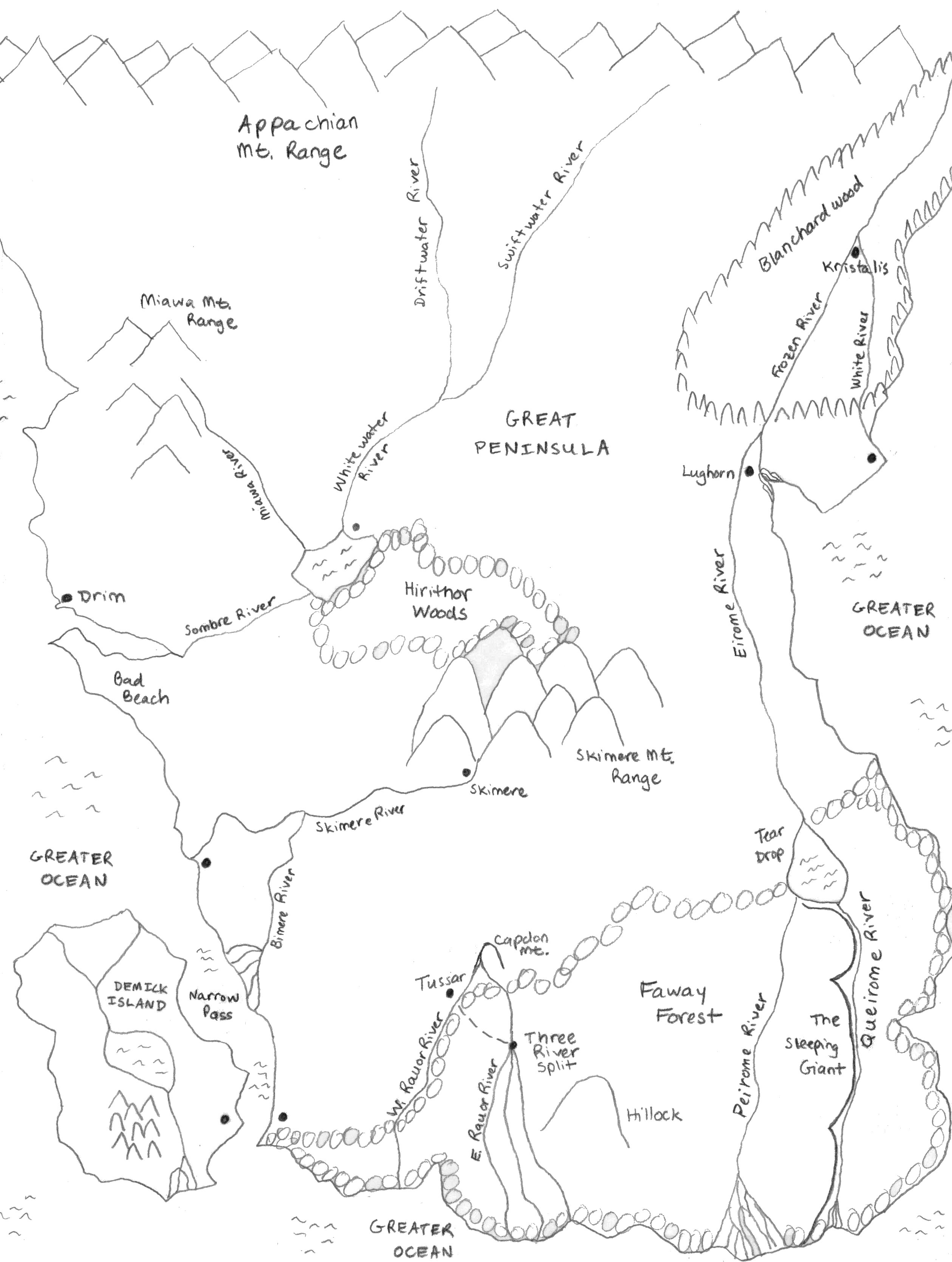
Some of my favorite world building exercises have been making a map for the ELIXIR BOUND (see the picture at the beginning of the post and the entry “Exploring the world of Elixir Bound”). For PIRATE ISLAND, part of my world building included creating a chart with realistic tides and moon cycles. So much of my world building goes on behind the scenes, but having all that information in my head makes for a rich world on the page, even if the reader only sees a small portion of what the world entails. Plus, those elements that don’t make it directly into the story are great for things like blog posts and bonuses for readers.

Okay, before we get to the links, I’d love to hear some of your world-building techniques in the comments!

“Tips on World Building for Writers — How to Make Your Imaginary World Real” by Chuck Sambuchino

“The Ultimate Guide to World-Building: How To Write Fantasy, Sci-Fi, And Real-Life Worlds” by Claire Bradshaw

“25 Things You Should Know About Worldbuilding” by Chuck Wendig

(Apparently people named Chuck have a lot to say about world building!)

#InkRipples is a monthly meme created by Katie L. CarrollMary Waibel, and Kai Strand. We pick a topic (September is all about world building), drop a ripple in the inkwell (i.e. write about it on our blogs), and see where the conversation goes. We’d love to have you join in the conversation on your own blogs or on your social media page. Full details and each month’s topic can be found on my #InkRipples page.

« Older posts Newer posts »

© 2026 Katie L. Carroll

Theme by Anders NorenUp ↑