Katie L. Carroll

Books for kids, teens, & those who are young at heart

Page 78 of 142

How Newborns Are Like Hobbits

Having spent a good part of the last month with my newborn son (and several years ago, lots of time with my first son when he was a newborn) and given my good working knowledge of characters created by J.R.R. Tolkien, I’ve come to realize that newborns are a lot like Hobbits.

Let’s start with the obvious physical similarities. Not only are newborns and Hobbits smaller than human adults (The Lord of the Rings prologue puts Hobbits at between two and four feet), but they both tend to be chubbier. Also they have different proportions than human adults. Though not necessarily mentioned in the books, in the movies, the Hobbits’ feet appears to be large for their sizes. And we all know newborns have proportionally large heads compared to their bodies.

And then there’s the hair. Hobbits have hair in weird places, namely their feet. If you’ve never had a baby, you might not realize it, but newborns often have hair in unexpected places. Many are born with fine hairs (called lanugo) on their bodies, commonly found on the back, shoulders, ears, and forehead. My own baby has adorable little hairs on the helix of his ears. Yet neither Hobbits nor babies tend to have facial hair.

Of course, there’s also the matter of food. Hobbits and newborns eat frequently. One of my favorite quotes from the LOTR movies is when Pippin asks Aragorn about “second breakfast” and Merry say, “I don’t think he knows about second breakfast.” Pippin replies, “What about elevenses? Luncheon? Afternoon tea? Dinner? Supper?” Going back to the LOTR prologue, we learn that Hobbits will eat six times a day when they can. My own newborn is on the twelve nursings a day meal plan. He has all the meals mentioned by Pippin, plus brunch, dunch (dinner-lunch), midnight snack…

I think the most interesting similarity is in their general philosophies in life. Granted no one can really know what a newborn’s philosophy in life is, but based on observation, I think it’s safe to say that a newborn is happiest when life is simple. Keep newborns fed, make sure they get their rest, and provide a fairly tranquil environment and they’re happy as pig in…well, newborns do quite a lot of that too (but we’re not here to compare newborns to pigs). Hobbits, too, prefer a simple, quiet life. In fact, Bilbo Baggins is considered highly unusual and outlandish for his adventurous ways.

That’s not to say there aren’t differences. Hobbits are fond of smoking tobacco in pipes, and with the exception of those very disturbing images of that smoking baby in Indonesia several years back, babies aren’t known for smoking. Going back to the LOTR prologue, Tolkien notes that Hobbits have keen eyesight, not so much for newborns. Tolkien also mentions that Hobbits are swift and silent, while even the quietest of newborns are full of cries, squeaks, snorts, farts, and any number of other strange noises.

Overall, though, I’d have to say that Hobbits and newborns are more alike than dissimilar, and they are both pretty darn adorable!

Writing Non-human Characters with Meradeth Houston Author of Surrender the Sky

Once again returning to share her wisdom on writing is Meradeth Houston! Meradeth is the author of the fantastic paranormal Sary Society Series, the latest of which is Surrender the Sky (see my 5-star Goodreads review here). Make sure to check out all the other stops on her Xpresso Book Tours blog tour and enter the giveaway. Welcome, Meradeth!

SurrendertheSkyTourBanner1

Writing characters that aren’t human

by Meradeth Houston

Thanks so much for having me back here! It’s always a treat to visit some of my favorite blogs again. I thought I’d talk a little about writing characters that aren’t human today. This is one of those topics that I think about a lot, but don’t generally get the chance to chat about. For those of you who have thoughts on the topic, please chime in too!!

The main characters that I write about in my novels are definitely not human—they’re Sary, which is a breed of supernatural I made up. They’re kind of similar to guardian angels, but I think all of my characters would be the first to tell you that they’re definitely not the angelic sort. They’re the souls of those who die before taking their first breath and are allowed to come back to the earth to help those who are contemplating taking their own life. Basically they’re immortal and have the ability to shift their form to look pretty otherworldly: wings included.

One of the most important things that I think about while writing these characters is to keep in mind their true age. Most of them are several centuries old, which means they’ve seen a lot. Not just historical tidbits (which I find fun to research and layer in), but personal things. They’ve watched everyone around them grow older and die—something that they can’t do. These kinds of things leave their mark, and I try to be aware and respectful of that in my characters. Even if they look to be in their teens or twenties, they’re not going to think like a human, and they’re not going to react like them all the time. This is challenging, but also can be a lot of fun to write.

While the Sary have been “on the ground” throughout their lives, allowing them to adapt as society and culture inevitably change around them, it isn’t necessarily easy. One of the other things I try to think about while writing is those things that the Sary might find comfortable from the past—things that they have a hard time giving up. This might be preferring candles and lamps even with electric lights, or just living in the older part of a city because it seems more like home. Technological changes can seem fast for even me, but for the Sary it’s been tricky to keep up. I like to think about the lag that can occur, and depending on the character, how comfortable they’re going to be with different parts of modern life.

Writing a supernatural being that can fly is also one of those things that I also find really a lot of fun. I know that may sound strange, but I’ve always wished I could fly (I think this may stem from growing up in California and hating traffic—who wouldn’t want to avoid that??), so writing from the Sary’s perspective is a whole lot of fun in this regard. I pester my pilot brother for aerial photos, and pay a lot of attention to the way the sky looks while in an airplane, hoping to do the concept of flight justice. Hopefully that comes across, because it certainly is fun!

There’s a lot more that goes into writing a character that’s not human, but I’ll stick with this for today! What else do you think goes into making a believable non-human character?

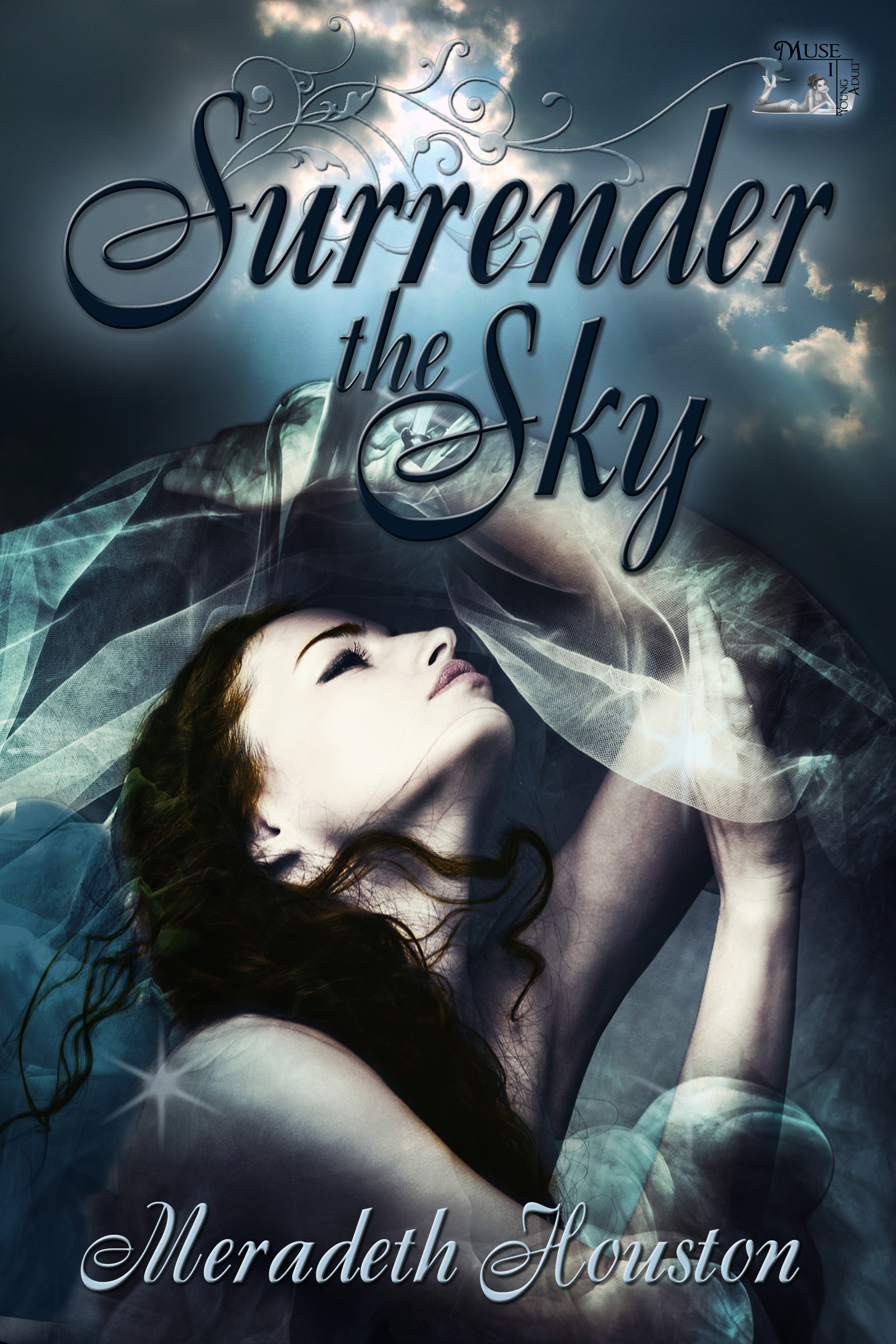
Surrender The Sky 300dpiSurrender the Sky blurb:

Gabby lives by two unbreakable rules: don’t expose her kind, the Sary, and don’t fall in love—too bad some rules are made to be broken.

When Gabby’s most difficult charge accidentally shoots her in front of a class full of students, the event exposes her carefully hidden identity. She shifts from looking like a normal teen to her secret Sary form, revealing her wings and the existence of her kind—immortals who try to keep people from committing suicide. Her incident attracts the attention of the next leader of the Sary, Jassen, who offers her an impossible bargain: she can keep her wings if she makes amends with those who know the truth. Things get more complicated when a rebel Sary, intent on exposing them to the world, starts interfering with Gabby’s work. And there’s no denying her attraction to Jassen, who is torn between his duties and his heart. With threats at every turn and her immortality on the line, Gabby has to find a way to save the Sary or surrender the sky forever.

Goodreads: https://www.goodreads.com/book/show/20943650-surrender-the-sky?ac=1

Purchase:

Amazon: http://www.amazon.com/Surrender-Sary-Society-Meradeth-Houston-ebook/dp/B00K2IMTNG/ref=sr_1_1?s=books&ie=UTF8&qid=1404146503&sr=1-1&keywords=Surrender+the+Sky+by+Meradeth+Houston

B&N: http://www.barnesandnoble.com/w/surrender-the-sky-meradeth-houston/1118931601?ean=2940045770484

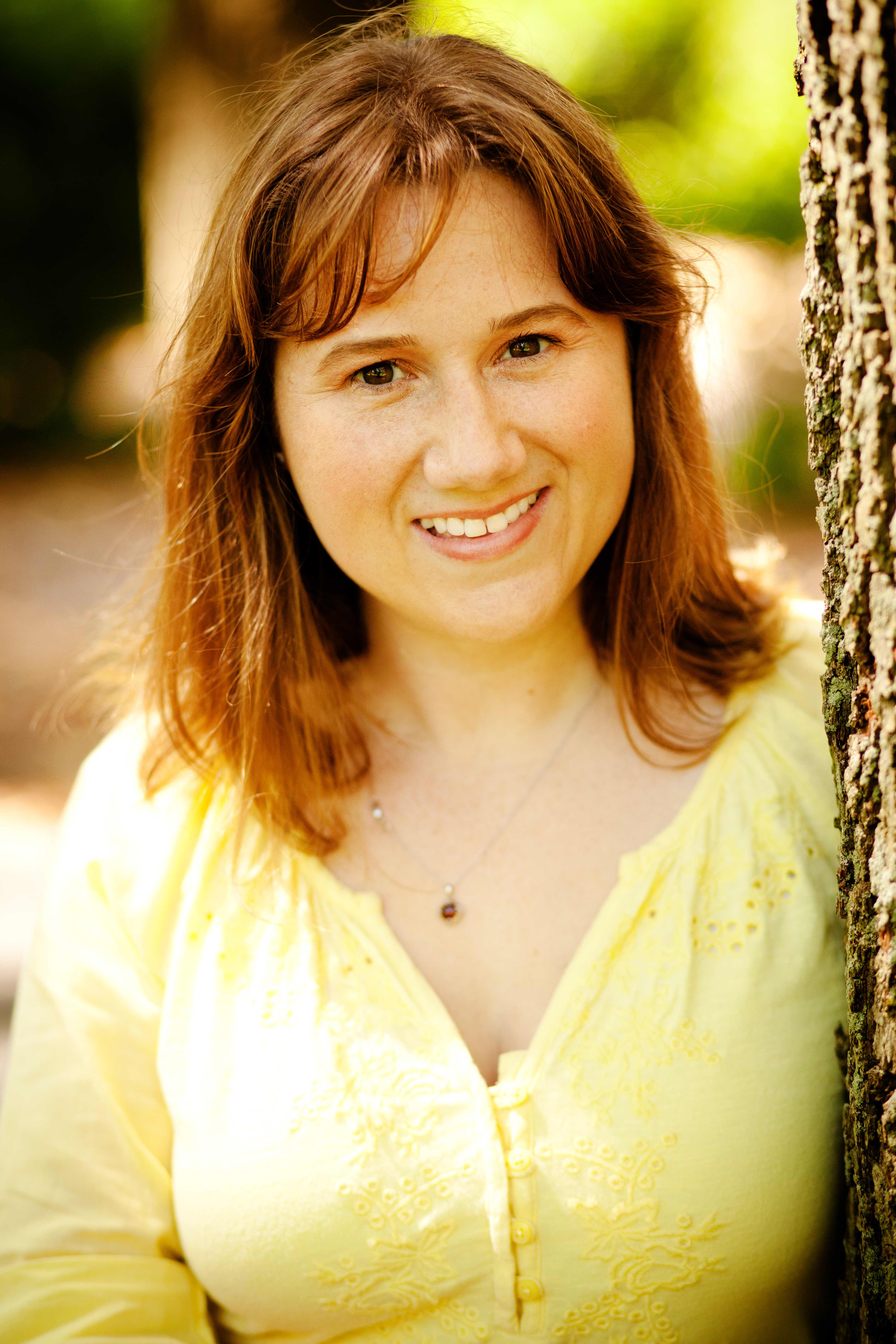
MeradethAbout the Author:

Meradeth’s never been a big fan of talking about herself, but if you really want to know, here are some random tidbits about her:

>She’s a Northern California girl. This generally means she talks too fast and use “like” a lot.
>When she’s not writing, she’s sequencing dead people’s DNA. For fun!
>She’s been writing since she was 11 years old. It’s her hobby, her passion, and she’s so happy to get to share her work!
>If she could have a super-power, it would totally be flying. Which is a little strange, because she’s terrified of heights.

Author links:

http://www.meradethhouston.com/

https://www.facebook.com/MeradethHouston

https://twitter.com/MeradethHouston

https://www.goodreads.com/author/show/5321667.Meradeth_Houston

a Rafflecopter giveaway

Summertime and the Reading’s Easy

I’m dubbing this summer my summer of rereading. There’s something comforting and easy with reading the familiar. And with a newborn and an almost 3-year-old, I’m in much need of comfort and ease. I’m starting with the Harry Potter series because it’s been a few years since I’ve read any of those books and it feels like the right time to delve into the series again. No matter how many times I read these books, I always love them.

I flew through The Sorcerer’s Stone in no time and have started Chamber of Secrets. We’ll see how far I get before the summer ends. So far I’m finding lots of inspiration for my own writing. Being so familiar (I’ve read the first four books probably close to ten times) with the plots allows me to linger over the superb writing in a way I don’t tend to do when I’m reading a book for the first time.

Pretty much every summer I read Jandy Nelson’s The Sky is Everywhere, so that’s definitely on my list as well. This is a book about 16-year-old Lennie, whose 19-year-old sister has just unexpectedly passed away. I feel like this a book that speaks to my soul. I find it to be uplifting and healing but also very emotional. It hits a little too close to home, given that my sister passed away at 16 (when I was 19).

I’m also currently reading two other stories I haven’t read before, and I’m sure there will be other new books on my list. E. Lockhart’s We Were Liars has been on my list and I’ve heard great things about it, so I’ll probably try to get to that one. Sinner by Maggie Stiefvater (one of my favorite authors) also recently came out and will likely get read.

What are you all planning on reading this summer?

Middle Grade vs. Young Adult with Anna Staniszewski Author of The Prank List

Anna Staniszewski is one of my favorite guest bloggers because she always brings such insightful topics and discussions. Today, as she celebrates the upcoming release of her newest book The Prank List (The Dirt Diary #2)Anna is talking the difference between middle grade and young adult fiction. Welcome, Anna!

prank list cover 2What Separates Middle Grade from Young Adult Fiction?

by Anna Staniszewski

I get this question a lot, so I thought I’d tackle it here. Let’s start with a couple of definitions.

“Middle grade” is generally for ages 7-12, though it can skew a bit younger or older depending on the project (short chapter books vs. longer novels). Middle grade usually features protagonists in elementary or middle school, and if it deals with topics such as sex or violence, those tend to happen off-screen.The ending, while not necessarily happy, should be hopeful.

“Young adult” generally features teen protagonists (14-19) and is often a coming-of-age story for readers 12 and up. (The actual readership of YA varies quite a bit. You might have fifth-graders reading it, but you also have adults who read nothing else.) Issues such as sex and violence can be shown on-screen and can even be of a graphic nature, though you often won’t get as much detail as you would in adult books. Endings, while often hopeful, can sometimes be bleak.

Now that we have that out of the way, we can see that content isn’t necessarily the dividing line between MG and YA. The bigger distinction is how the content is handled, whether it’s off-screen and implied or on-screen and shown.

The protagonist’s age is often a factor, as well, although there is some wiggle room here, too. My main character in The Dirt Diary is 14, for example, but she’s in 8th grade. That puts her right smack in between the two genres, which is why I often refer to the book as “tween,” although it’s generally considered MG.

For me, the biggest difference between MG and YA is the character’s emotional journey. I’ve heard more than one person say that in MG, the character goes through lots of life-changing experiences but can still remain a child at the end. In YA, the character goes through lots of life-changing experiences that force him/her to become an adult. This might be too simplistic of an answer, but I think it goes a long way to explain the difference between the two.

In MG, you have characters exploring their worlds and experiencing what things outside of their own lives are like. In YA, you have characters exploring their own identities and figuring out where they belong in the world. The role of family is different in both; in MG, the family tends to be part of the story, both a support system and a source of conflict, whereas in YA, the family is often secondary or more a source of conflict than anything else. Again, this goes back to the idea of staying a child vs. becoming an adult. At some point, you need to find independence from your family (as many YA protagonists do) and strike out on your own.

Over the past decade or two, the MG and YA markets have changed quite a bit. It used to be that a book with a 14-year-old girl would automatically be labelled as YA, but now that you have more adults reading YA, the genre has started to focus on older and more mature protagonists. That means that MG has expanded too, including a wider range of books, sometimes those that feature younger teens.

Because the market is always shifting, I try not to drive myself too crazy with definitions, but I do try to keep in mind the general attitude in MG vs. YA. That, I think, hasn’t changed too much. In MG, we often still see characters branching out into the world, whereas in YA we see characters who want to find their places in it.

The Prank List blurb:

Rachel Lee never thought she’d fight for the right to clean toilets. But when a rival cleaning business starts stealing her mom’s clients, Rachel will do whatever it takes to save herself the horror of moving to Connecticut—which would mean giving up her almost, sort of boyfriend, her fantastic new pastry classes, and her best friend Marisol.

Operation Save Mom’s Cleaning Business is a go!

But when the series of pranks Rachel and her BFF cook up to take down the competition totally backfires, Rachel worries that her recipe for success is a dud. You know what they say—if you can’t stand the heat, stay out of the kitchen…

Anna StaniszewskiAbout the Author:

Born in Poland and raised in the United States, Anna Staniszewski grew up loving stories in both Polish and English. Currently, she lives outside Boston with her husband and their crazy dog. When she’s not writing, Anna spends her time reading, daydreaming, and challenging unicorns to games of hopscotch. She is the author of the My Very UnFairy Tale Life series and the Dirt Diary series. Her newest book, The Prank List, releases on July 1st from Sourcebooks. You can visit Anna at www.annastan.com.

The Best Part of Writing by Ally Malinenko Author of This Is Sarah

Have you heard of BookFish Books? It just so happens to be a new publishing company run, among others, by a couple of my best writing buddies, Erin Albert and Mary Waibel. And one of their new releases is This Is Sarah by Ally Malinenko. Ally is here to talk about her favorite part of the writing process. Welcome, Ally! 

THISISARAH_COVERThe best part of writing, for me, is the beginning. You know the part I’m talking about. That first moment where you see a character.

You picture her, standing on the train trestle, her hands clutching something. What? Anything. Down below someone calls her name and she starts running. Who is she? What is she running from? Why? What’s in her hand? In her head? In her heart?

That leads up to the first draft. I think a lot of people dislike the first draft. It’s full of mistakes.

Of bad writing.

Of atrocious moments of dialogue.

But I still like this part the best. The part when my brain spins faster than my fingers can slide over the keyboard. It’s all exciting and new and I’m not even sure what’s going to happen next. Look at me! I’m TELLING A STORY!

If only it was like that all the time.

Then comes editing, which should in fact be called Crippling Self Doubt. Revisions are difficult for me. Probably because I don’t take enough notes in the beginning. I don’t slow down. I don’t stop and think, say “Wait if X happens, what about Y?” I just write X X X X X X and then fall into some massive plot hole that I can’t claw my way out of. Next comes the wailing and gnashing of teeth.

And that was what I had been doing with the Sci-fi Time Travel TOME that I had been working on for years. The manuscript that no matter what I did it seemed determine to stay just inches out of my grasp.

And then something weird happened. One morning there was an image of a teenage boy, full of anger. Before he had a name I just called him “My furious boy.” And then a girl, trapped in a home she no longer knew how to navigate. In a family that was suddenly so foreign that she felt abandoned.

And the one person, his girlfriend, her sister, that they shared in common. The girl who got in her car one day and disappeared.

I slowly tried to fit them together like puzzle pieces – Colin (my furious boy) and Claire (my trapped girl), together on the good ship Heartbreak.

Like I said at the time I was (am) in the middle of a big revision on a very long, very complicated Time Travel Sci Fi TOME. But each morning, when I got up at 5 am to write, there was my furious boy and my sad girl. And over time, I started hanging out with them more.

I’m not going to say anything as ridiculous as “follow your Muse” because a) that sounds like the terrible sort of stuff that amateur (read: me) writers say and b) it makes it sound like your Muse is this elegant ghost-y thing in a white chiffon dress that sounds like Cate Blanchett when she whispers in your ear which is just ridiculous.

What I am saying is that sometimes your brain switches gears on you.

Go with it.

There’s a part of you that knows what story you want, what story you NEED to tell before you even do.

Trust that part of you. The rest is mostly typing.

This Is Sarah blurb: 

When Colin Leventhal leaned out his bedroom window on the night of May 12th and said goodbye to his girlfriend, he never expected it would be forever. But when Sarah Evans goes missing that night, Colin’s world unravels as he is transformed from the boyfriend next door to the main police suspect. Then one year later, at her memorial service, Colin makes a phone call that could change everything. Is it possible that Sarah is still alive? And if so, what is Colin willing to do to bring her back?

And as Colin struggles with this possibility, across the street, Sarah’s little sister Claire learns how to navigate this strange new land that is life without her sister. Even as her parent’s fall apart, Claire is convinced to keep on going. Even if it kills her.

THIS IS SARAH is a meditation on loss, a tale of first love, and a harrowing journey about what it is to say finally let go and say goodbye.

Excerpt:

They found her red Chuck Taylor sneakers five miles from where her car was, deep in the woods.

One was unlaced, as if she had undone it and slipped her foot out of it right there under that canopy of trees.

The other was still tied.

Snow filled them like little red candies covered in sugar.

In the police station, in that evidence bag, they seemed so small, as the snow slowly melted off them, staining the fabric and dripping into the bottom of the bag. I couldn’t imagine them fitting Sarah’s feet. I couldn’t imagine them fitting my own.

Sarah’s empty shoes.

I thought about how they’d never be worn again. How she would never slide her foot inside, how her fingers would never tug those laces and loop them closed.

Her room back home was filled with things that would go unused. They’d just sit there, waiting for Sarah to come home, collecting dust.

All the things Sarah left behind.

When I saw the shoes, sitting in the police station, a noise escaped me. Not quite a sob, but a cry—a shock of disbelief—and my hope retreated as I realized I was now one of those things. Like her clothes, her jewelry, her records or her shoes.

I was just another thing Sarah left behind.

Ally'sPictureAbout the Author:

Ally Malinenko is the author of the poetry collection The Wanting Bone (Six Gallery Press) and the children’s fantasy Lizzy Speare and the Cursed Tomb (Antenna Books). She lives in Brooklyn with her husband.

« Older posts Newer posts »

© 2026 Katie L. Carroll

Theme by Anders NorenUp ↑