Katie L. Carroll

Books for kids, teens, & those who are young at heart

Page 68 of 142

February Blues and Preview of New England SCBWI Spring Conference

The midpoint of February is just about when I’ve had enough of winter and I’m start looking pale and tragic (name that movie reference for a gold star!). I practically have to bribe The Boy to go outside and play, ya know, on the rare day when it isn’t snowing or positively frigid. It’s always at this point of the year when I question why I live in New England.

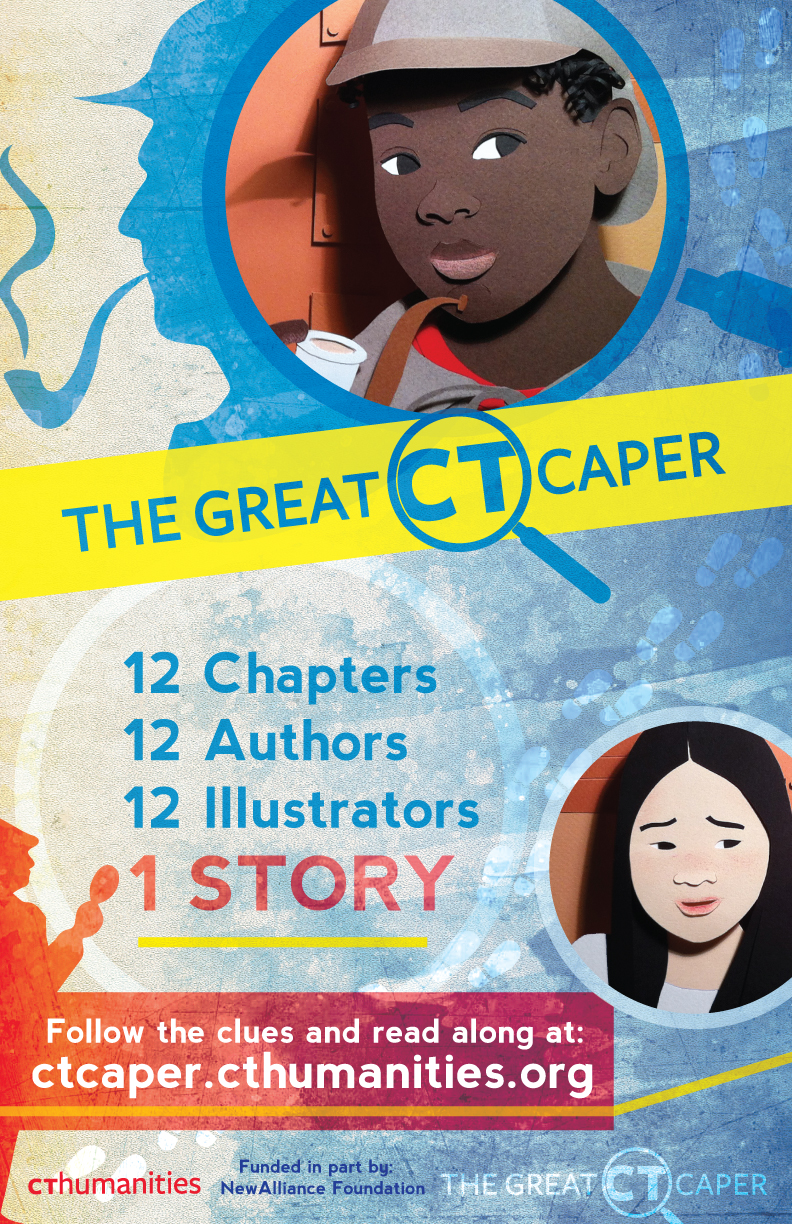
Even with all the gloomy weather, I’ve been busy prepping for a school visit for the Great CT Caper this week and a big conference appearance in April. The conference is the New England SCBWI Regional Conference and I’ll be teaching two workshops there, an hour-long one called “Something Borrowed, Something New: Mining Myths, Legends, and Fairy Tales to Write Fantasy” and a two-hour intensive called “Mapping a Scene by Scene Guide to Revision”.

And if those scintillating titles don’t make you want to go, just check out the rest of the faculty list, including Crystal Kite winner Jo Knowles, Caldecott Medal winner Dan Santat, Newberry Medal winner Kwame Alexander, and a slew of other amazing authors, illustrators, editors, and agents. As I’m writing out this list, I’m starting to have second thoughts about being on faculty. What could I possibly have to offer in comparison to these amazing talents?

*Deep breath as I attempt to avert a crisis of confidence*

Okay, fake it till I make it…. “My sessions are going to be amazing,” I say in a cheerleader type voice. I last attended this conference in 2013 (check out the highlights here), though I took last year off because I was super pregnant. Registration is open and filling up quickly (do that here!).

What have you all been up to this winter?

Meet Beth Lovell Illustrator for THE GREAT CONNECTICUT CAPER

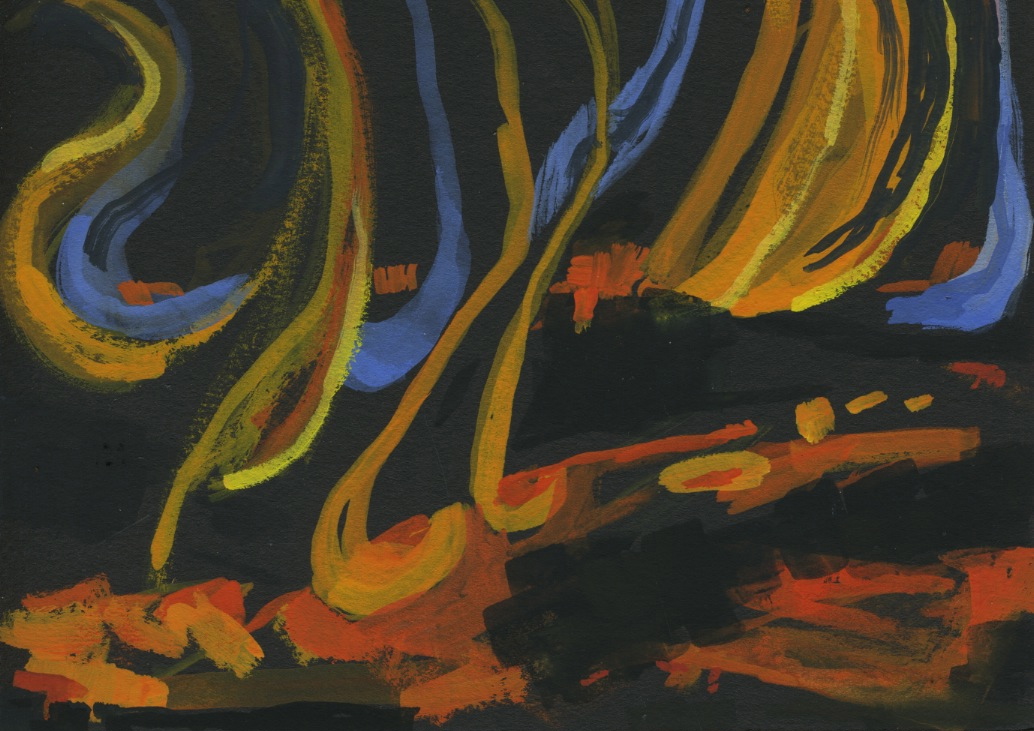
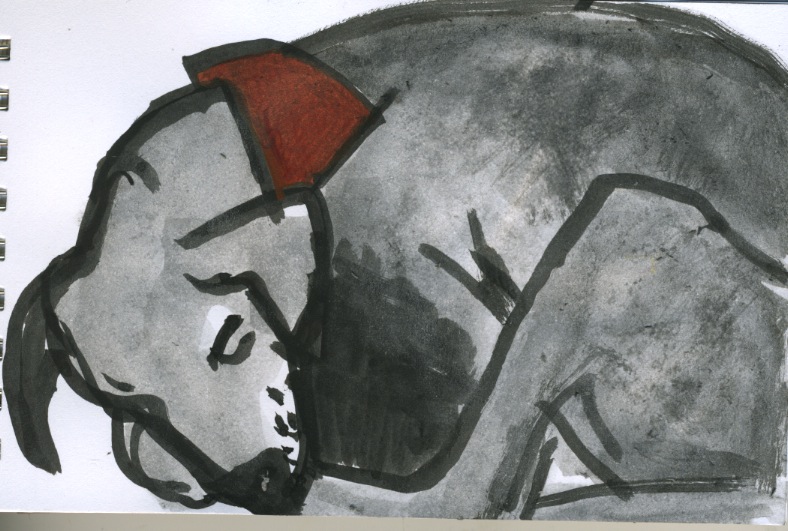
Have you check out chapter three of THE GREAT CONNECTICUT CAPER yet? You’ll definitely want to after reading this interview to see what Beth Lovell has created as an illustration for the Caper. All the beautiful artwork on this post was graciously provided by Beth. Let’s give her a big welcome!

What is your typical approach when sitting down to start a new project?

I draw or paint every day and usually my work is completed in one fell swoop. I work anywhere from 5 minutes to an hour or longer on a particular piece, usually.

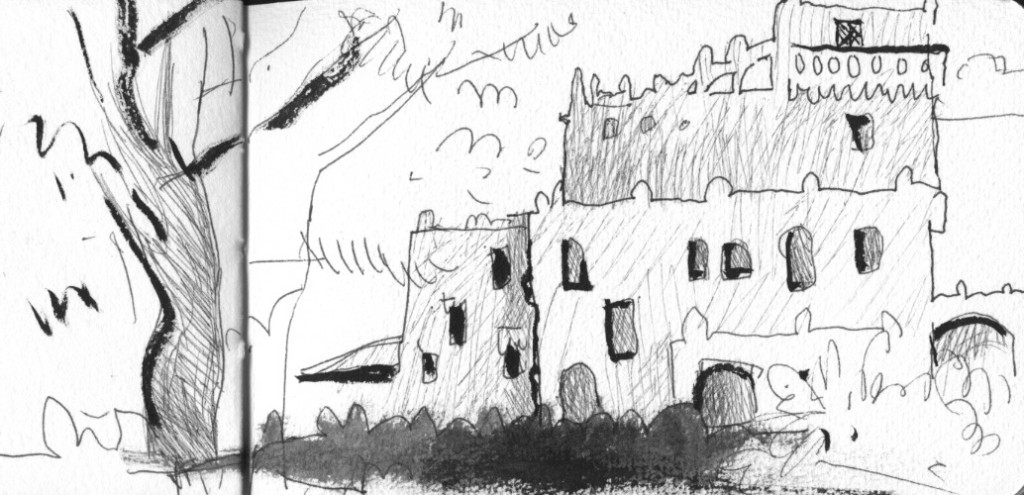
gillette sketch

Did your approach differ at all for creating your illustration for the Great CT Caper?

Yes, I did multiple sketches for the different characters imagining how they might look, and I sketched and took loads of photos on site at the locations that were mentioned in my chapter and at Gillette Castle itself. I wanted to have as many resources in my own hand as possible for completing the assignment and I prefer if possible to work from observation rather than photos. I did have to Google search for some character ideas however. I scanned all the drawings and paintings and sketches and made a collage in Photoshop laying everything out like I wanted. I printed and re-drew on the prints, and rescanned and re-collaged everything several time before I was happy with it. My husband is a Photoshop expert so he had a hand in it as well.

What was your biggest challenge for creating a piece of artwork for the Great CT Caper?

Working under the deadline of a week was exhilarating and frantic. I think artists secretly like the pressure of a deadline because it focuses you like nothing else can!

Did you do any particular research for this project?

I sketched on location at many of the parks mentioned in the chapter. It was fun to see a few places in Connecticut that I had not yet visited. Connecticut offers quite a bit of variety in terms of terrain, there is the shoreline, beaches, wooded hiking trails, really interesting and unusual architecture like Gillette Castle.

I did Google searches to come up with a couple of characters in my illustration and that was loads of fun. If you have something particular in mind when you start your image search it is fun to see how close you can get to that idea, but also there is a random element there.

Scan

How did you get started in illustrating?

I have been doing a drawing or painting every day as challenge to keep art a significant part of my life since 2009. I was trained as an oil painter, but I seriously love drawing, it is so fun and direct, it seems so much more natural of a way of making things for me and I just cannot stop doing it. My drawings have a kind of illustrative quality so I have just been going in that direction more and more. I would love to illustrate more professionally but I have only done a few published things, if you count web venues. I would love to illustrate a graphic novel.

What is your work space like? Do you have any other places you like to work?

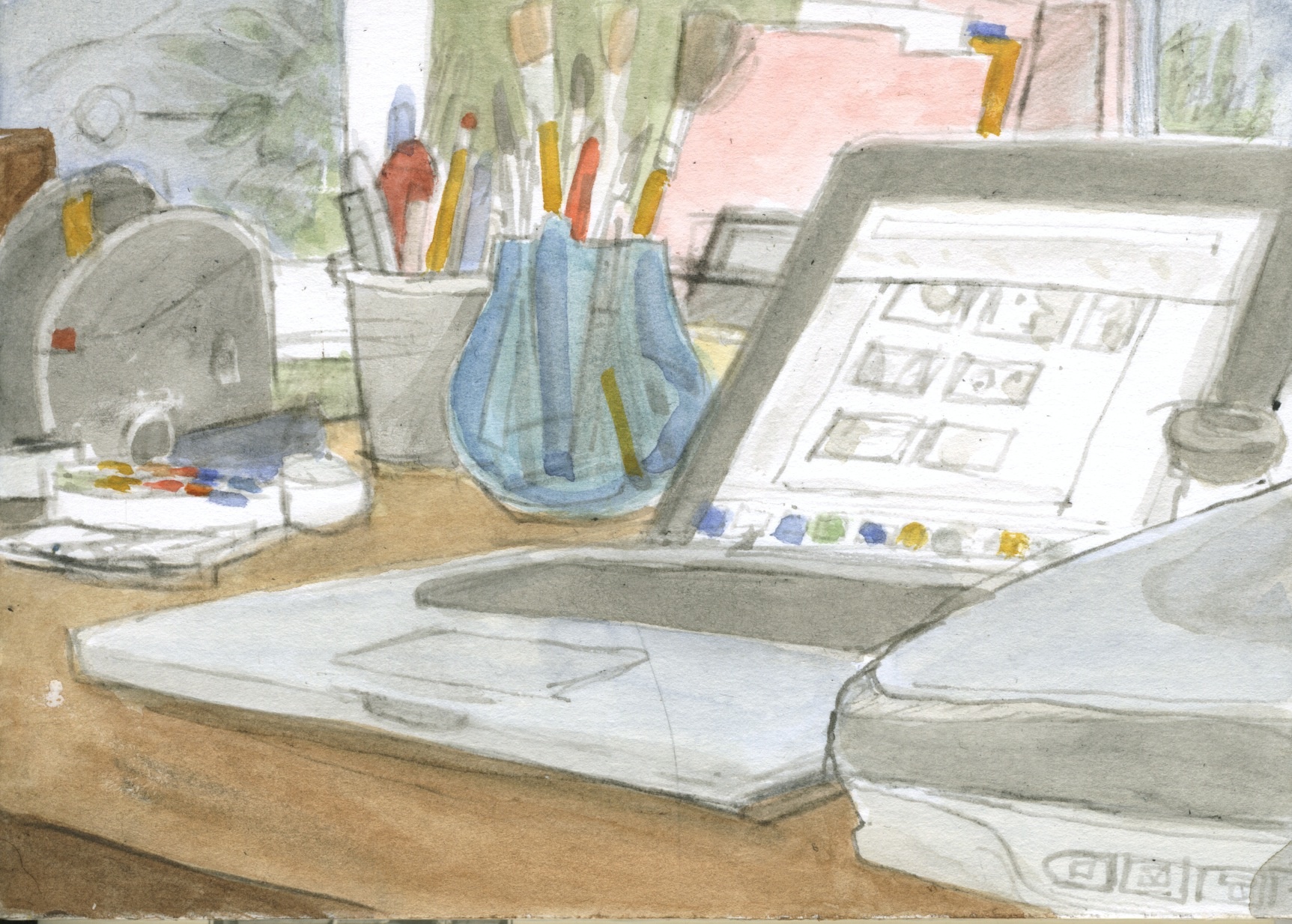
I work at home, in our dining room which has my computer desk and scanner, and a large table made from a wooden door. It is a fabulous workspace that everyone in the family uses for various projects, homework, and whatnot.

I also have a small field kit of art supplies that travel with me at all times so I can sketch in the supermarket, or out and about whenever I see something that is visually interesting. I love sketching on location and have drawn many times at the Peabody, and coffee shops, and the New Haven green and around.

workspace

What artists inspire you?

This is a big question, and for this interview, I will focus just on illustrators. Before I had children, most of my influences were people who made paintings, but since my kids were little I have just gone mad for children’s book illustrators, cartoonists, and people who make graphic novels. A few who I admire greatly are Mimi Grey whose collaged children’s books are just fabulous and funny she did Traction Man, Kate Beaton who draws Hark a Vagrant, Lucy Knisley whose graphic novel Relish is just fabulous, and Isabel Greenberg who drew Encyclopedia of Early Earth.

Besides chapter three of the Great CT Caper, where else might people find your work?

I have work at www.bethlovell.com. I have a Facebook group for anyone who’d like to share their own daily drawings. https://www.facebook.com/groups/cawdailydrawing/

It goes along with a course I am teaching at Creative Arts Workshop in New Haven, but the Facebook group is open to anyone to join. The more the merrier!

daily drawing 4

Any upcoming projects you’d like to mention?

I recently had some sketches of Occupy New Haven in the CT Bound flatfile show at Artspace, which is a small show accompanying the CT(un)bound Book Art show going on there right now. The show was up through January 31st.  http://artspacenh.org/include/404.asp?404;https://artspacenh.org:443/galleries/gallery5/

And finally, please share something silly/unusual/interesting that you don’t normally share in interviews…

This does not really fit your question, but here goes:

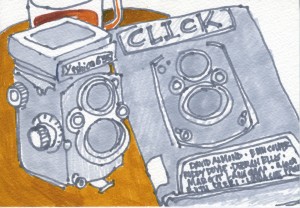
One of my favorite young adult novels is serially written collaboratively by a bunch of different fabulous authors, it is called Click! and it includes Nick Hornby (Author), David Almond (Author), Eoin Colfer (Author), Roddy Doyle (Author), Deborah Ellis (Author), Margo Langan (Author), Gregory Maguire (Author), Ruth Ozeki (Author), Linda Sue Park (Author), Tim Wynne-Jones (Author).

click

So when I heard about the collaborative  CT Caper project, I really wanted to try for it. I was so excited to be chosen as one of the illustrators on this project. I’ve always wanted to work on a graphic novel so this seemed like a good step in that direction.

The thing I want to say is that my sketch that I submitted was really sketchy and fast and I had wanted to make a whole perfect ink drawing or graphic novel spread out of it, but procrastinating artist that I was, the deadline approached, and I had to decide if I thought my sketch was good enough to submit. In my heart of hearts I knew I could do better, but in my heart of hearts I knew I also really really wanted to participate so at 11:45 pm I uploaded what I had and I am so glad I did. I want to share that with any and all artists, writers and students, go ahead and try, please don’t wait til you feel like everything is perfect, you are good enough exactly as you are, right this minute!

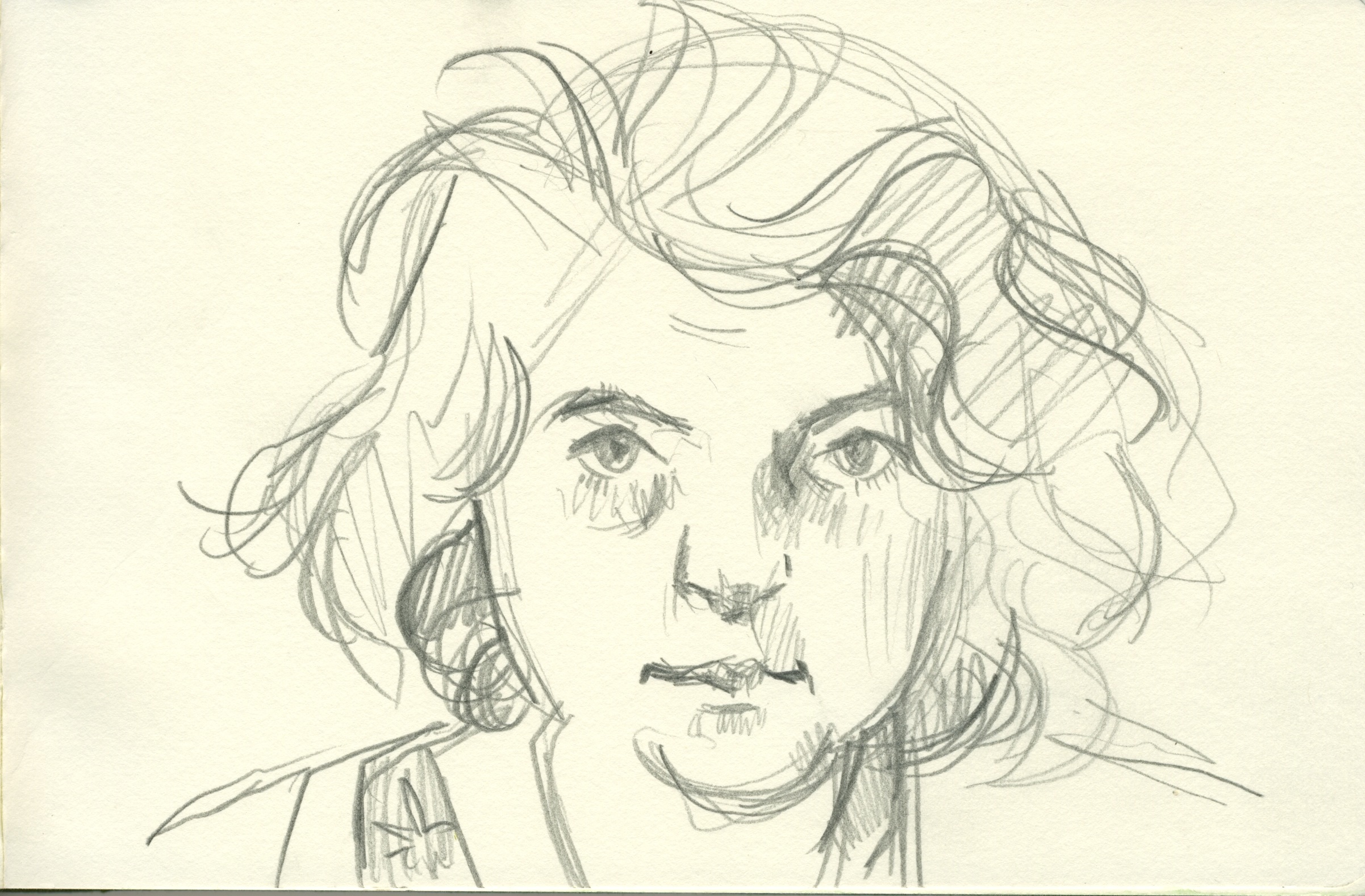
selfportrait with messy hairAbout the Illustrator:

Beth Lovell is a Connecticut artist who has posted a daily drawing or painting online since 2009, a practice that began as a New Year’s Resolution. Beth has an MFA in Painting from Yale School of Art and a BFA from Indiana University, Bloomington. You can find her work at www.bethlovell.com and littlewolfpress.etsy.com.

Females in YA: Part 9 Feminism

Somewhere along the line the word “feminist” got a bad rap, so much so that people seem to be confused about what it really means to be a feminist. Feminism is simply the doctrine advocating social, political, and all other rights of women equal to those of men”. So if you think women should have equal rights as men, then you’re a feminist. No man-hating or bra burning required!

When the heck did feminism become a bad thing anyway? Turns out a simple Internet search turns up plenty of discussion on that topic already. See “When Did Feminism Become a Bad Thing?” by Daisy Lindlar; “Why men have a problem with the word ‘feminism'” by Martin Daubney; and “Feminism: Has it Become a Dirty Word?” by Barbara & Shannon Kelley…just to name a few.

The idea of feminism has been so construed to some kind of men vs. women mantra that even these 10 really famous women celebrities (including Madonna and Susan Sarandon) have come out and said point-blank that they are not feminists. Many of whom go out of their way to say they are “humanist” (whatever the hell that means…can anyone who isn’t a sociopath not be a humanist?), but I suspect that they are actually feminists and are simply under the delusion that feminism is a bad thing. There’s even a hashtag on Twitter #womenagainstfeminism. Really?

C’mon, ladies, let’s get our shite together and take back the word. (Initially I wrote “our word” but changed it because men can be and should be feminists, too.) Still not convinced you’re a feminist? Check out the article “Not Sure What Feminism Is? Allow These Famous Authors To Explain” by Maddie Crum. Even as I write this rally cry, it seems someone may have beaten me to the punch.

In September 2014, UN Women Goodwill Ambassador Emma Watson made a speech about gender equality (i.e. feminism) and launched the HeForShe campaign. Among the things she said about was this:

I decided I was a feminist and this seemed uncomplicated to me. But my recent research has shown me that feminism has become an unpopular word.

Apparently I am among the ranks of women whose expressions are seen as too strong, too aggressive, isolating, anti-men and, unattractive.

Why is the word such an uncomfortable one?”

After this speech, Watson faced both praise and criticism (see the article “Emma Watson’s UN speech: what our reaction says about feminism” by Michelle Smith), and also threats to release nude photos–which didn’t actually exist–of Watson (see “The Emma Watson Threats Were A Hoax, But Women Face Similar Intimidation Online Every Day” by Emma Gray). In my mind, it was yet one more thing to confirm that we do need feminism and that we need to show what being a feminist really is.

So by now you’re probably asking, “Ummmm, Katie, when are we going to get to the part about YA?” Patience, dearies, and you shall be rewarded! Before we get to the YA part, let me point you to one more article, “Teen spirit: young feminist heroes” by Kira Cochrane, showcasing real, non-celebrity young people and their insights on feminism.

Okay, so now we’ve finally reached the YA part of all this. Writers of YA have a huge impact on the lives of teenagers. We can take our own messages of feminism and weave them into our narratives (in a non-didactic way of course). And I, for one, think we not only can, but we should. Let’s not pretend that gender inequality hasn’t infiltrated not only the fictional world of YA but also the real world in which women and men writers are treated differently (see “A Censored History of Ladies in YA Fiction” by Kelly Jensen).

Will feminism be a central issue in every piece we write? Certainly not. But even when we write about something else, like first love or a daring adventure, I think it’s important to understand what messages, even indirectly, we are sending to our readers. Is every character we are going to write be a feminist? Again, of course not. But it’s important to examine our work and wonder if in it we are buying into and maybe even feeding into gender inequality. Let’s not pigeonhole our characters, thereby not pigeonholing our teen readers.

And just in case I haven’t given you enough reading to do already with all those links, here are a few more that make me hopeful for the idea of feminism in YA: “13 Contemporary Novels All Feminists Should Read” by Emma Cueto, “13 Female Young Adult Fiction Authors That Owned 2014” by Caitlin White, and “2015 Is the Year of the Feminist YA Novel” by Kelly Jensen.

Finally, let me state for the record that I, Katie Carroll, YA author, am a feminist.

The Very Inspiring Blogger Award

A very big thanks to Beverly Stowe McClure for nominating me for The Very Inspiring Blogger Award. Beverly is a force in the kidlit world with a slew of writing credits to her name and a generous soul. Make sure to check out her website and blog The Story of a Writer.

veryinspiringblogaward

The rules for accepting this award are as follows:
1. Thank the person who nominated you, and link to their blog.
2. Display the award logo.
3. Nominate at least 15 other blogs (more or less) and provide a link where they may be found.
4. Then, go to their blog, leave a comment to let them know they have been nominated, and where to find the information they need to accept (rules).
5. Mention three things that inspired you the most during the past few weeks.

So here are the three things that have inspired me recently…

1. My kids…of course! Love those little guys. They are a constant reminder of all that is wonderful in the world: the way they think, the way they learn, the way they share, even the way they “fight.” (A fight between the boys usually entails The Boy yelling at The Prince for some nonexistence slight or rudeness–cause 7-month-olds are so rude, right–and The Prince, loving the attention from his older brother, breaks into a big two-tooth grin.) They’re still young enough to be impressed by their old mom, so I’m enjoying their enthusiasm while it lasts. Just yesterday when The Boy spotted the cover of my picture book, he said, “Oh, I love that one,” and insisted we read it. So, yeah, they keep me inspired in so many ways, even as they are tiring me out.

2. A group of students I have yet to meet. I’ve been putting the finishing touches on a school presentation for early February in conjunction with The Great Connecticut Caper. Among the group, are 7 students who submitted a story to the Caper’s first contest and won the author visit. Just thinking about the fun activities I have planned for them and thinking about the writing that will hopefully come out of it keeps me excited about my projects.

3. My writing group. I have a pretty awesome in-person critique group that I meet with once a month. The quality of the work coming from every single person in the group has reached such a level of excellence lately. We’ve really hit a groove. Not only do I look forward to reading their offerings every month, but knowing they are all waiting for the next installment in my WIP keeps me on track with my word count goals.

Okay, now it’s your turn. I’ve never been very good at nominating people for these blogger awards, so here’s five people I’ve come up with. And, if you’re a blogger and would like to be nominated and play along, just leave a comment and I’ll add you to the list. My nominees:

1. Kai Strand – Strands of Thought

2. Meradeth Houston – Write Stuff 

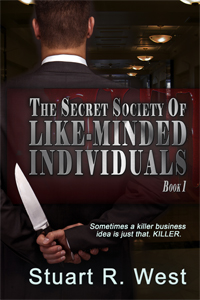
3. Stuart R. West – Twisted Tales from Tornado Alley

4. Eric Price – Fantasy, Science Fiction, and Whatever Else Comes to Mind

5. Jeff Chapman – Jeff Chapman’s Writing

6. Comment to have your blog added here!

Confessions of an Author: Creative Gap

I’ve had some wonderful event and workshop opportunities come up for this year (more details to come on those!). With preparations for those in full swing, plus a couple of sick kiddos, a crazy blizzard on the way, and my regular writing and editing duties (Does anyone else snicker when they see the word “duty”? …No, just my infantile mind.), I’m dipping into the archives for today’s post. Stay safe all of you who are in the path of the storm!

Confession #7: The creative gap that exists between what an author imagines in her head and what ends up on the paper inevitably leads to a certain level of failure.

As a writer, I have certain images, ideas, nuances, themes, characters (and any number of other things) in my head when I create a piece of writing. It’s not that I necessarily have a set agenda–this is especially true when drafting and the story and characters are still taking shape–it’s more that I have a clear vision for a piece. I wouldn’t call it a message (because who wants to read a message-heavy piece of writing)…for a lack of a better way to describe it, let’s call it a creative vision.

Inevitably, the words I use to try and achieve my creative vision never quite live up to what I see in my imagination. This has nothing to with my ability as a writer; it’s more a failure of the medium of the written word. Writers have to rely on words to paint a physical and emotional landscape for a reader. We create not only worlds and characters, but ideas and feelings that need to come alive through words because a reader can’t see into a writer’s head.

Even now, trying to explain this creative gap is a frustratingly futile attempt. The words you read here are not exactly what is going on in my head. There is a creative gap between my brain and what you’re reading.

English users even try to steal words from other languages to help overcome the creative gap. A word like “umami”, taken from the Japanese, is roughly a pleasant savory taste (tomatoes are said to possess this quality), but really it’s a taste or sensation that can’t really be expressed in our language.

Then there are words that are so complex and subject to a person’s individual experiences and emotions. Success. Peace. Love. A writer can use these words, but has no control over how a reader will interpret it. Words are simply an inadequate form of communication sometimes.

And this creative gap isn’t unique to writers; it crosses all types of creative media. Films, though more visual, lack in different areas than books. When watching a film, a viewer can’t be in a character’s head and hear his/her direct thoughts (except for the occasional voice over). Artists can paint or draw what they see in their head, but there is no commentary to go with it. A person looking at a painting has to draw his/her own emotional context out of it.

So what’s a writer or creative person to do? Give up because our creative vision will never be fulfilled. Create a failure and despair over it. Nope! We accept that the creative gap exists and use all the tools we possess to convey our creative vision to the best of our ability.

Because something magical happens when our (inadequate) words are read. The creative gap works in reverse. Readers brings their own creative visions to the writer’s words. And they fill the gap, not as the writer would have filled it, but with their own imaginations.

In the end, the creative gap does not create a failure, but a piece of work that is unique to each individual who consumes it. A work that is full of images, ideas, nuances, themes, characters (and any number of things) the creator never could have imagined. And that is certainly a wonderful exchange.

« Older posts Newer posts »

© 2026 Katie L. Carroll

Theme by Anders NorenUp ↑