Books for kids, teens, & those who are young at heart

Author: Katie L. Carroll (Page 91 of 142)

Colors Like Memories by Meradeth Houston Paperback Party

Meradeth Houston, author of the paranormal books Colors Like Memories (see my Goodreads review hereand The Chemistry of Fate (see my Goodreads review here)stops by to talk about the paperback release of Colors. Welcome, Meradeth!

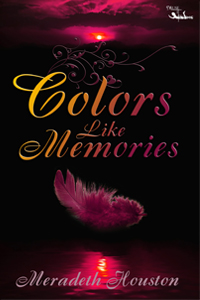
Colors Like Memories 200x300Hi! *waves* I’m incredibly excited to announce the paperback release for COLORS LIKE MEMORIES. The ebook release has been a blast, and it is especially awesome to actually hold the book in my hands 🙂 Here are three things I think you might find fun about the book:

1. It’s got a pretty sweet cover 🙂 And I’m rather partial to the blurb:
Julia has a secret: she killed the guy she loved. It was an accident—sort of.

Julia is a Sary, the soul of a child who died before taking her first breath. Without this ‘breath of life’ she and others like her must help those on the verge of suicide. It’s a job Julia used to enjoy, until the accident that claimed her boyfriend’s life—an accident she knows was her fault. If living with the guilt weren’t enough, she’s now assigned to help a girl dealing with the loss of her mother, something Julia’s not exactly the best role model for. If she can’t figure out a way to help her, Julia’s going to lose her position in the Sary, something she swore to her boyfriend would never happen.

2. There have been some pretty awesome things said about it (if I do say so myself, but I may be a bit biased). See:

“…I applaud the author for providing a writing that has the power to encourage, inspire, help, heal and simply serve as a platform to stimulate communication for any reader (regardless of age), who is feeling hopeless. If you are looking for an interesting read, this book is well written, interesting and has several positive messages that the reader can take away from the story. I would recommend this book to any reader.” TWC Amazon Review

“Colors Like Memories was an amazing YA paranormal romance. It will make you soar with wings then drop you off and catch you once you get near the ground.” Michelle Kullman Amazon Review

“COLORS LIKE MEMORIES is an achingly beautiful tale of love, loss, and new beginnings. Meradeth Houston writes with a clean, clear prose that packs a punch. She carries her characters through the full spectrum of emotions, and the reader is swept along in the journey.” RunningnWriting Amazon Review

3. You don’t have to wait for book #2! THE CHEMISTRY OF FATE, also set in the Sary world, is already available, and you can grab a copy at AmazonB&N, or my publisher MuseItUp Publishing. Book #3, SURRENDER THE SKY, will also be released soon 🙂

You can order COLORS LIKE MEMORIES at my publisher’s site: MuseItUp Publishing, or find it on Amazon, and Barnes & Noble. Ebook copies are also available on all vendor sites!

Those are my three things, and if that’s not enough to interest you, well, I’ve also got a little giveaway running for a book of your choice. Check out the rafflecopter below 🙂

MeradethHoustonA bit about Meradeth:

>She’s a Northern California girl, but now lives and teaches anthropology in Montana.

>When she’s not writing, she’s sequencing dead people’s DNA. For fun!

>She’s been writing since she was 11 years old. It’s her hobby, her passion, and she’s so happy to get to share her work!

>If she could have a super-power, it would totally be flying. Which is a little strange, because she’s terrified of heights.

Find her online:

Website : Blog : Twitter : Facebook : Pinterest : Goodreads

a Rafflecopter giveaway

Putting My Writing in a Bubble

I’ve been in kind of a weird place with my writing lately, really feeling the need to put my writerly self in a bubble and focus on what I want from my stories without thinking about the reader, my critique partners, or anyone else. I’ve been putting myself out there a lot lately, with the blog tour last month, contacting schools and bookstores for speaking opportunities, and being really open about my process. So I think it’s time to step back for awhile from all this crazy public life stuff.

That doesn’t mean I won’t be blogging, though. I’ve come to really love my Observation Desk (which in case you didn’t know is the name of this blog), my place that’s all my own where I can wax philosophical (or less than philosophical!) about anything I want. And I love interacting with all my readers through your comments. And I love hosting other authors here, too!

Keep an eye out for a new Females in YA posts with lots of linky love, some scientific type posts (because I haven’t been doing enough of those lately), and pictures. Because pictures are easy posts to do! 😉 And of course, all those lovely guest posts from my fellow author friends.

So I’ll be in the bubble, but it seems there will be lots of holes in the bubble for me to breathe and share with you all, but maybe just not about any of my current WIPs! What have you all been up to lately?

Writing Middle Grade with Anna Staniszewski

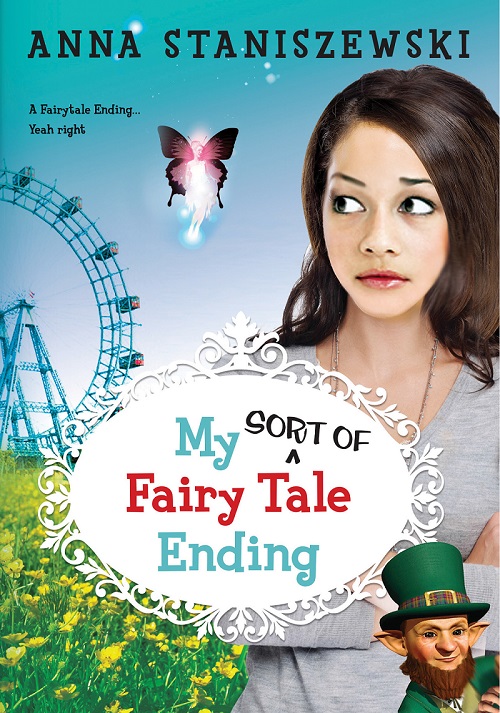
Anna Staniszewski, author of the hilarious My Very UnFairy Tale Life seriesthe most recent of which, called My Sort of Fairy Tale Endingreleases next month, discusses writing middle grade fiction. A topic she is well-versed in. Welcome, Anna!

My-Sort-Of-Fairy-Tale-Ending-CoverHow to Write Middle Grade Fiction in Two Simple Steps

What’s the hardest thing about writing middle grade fiction? Being an adult. Really. Your adult self likes to get in the way when you’re writing for 8-12 year olds. Your adult self is judgmental and bossy. It thinks it knows best. Sometimes it won’t shut up.

Here’s my advice when you’re writing middle grade fiction: Try to quiet the adult part of your brain as much as you can and consider these two questions.

1. How can I be the child protagonist?

2. How can I let the child protagonist be him/herself?

Let’s tackle the first question. How can I be the child protagonist? You can’t, right? Because you’re an adult. Well, I’m not sure that’s true. For one, I think many of us have inner children that we can tap into. (And some of us never quite mature beyond the age of thirteen, anyway.)

I’ve found that middle grade books that don’t quite work feel like they were written by an adult instead of told by a child character. To avoid this trap, try to tap into those feelings of what it was like to be the age you’re writing about. Do some journaling as your younger self, if that helps.

Also, do your research. Try to find a (non-creepy) way to spend time with kids and listen to what they talk about, care about, etc. Trust me. This will help. And remember that you’re not writing about all children; you’re writing about one particular character who happens to be in elementary school or—even worse—middle school.

And now on to the second question. How can you let the child protagonist be herself? For one, you need to spend a lot of time working out this specific character, what she wants, what she needs, etc. But also, try to quiet that adult voice that might be tempted to judge your character’s actions or to medicate her or to call her mother.

Because here’s the thing: Your young character might be smart and resourceful, but chances are she has less world experience than you do. She’s going to make mistakes. Maybe big mistakes. Let her. And don’t worry about what kind of example she’s going to set for other kids. If you try to make an example of her, she’ll feel fake. Let her mess up and learn and BE HUMAN. Then she’ll feel real.

So that’s it. How to write middle grade fiction in two simple steps. Easy, right? Not exactly. But when it all comes together, it really is worth it. Trust me. I’m an adult.

My Sort of Fairy Tale Ending blurb:

Happily ever after? Yeah, right. Jenny’s search for her parents leads her to Fairy Land, a rundown amusement park filled with creepily happy fairies and disgruntled leprechauns. Despite the fairies’ kindness, she knows they are keeping her parents from her. If only they would stop being so happy all the time-it’s starting to weird her out! With the help of a fairy-boy and some rebellious leprechauns, Jenny finds a way to rescue her parents, but at the expense of putting all magical worlds in danger. Now Jenny must decide how far she is willing to go to put her family back together.

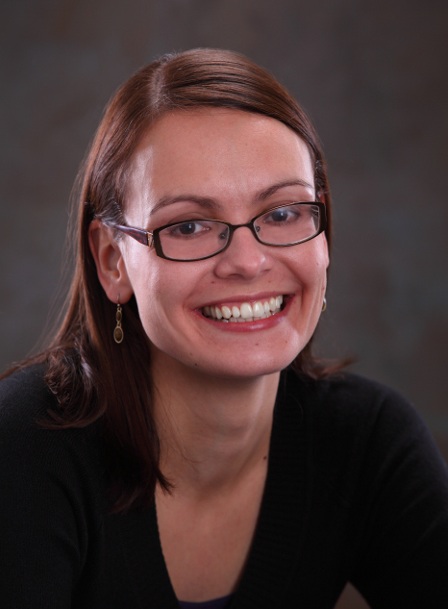
Anna_StaniszewskiAbout the Author:

Born in Poland and raised in the United States, Anna Staniszewski grew up loving stories in both Polish and English. She was named the 2006-2007 Writer-in-Residence at the Boston Public Library and a winner of the 2009 PEN New England Susan P. Bloom Discovery Award. Currently, Anna lives outside of Boston with her husband and their black Labrador, Emma.

When she’s not writing, Anna spends her time teaching, reading, and challenging unicorns to games of hopscotch. She is the author of My Very UnFairy Tale Life and its sequels, My Epic Fairy Tale Fail and My Sort Of Fairy Tale Ending, all published by Sourcebooks Jabberwocky. Look for the first book in Anna’s next tween series, The Dirt Diary, in January 2014, and visit her at www.annastan.com.

Scott R. Caseley Author of Isosceles on Females in YA

A special treat today as another male author weighs in on the Females in YA series on the blog. Returning guest poster Scott R. Caseley, author of the YA mystery Isosceles, discusses the voices in his head (c’mon, writers, you all know we have ’em!). Welcome back, Scott!
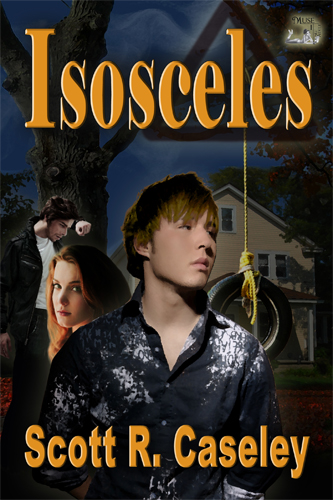
Isosceles_50cf70dc9b4fb“Following A Female Voice”

Written by Scott R. Caseley

When going on a road trip, a GPS device sits on my windshield directing me how to get to the destination. I imagine that this faceless individual is a person that’s been there before and knows how to lead the way. This has a direct correlation to all the great stories that have been or have yet to be written. Choosing the right voice to tell the story is key. The difference between GPS technology and literature is, you have a set number of voices to choose from on the former.

Thankfully, when writing a book, you can select from a limitless amount of voices to guide your story along.  In my own experience, I don’t know right off the bat whether it will be told from a male or female point of view, I just end up going with whichever character not gender will serve the plot best. No matter which person ends up being the voice telling the story, including as narrator in some cases, I always aspire to make them complex, flawed, and as human as possible.

For my novel, Isosceles, there were three main characters to choose from; Sean, Madeline, and Trey. I thought of Trey and Madeline as being strong-willed individuals who had judgments on everything who wanted to tell me this story about him dying and what affect it had on her and their mutual best friend Sean’s life. However, as quickly as I thought of using them, I discarded the idea. With her opinionated personality I decided she would be too much in everyone’s way including her own to tell the story the way I felt would be best. Additionally, I decided I didn’t want to end the story with his death, as would certainly be the course of action I would take if Trey were narrating. I ultimately chose to tell it from Sean’s point of view, because I felt that the story needed to have a more observational bent to it to make it most objective.

However, Madeline’s voice lingered on my mind during the whole writing process as determined women have always been a joy to create, as I have known many of them in my life and stories featuring them like The Girl With The Dragon Tattoo and Bridge To Terabithia are favorites of mine. Though, I also know a number of shy women who like to hide out in the background and rather enjoy some famous shy female characters too. Still, when I create my female characters, I’m not basing any of them exclusively on the real and fictitious women on my mind who have either trait. If I based something on someone entirely, it would not serve the story, unless the story was just about that particular person. I find creating hybrids between real and imagined much more fascinating for the stories I have already done.

Moreover, no character in any of my stories has been based on people solely of their gender. I find traits most interesting when they can be found in both sexes. Taking a character off the stereotypical path of being a guy, or being a gal, is a bit like choosing an alternate route on your GPS. You’ll still get where you want to at the end, but what you’ll experience or see along the way may be much more interesting then just sticking to the main roads, or the most common routes you feel everyone has gone down before.

Madeline, my aforementioned character in Isosceles is in love with Trey, and friends with Sean, but she’s got a lot more to her than that. She doesn’t aspire to be popular in school, and prefers to do her own thing. She’d much rather be a ‘floater’ in all the cliques and help those in need, counsel them, etc. She also lives life on her own terms, and doesn’t wait around for a guy to lead her on her way, she just goes forward and takes the chances. She excels in school and even graduates valedictorian. With all these strengths, she does have her share of weaknesses. I’ll let you read the book to decide for yourself what you think they are.

For all my efforts, I had critics who lauded and others who loathed her. This inspired me to want to tell a future story at least in part from a female point of view. I feel confidence in the ‘voice’ I gave Madeline, and will give my readers more female options to choose from on the next journeys my pen takes them on. Who knows maybe someone with her traits may be the narrator sometime. All I ask of you, my readers is to not be alarmed when the route takes you off the main road, just sit back and enjoy the ride, because if I do my job right, my female characters will always bring you to the proper destination.

Isosceles blurb:

When he finds his best friend Trey Goodsby dead and almost completely submerged in a bathtub filled with bloody water, Sean McIntyre is determined to find out if it was an accident or suicide. If it was suicide, why did he do it? And, did his death accidental or intentional have anything to do with Madeline Edwards, the woman who came between them constantly through their thirteen-year friendship? Isosceles, a coming-of-age mystery romance begins with the death of Trey Goodsby, and explores his relationships with family, friends, his romances, and which of the circumstances he found himself in that led to the tragic event, and the repercussions for those he left behind.

Isosceles can be purchased at the MuseItUp bookstoreAmazon.comAmazon UKBookstrandCoffee Time Romance, and other ebook retailers.

About the Author:

Scott R. Caseley was born in Nashua, New Hampshire. He gained an interest in writing in elementary school in nearby Hudson. Growing up, he carried a small notebook or pen on family trips making observations and frequently turned them into poems or short stories. While attending Franklin Pierce University, he co-wrote and co-directed a student film. After graduating, he wrote and directed a dramatic feature, co-wrote and directed a documentary and conducted interviews for an online magazine. He’s also passionate about acting, and he’s enjoyed performing on stage, in bit parts on film, and is also a trained voice actor. In addition to his creative pursuits, he is passionate about healthy living. He follows a fitness regimen consisting of several activities such as; weight training, walking, swimming, yoga, and Zumba. He complements this by cooking several nutritious examples of international and American cuisine. Last, but certainly not least he also enjoys just spending time with family and friends until the early morning hours with plenty of laughter and coffee. You can find more about Scott on Facebook, Twitter (@scottrcaseley), Amazon, and his website.
Team Editing with Erin Callahan and Troy H. Gardner Authors of Tunnelville

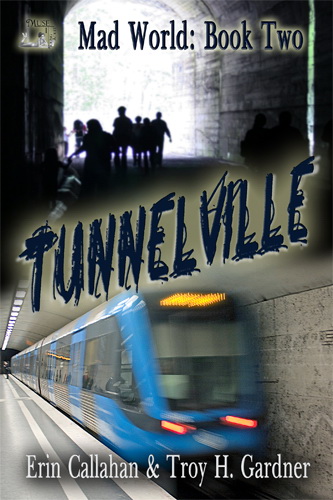
Today I have returning guest posters Erin Callahan and Troy H. Gardner authors of  Tunnelville, the second book in the Mad World Series. They are talking team editing. Welcome, Erin and Troy!

Tunnelville_333x500Team Editing

by Erin Callahan & Troy H. Gardner

Q. So you wrote a book, now what do you do with it?
A. Edit, edit, and then when you’re done, you edit it two more times.

Writing a book is only the first act of the long process of having an idea grow into a final novel. Once the manuscript has a beginning, middle, and end (hopefully), then it’s time to go back and revise.

With the split narration technique employed in the Mad Word series, our editing process starts when we combine all of the chapters into one file. At this point, either Erin or Troy has the file and works on it before passing it off to the other. We now use the Track Changes feature of Word, which allows you to track changes (well named, isn’t it?) in the document. This tool is invaluable when editing with a partner, as it allows you to quickly see what changes and comments your partner has added to the draft. It also reminds you which of those changes you made, which can occasionally get confusing. We also save each version of the manuscript with a new date. This makes it easy to tell which version is the most recent and preserves all the old versions, in case we decide to revert back to an earlier draft of a particular scene.

In the initial pass through of the manuscript, we mostly look for global issues (although we’re always on the lookout for typos). We look for inconsistencies in the timeline and the flow of each chapter and scene break. It’s not unusual for a first draft to have one narrator’s story progressing over two weeks in the course of three chapters, and the other narrator only two days. Once we notice a timeline issue we decide which version flows best (or brainstorm a third route), and how to rework one of the narrations to fit. The final version usually includes tweaks to both narrators’ chapters.

Similarly, one chapter will often flow directly into the next with a continued scene, and we must make the change in narration consistent. For instance, in Perfection, a character passes out at the end of one of Max’s chapters and Troy wrote a few more paragraphs of Max being concerned. Meanwhile, Erin had written Astrid’s following chapter picking up immediately as the character passes out. This made the transition somewhat jarring, so we cut the last few paragraphs of the Max chapter.

During this stage, we sometimes combine extremely minor characters who only have one or two lines. This beefs up the presence of more important characters and makes the story less confusing for readers to keep track of.

We use Track Changes to leave copious amount of notes for each other about things we love or aren’t fond of. Once these kinks are mostly worked out, we pass the manuscript back and forth for another round of deeper edits to tackle those notes. Sometimes these notes are as simple as one of us asking about a character’s motivations, but they can also be rewrite suggestions or telling Troy that his writing sucks (just teasing you, Erin) pointing out inconsistencies.

Once we’re past the global editing stage, we move on to more minute details, such as tweaking dialogue, changing passive verbs to active ones, and deleting repetitive language. Though it can be tedious, we find the best way to tackle this level of editing is to examine each sentence and consider how it could be made stronger. We think about whether it could be made sharper, cleaner, and clearer, or whether it could benefit from a more dynamic verb or more descriptive adjectives. Fancy prose can be fun, but if you consistently use very “purple” verbiage, you risk pulling your reader out of the story. We use the sentence-by-sentence editing stage to try to strike a balance with the language we choose.

Writing with a partner can be particularly helpful during the editing process, but we also sometimes use beta readers. A fresh pair of eyes can often clue you into issues you didn’t even know existed in your manuscript. And though we welcome general feedback from beta readers, we also provide them with a few focus questions to keep in mind while reading. Specific feedback from beta readers is essential when we’re concerned about whether a particular world-building concept is presented clearly or whether a character comes off as three-dimensional.

On a final note, although editing is a crucial part of the writing process, it can be incredibly stressful. We’re hard on ourselves (and each other), but we also know when to set the manuscript aside and take a break. Just as with a first draft, a little distance from a frustrating project can rejuvenate you and give your brain time to refocus.

Tunnelville blurb:

Following their panicked escape from Wakefield, Astrid Chalke, Max Fisher, and their friends find themselves adrift and on the run in western Massachusetts. After picking up a young thief with a complex philosophy, and dealing with the pains of prescription drug withdrawal, they make their way to Boston.

Drained by a long trek to the city, the damaged teens settle in an underground tunnel community—a city below the city that appears to lie on the fringes of both the world above and the world of magic. Among the eccentric tunnel folk, they encounter the fabulous Angie DeVille, a self-made hipster and socialite who takes them under her neon wing and envelops them in her breathless and fast paced life.

Funded by a seemingly ruthless organization, the relentless Dr. Lycen is tasked with hunting down the Wakefield escapees. But as Astrid and Max eke out a meager existence in their new home and do their best to stay off Dr. Lycen’s radar, they learn that new and even more harrowing threats might be lurking just over the horizon.

Read more about Tunnelville on Goodreads or on the Mad World Series website, and purchase it at the MuseItUp bookstore, AmazonBarnes & Noble, and other ebook retailers.

About the Authors:

Erin Callahan lives with her husband in the bustling metropolis of Hooksett, New Hampshire, and works for the federal government. She enjoys reading and writing young adult fiction, playing recreational volleyball, and mining the depths of popular culture for new and interesting ideas. A year after graduating from law school, she found herself unemployed and took a job as a case manager at a residential facility similar to the one featured in Wakefield. Though she worked there for just over a year, the strange and amazing kids she met will forever serve as a well of inspiration.

Troy H. Gardner grew up in New Hampshire and graduated with a B.A. in English/Communications with a dual concentration in film and writing from the Massachusetts College of Liberal Arts. He spent ten years working in the banking industry dreaming up numerous stories to write. When not writing, which is seldom, Troy busies himself jet-setting from Sunapee, NH to Moultonborough, NH. For more, check out TroyHGardner.com.

« Older posts Newer posts »

© 2026 Katie L. Carroll

Theme by Anders NorenUp ↑