Books for kids, teens, & those who are young at heart

Author: Katie L. Carroll (Page 82 of 142)

Meet Christopher Mannino Author of School of Deaths

Today’s guest post brings you an interview with Christopher Mannino as he celebrates the release of his YA fantasy School of Deaths. Welcome and happy book b-day, Christopher!
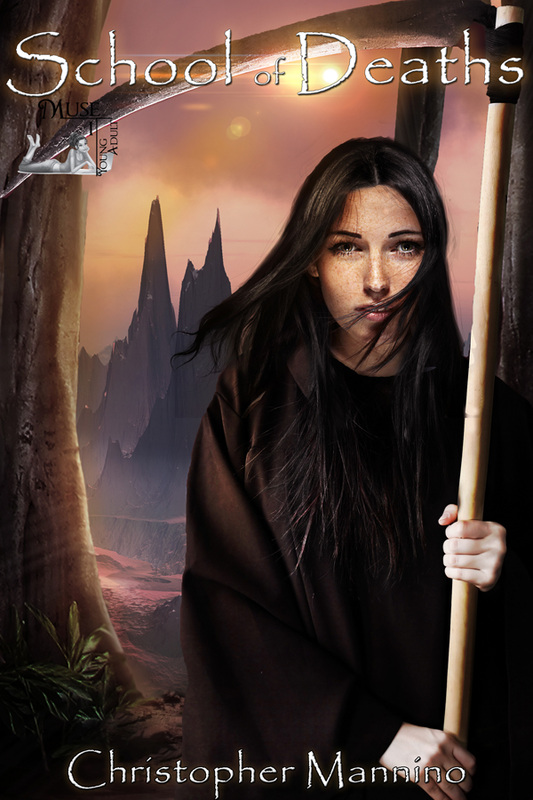
CoverSchoolofDeathsWhat inspired you to write School of Deaths?

The idea for School of Deaths emerged when I was finishing my graduate degree at Oxford University.  I spent four months abroad, far from everyone I knew.  Every week, I traveled somewhere I had never been before.  I would climb castle ruins in Wales and visit cathedrals in England.  One of my favorite trips was to Tintagel Castle in Cornwall.  I crept to the cliff face of Barras Nose, a stony peninsula jutting into the North Sea and overlooking the ruins of Tintagel, which some believe to be the birthplace of King Arthur.  It was dawn, there were no other people in sight, and I had to struggle against the wind, fighting to keep my balance so I didn’t crash into the ocean.  I imagined being buffeted by winds, alone, and what that would do to a character. That’s how I came up with the character of Suzie, alone in a world of men, buffeted by sexism.

Returning to Oxford, I envisioned Suzie alone in a strange school.  The idea of a school of trained Reapers appealed to me, giving a fantasy edge to her story.  In an early draft, the school of deaths resembled Oxford.  However a beta reader told me, very correctly, that Oxford was the inspiration for JK Rowling’s Harry Potter series.  I eventually changed the setting drastically to avoid that parallel.

What book had the most influence on you while growing up?

J.R.R. Tolkien’s Lord of the Rings trilogy was my first taste of high fantasy.  I read the series when I was eight, and by the time I was fourteen had re-read the series twice more.  I’d already been an avid reader, but something about Middle Earth appealed to me deeply, and it remains one of my favorite novels to this day.

In seventh grade, I was given a writing assignment where we had to create an original short story mimicking the style of one of our favorite authors.  Essentially, we were writing fan fiction, though none of us knew that term at the time.  My piece was a short story about the lost Entwives, and what occurred after they left Fangorn.  It was my first time writing anything creative that I enjoyed.

Years later, in Oxford, I was surrounded by Tolkien’s actual home.  Oxford was where he lived and taught, along with other writers such as CS Lewis and Philip Pullman.  I joined the Oxford Tolkien Society, and often ate at the Eagle and Child pub (where the Inklings, a group of writers including Tolkien and Lewis, would exchange ideas).  For me to start my stories there was only appropriate.

What is your favorite part of the writing process? What is your least favorite part?

I love to dream.  My favorite part of the writing process is the very beginning, when an initial idea worms its way out of my subconscious and into my thoughts.  As I work on the first draft, I enjoy seeing that idea grow, meet other ideas, and change.  At this point, the novel is like a movie playing in my mind.  Characters act and react with epic music and stunning visual effects.  I’m so excited that I want to keep coming back to the keyboard, and keep sharing my ideas.

My least favorite part is all of the things that go with writing that aren’t writing.  The long and difficult processes of finding a publisher, and now for marketing are frustrating.  The editing phase was not my favorite, but I did enjoy seeing the story improve.  With marketing and publishing the idea does not change, and the amount of time required is very high.  For people such as myself, who work full-time jobs, the time spent on elements of the writing process that do not involve writing is an annoyance.

How has your work with high school theatre influenced your writing?

I am fortunate enough to be pursuing both of my dreams.  Theatre and writing are two of my greatest passions.  One way teaching has influenced me, is through my daily work with teenagers.  I am a young adult author who interacts with actual young adults on a daily basis.  This helps me understand their needs, wants, and desires better than authors who do not work with kids.  Theatre is also highly creative.  I see the world in a slightly different way thanks to theatre, and the use this ability to create abstract visualizations when writing.

On the other hand, my job makes writing more difficult at times.  I am usually the first teacher to school and the last one to leave, because of the many theatre programs I run.  Time is not my ally, and I struggle to find time to write.  Most of my first drafts are done purely in summer vacations.

If you could have one superpower, what would it be?

Shape changing appeals to me a lot.  I’d love to take the form of a bird and soar through the sky, or dive deep under the ocean as a fish.  Shape-changing is the most fun power I can envision.  However, if I had to pick the most practical superpower, it be the ability to manipulate time.  If I could have infinite time to get things done, or perhaps travel through time, my life would be drastically different.

What is something funny/weird/exceptional about yourself that you don’t normally share with others in an interview?

Ok, I did share this in one other interview, but it’s the funniest thing I can think of.

I once saw a dinosaur fly.  It’s actually one of my earliest memories.  When I was about four, my parents brought my brother and me to a park by the Charles River in Boston (where we lived).  I was pushing and pulling on my brother’s stroller, then yelled and pointed towards the river.  “There’s a dinosaur flying!”  I shouted.  My dad smiled, rolling his eyes at his son’s already overactive imagination.  I pointed again, very insistently.  My mother turned and gasped at the brontosaurus hovering above the river.  “Told you so,” I said.  The life-size model brontosaurus was on its way to the Science Museum, and was being flown by helicopter.  It’s a sight I’ll never forget.

School of Deaths blurb:

Can a timid girl find bravery as the first female Death?

Thirteen-year-old Suzie Sarnio always believed the Grim Reaper was a fairy tale image of a skeleton with a scythe. Now, forced to enter the College of Deaths, she finds herself training to bring souls from the Living World to the Hereafter. The task is demanding enough, but as the only female in the all-male College, she quickly becomes a target. Attacked by both classmates and strangers, Suzie is alone in a world where even her teachers want her to fail.

Caught in the middle of a plot to overthrow the World of Deaths, Suzie must uncover the reason she’s been brought there: the first female Death in a million years.

Purchase School of Deaths on the MuseItUp bookstore, Amazon, or Barnes & Noble.

Mannino_shot2About the Author:

Christopher Mannino’s life is best described as an unending creative outlet. He teaches high school theatre in Greenbelt, Maryland. In addition to his daily drama classes, he runs several after-school performance/production drama groups. He spends his summers writing and singing. Mannino holds a Master of Arts in Theatre Education from Catholic University, and has studied mythology and literature both in America and at Oxford University. His work with young people helped inspire him to write young adult fantasy, although it was his love of reading that truly brought his writing to life.

For more about Christopher and his book check out his website, his blog, Goodreads, Twitter, or Facebook.
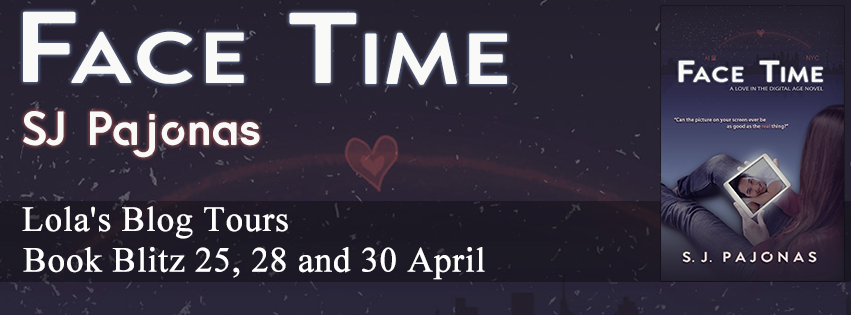
Top Ten Places to Visit in Asia from S.J. Pajonas Author of Face Time

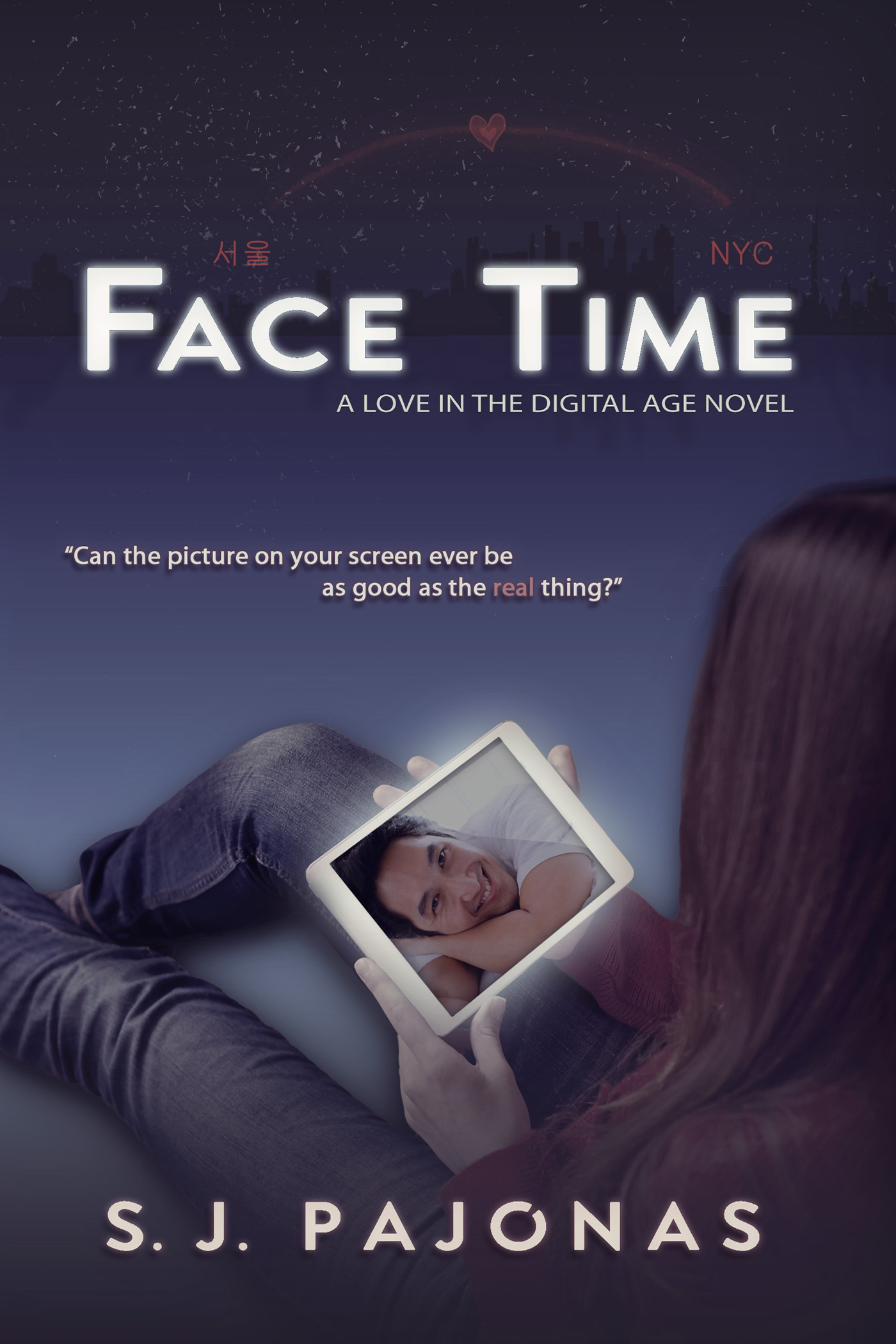
S.J. Pajonas is back on the blog to celebrate the release of her contemporary romance Face Time (Love in the Digital Age #1) (see my 5-star Goodreads review here). On this stop of the tour, organized by Lola’s Blog Tours, catch the travel bug with the top ten places to visit in Asia.You can view the whole blitz schedule here. And don’t forget to enter the giveaway!

Face Time banner

I’m really in love with Asia, which will come as no surprise to anyone who knows me or has read my books. Japan is my first love, and I have traveled there, studied their culture and language, and now written three books in a series that’s Japan-inspired. But other parts of Asia are interesting to me too, and I’m dying to travel to most of the places in this list. Parts of FACE TIME take place in Seoul, Korea, and I hope that’s my next stop in East Asia someday. Laura spent a good deal of time in Thailand in her early twenties, and I think I’m actually jealous of her! Yes, it really is possible to be jealous of your own characters.

1. Tokyo, Japan (http://en.wikipedia.org/wiki/Tokyo) – This would be my first choice in East Asia even though I’ve already been there. Tokyo is so big, so dense, that you could live there your entire life and still only see a fraction of it. It may feel very foreign or it may feel like a second home. Tokyo is polarizing city. Go to Tokyo for the clean and orderly sidewalks and public transportation, the technology, the food, and the absolute in crazy and weird. Where else will you be able to go to a cat cafe or a cafe where you can sleep next to someone for the night (no touching)? http://www.tofugu.com/2012/10/05/japans-weird-themed-cafes/

2. Bangkok, Thailand (http://en.wikipedia.org/wiki/Bangkok) – I’ve been to Bangkok, and it is an amazing city. It’s definitely not as clean or orderly as Japan, but Thailand has a lot going for it. The Buddhist culture is peaceful and easy to get along with (as long as they’re not in the middle of an uprising). The King of Thailand is benevolent. The food is incredible, and, if you love summer, it’s always hot there. Go to Bangkok for the edge-of-your-seat tuk tuk rides, the giant golden reclining Buddha, the easy access to Southern Thailand and its beaches. Also, your US dollars will go far in Thailand. It’s possible to live cheaply and comfortably there for a long time on very little cash.

3. Seoul, Korea (http://en.wikipedia.org/wiki/Seoul) – Just across the water from Japan is Korea, so if you visit one, it’s easy to visit the other. Seoul is another huge metropolis which grew after it hosted the Olympics in 1988 and the FIFA World Cup in 2002. It is also clean and orderly and the public transportation is easy to use. Seoul is one of those cities that blends old and new really well. Ancient temples stand next to office buildings, and there’s always something going on worth watching or visiting. Go to Seoul for the kimchi, the coffee, the soju, and the possibility of being a background extra in a K-drama. Ha! You know you want to.

4. Macau, China (http://en.wikipedia.org/wiki/Macau) – Macau is actually in a Special Administrative Region of China like Hong Kong, and I really want to go to Hong Kong as well, but Macau draws my attention because of the gambling. Supposedly it’s bigger than Vegas, and I’m totally intrigued by gambling overseas. The food here is a mix of Chinese and Portuguese, and then there’s also a distinct Macanese cuisines as well. Go to Macau for the unique mix of consumerism, Old World China, baccarat, and clash of cultures.

5. Kyoto, Japan (http://en.wikipedia.org/wiki/Kyoto) – If you want more of the Old World Japan then Kyoto is a better bet than Tokyo. Time has come to a standstill in many areas of Kyoto. This is the city where you can see geisha (known as geiko) walking in the streets to and from parties, ancient Japanese temples and castles, Noh plays and festivals. If you can make it here during hanami season to view the cherry blossoms, you’re in for a treat. Go to Kyoto for a ten-course traditional kaiseki meal, a party with a geisha, and stay in a ryokan. You won’t regret it.

6. Taipei, Taiwan, China (http://en.wikipedia.org/wiki/Taipei) – Taipei seems like a fun city, full of fast-moving people and Chinese tradition. It’s well known for its temples, festivals, and food, shopping, and easy public transportation. Go to Taipei for the excellent seafood, the Chinese New Year celebrations, and the hour-long hair washing boutiques. It’s supposedly better than a massage.

7. Beijing, China (http://en.wikipedia.org/wiki/Beijing) – I suppose if you visit one place in China, this should be it. As the capital of PRC, it holds a lot of treasures including access to the Great Wall of China and the Forbidden City. Beijing is further to the north in China, so if you don’t like cold weather, you shouldn’t travel in winter. Go to Beijing for the Peking Opera, the chance to stare at Qing Dynasty treasures, and the Beijing Zoo Panda House for pandas!

8. Hanoi, Vietnam (http://en.wikipedia.org/wiki/Hanoi) – I’m dying to visit Vietnam. Modern Hanoi is colorful and chaotic, and filled with easy things to see and do. We did fight a war there in recent memory, but tourists are still welcome in the country. Vietnam still feels like a closed book to me. My cousin went there a few years ago with his wife who’s Vietnamese, and he was charmed by the people, the food, and architecture of temples and what wasn’t bombed into the ground. Go to Hanoi for the history, the pho and bahn mi, and the chance to ride a scooter with thousands of others through the streets at breakneck speed.

9. Manila, Philippines (http://en.wikipedia.org/wiki/Manila) – I don’t know much about the Philippines but I hear it’s awesome there. The capital city of Manila is rich with museums, gorgeous Catholic churches, and a fine array of cuisine from all neighboring regions from China, Thailand, and Malaysia. Watch the sunset on the bay from a rooftop restaurant and then hit the clubs in Makati for dancing and drinking all night long. Go to Manila for the Filipino home cooking at Cafe Juanito, halo-halo, and the Marikina Shoe Museum dedicated to all of Imelda Marcos’s shoes. Yes, a shoe museum.

10. Singapore (http://en.wikipedia.org/wiki/Singapore) – Singapore is its own city-state (as my husband says, like the Vatican) and it’s situated on the Malay penninsula. I know Singapore gets a bad rap for its harsh laws, but I have known people to live there and it’s quite a pleasant and happy place to live. There’s hardly any crime, the streets and surrounding area are clean, the people are hospitable, and the food is amazing. They have these large food courts full of delicious Asian meals (meat, noodles, rice, seafood, you name it). Singapore has plenty of sights to see and lots of religious festivals each year to witness. Go to Singapore for the Merlion, the fish head curry, and the extremely hot climate (if that’s your thing.)

Want to get on a plane now? Tell us where you’d go!

Face TimeFace Time blurb:

After the best first date ever, Lee thought Laura was funny, intelligent, and impulsive; a whirlwind of bright laughter and happiness. Laura loved Lee’s sweet smile and the way he expertly filled in every awkward pause. He held her hand and then pulled her in for the most perfect kiss she’s had in years. What could possibly be wrong? Just the 7000 miles that separates them the next day.

Even though Lee has gone home to Seoul, Laura can’t stop thinking about him. What starts as an innocent text thanking him for their dinner date becomes something much more: someone either of them can’t live without. But Laura’s got a live-in mother going through a midlife crisis, and Lee’s stressful traveling schedule means they’ll be apart for some time. Life, family, and a complicated past also get in the way, and they’re both going to need actual face time to figure it out.

You can find Face Time (Love in the Digital Age #1) on Goodreads. Purchase Face Time on Amazon, Barnes & Noble, Kobo, iBooks, All Romance ebooks, or Smashwords. Or request a review copy of Face Time through Netgalley: https://www.netgalley.com/catalog/show/id/45757.

Want to know more about Face Time?

– You can listen to the playlist: https://soundcloud.com/spajonas/sets/face-time-a-love-in-the

– Visit the visual inspiration Pinterest board: http://www.pinterest.com/spajonas/face-time-love-in-the-digital-age-1/

– View a teaser trailer from Laura’s point of view: http://www.youtube.com/watch?v=HQeJY3CLLBA

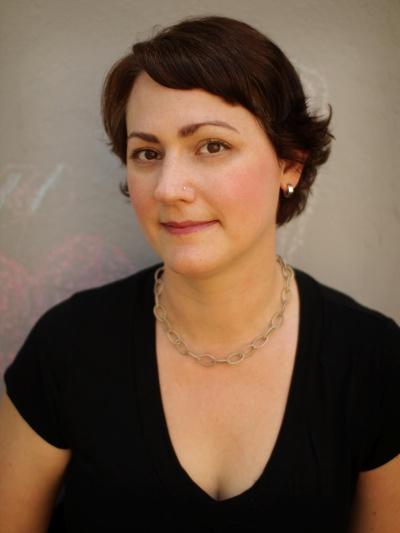
sj pajonasAbout the Author: 

S. J. Pajonas loves all things Asian and has been in love with Japan and the East for as long as she can remember. Writing about Asia and Japan came naturally after studying the culture and language for over fifteen years. She studied film and screenwriting first and eventually segued into fiction once she was no longer working a full-time job.

Face Time is the first novel in the Love in the Digital Age series, and Pajonas’s first foray into Korean culture and families. Along with Removed and Released in the Nogiku Series, she continues to take the cultures of Asia and weave them into stories that appeal to people from around the world. Her writing is described as unique and unpredictable. Expect the unexpected.

Stephanie lives with her husband and two children just outside of New York City. She loves reading, writing, film, J- and K-dramas, knitting, and astrology. Her favorite author is Haruki Murakami and favorite book is The Wind-up Bird Chronicle.

You can find and contact her website, Facebook, Twitter, Goodreads, Pinterest, Flickr, Instagram, or Tumblr.

a Rafflecopter giveaway

banner Lola's Blog Tours

What Taylor Swift Can Teach Writers by Jeff Chapman

Jeff Chapman returns to the blog today to celebrate the release of his latest story, Last Request: A Victorian Gothic. He brings us an enlightening and fun piece on storytelling. Welcome back, Jeff!

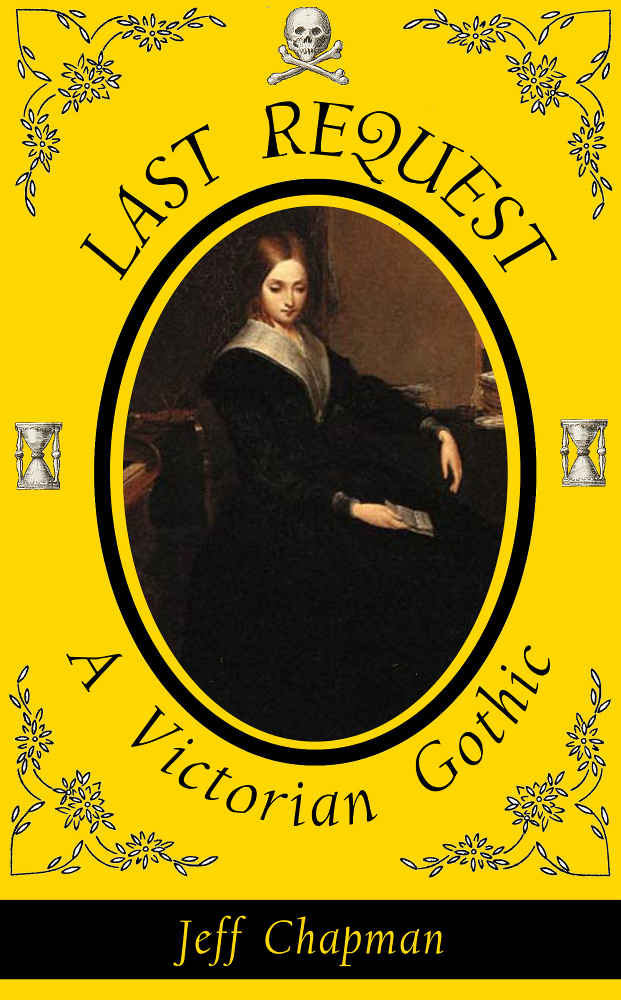
LastRequestCover621x1000What Taylor Swift Can Teach Writers

by Jeff Chapman

My daughters recently discovered Taylor Swift. You know what that means for me. I tried to interest them in U2, The Doors, or Mazzy Star but no luck. So, as I’m listening to Taylor Swift ad nauseum, the writer in me starts analyzing the lyrics. Why are these songs so popular? (I have to give Swift some praise here for writing songs that at least have some story to analyze.) Here’s a link to a Youtube video for “You Belong to Me,” one of her more popular tunes. It’s safe for work. Unless you’re a guy trying to maintain your macho credentials. In that case you should wait until you get home and everyone is asleep.

Let’s begin with a few observations on the video. As for the guy, if that’s the girl next door, why does he ever leave the house? And why did he close the curtains? And what self-respecting father would allow his daughter to have a bedroom window looking directly into a guy’s window? I would have that window bricked over so fast.

As for the story, we have a geeky girl (glasses, books, and studying) who has a crush on a very popular boy. He’s out of her league. It’s hopeless. But, his uber-popular cheerleader girlfriend is no good for him, doesn’t appreciate him. If he would take a serious look at geeky girl, he might understand that she’s the best girl for him. And that’s exactly what happens in the end.

So why is this song and others like it so popular? The story is every less-than-popular girl’s fantasy. Swift is doing something smart. She’s aligning herself with the majority of teenagers, putting words to the hopes and dreams of the masses along with a catchy tune. Writers often hear the mantra “write the stories you want to read.” The idea is that those stories will be your most impassioned work. We hear successful writers repeating that phrase as if it’s a formula for success. Is it? What if what you want to read isn’t what loads of other people want to read? Will you create great stories that no one reads? Maybe, instead of focusing inward, we should tailor (pun intended) our stories to resonate with the hopes and dreams of the masses. Something to think about.

Last Request: A Victorian Gothic blurb:

“For the love of God, cut my head off.” The last request in Uncle Silas’s will shocks everyone speechless, everyone except his favorite niece, Anna. More than death itself, the claustrophobic Silas fears a premature burial. Will her elders carry out his request? Anna is certain they will not. It’s up to her to do the right thing, even if it is a bit grisly. Armed with butcher knife and candle, Anna heads for the crypt underneath the church in the dead of night. All does not go according to Anna’s careful planning. 

Step inside a dark story in the tradition of the penny dreadful, at times humorous and horrifying, but don’t close the door behind you. Someone might lock you in. Last Request can be purchased on Amazon. 

Jeff_chapman-headshot-small-80x109About the Author:

Jeff Chapman writes software by day and speculative fiction when he should be sleeping. His tales range from fantasy to horror and they don’t all end badly. He lives with his wife, children, and cats in a house with more books than bookshelf space. You can find him musing about words and fiction on his blog or you can connect with him on Twitter (@JeffChpmnWriter), Facebook, Goodreads, or his blog.

Jeff’s latest title is Last Request: A Victorian Gothic, available for your Kindle at Amazon. At times horrifying and humorous, Last Request follows a young girl’s attempt to carry out her late uncle’s curious request.

Magnetic Poetry for National Poetry Month

April is National Poetry Month, and one of my favorite forms of poetic expression is the magnetic poetry set on my refrigerator. It’s fun because anyone who stops by my kitchen can play and it’s always anonymous, so no need for self-consciousness to hinder your creativity. And here’s the latest set of poems:

  • a giggle is the voice of the soul  (to this I say, “Giggle on!”)
  • freeze picture moon spark  (this is somehow evoking a very interesting image in my mind)
  • genius on little man  (a bit hippieish, but I can appreciate the sentiment)
  • believe in angel s but know whisper s come from the dark shadow s  (note to self: stay out of dark places)
  • keep a spider brain warm  (because nobody likes cold spider brain)
  • some want bird taste fruit  (when I really think about this one, it can mean so many different things…)
  • to a certain woman that s you  (oh, me…why thanks)

How have you celebrated National Poetry Month? (Did you even know we had a National Poetry Month?)

A No-Nonsense Approach to Revision by Patrick Scalisi

My writing/editing buddy from college Patrick Scalisi graciously agreed to guest post on the blog today, and with great advice on the dreaded (at least if you’re me it’s dreaded) revision. Be sure to check out his book coming later this year from Hazardous Press. Welcome, Patrick!

A No-Nonsense Approach to Revision

by Patrick Scalisi

Editing is often a dirty word among writers. I myself have often used the axiom that creating is more fun than correcting, which is to say that revising one’s work is less thrilling than the sheer adventure of crafting a new story from scratch.

Like it or not, though, revision is an essential part of the writing process, the method by which you make your work truly shine. I’m not going to lie and say that editing isn’t an arduous, frustrating and time-consuming process. It is. But editing also lets you put your best self into the world when your book, short story or poem finds its way onto a bookshelf or someone’s e-reader.

As a professional editor for the past 10 years, I’ve had the opportunity to collaborate with writers whose work has been both very rough and very polished. Here are some insights I’ve gleaned that can help make the editing process as fruitful as possible.

Edit both on screen and on paper. Almost everyone does their writing on computers and tablets, so the inclination is strong to edit on these devices as well. For a first run-through, editing on screen can be a good idea. But make sure to print your work and edit on paper as well.

While science is still on the fence about whether our eyes can better interpret text on paper versus on screen, most studies agree that our brains work differently based on the medium we’re reading. This difference is important. Often, you’ll catch errors on paper that you missed on screen and vice versa. So no matter what you’re writing, make sure to integrate a paper edit into your revision process.

Eliminate Unnecessary Words. Your word processor’s extended search-and-replace feature (often Ctrl-F in Windows or ⌘-F on a Mac) lets you easily find problem words — like adverbs — that can weaken your manuscript.

During the revision process, I like to do a document-wide search for “ly.” This lets me identify most of the adverbs and evaluate each one to see if it’s really necessary or if it can be replaced with a stronger verb.

In addition, this list from writer Juliet Madison is extremely helpful in identifying and replacing other trouble words like “very” and “almost.”

Get HONEST opinions from people you trust. At some point, you’re going to want to share your work with someone else to get an outside opinion on the story / novel / poem’s strengths and weaknesses. These people are often called “beta readers.” Choosing beta readers, however, can be just as tricky as finding a stronger verb to replace that adverb.

Beta readers should, above all else, be someone that you trust to give HONEST feedback. Surrounding yourself with yes-men who tell you that the work is “perfect” and “not to change a thing” does a disservice to you as a writer because you’re not receiving the constructive criticism you need to make the work as strong as possible.

You’ll notice I used the term “constructive criticism.” A good beta reader will tell you what he or she both liked and disliked about your work. The very best beta readers can also offer suggestions on how to fix existing problems.

So, who makes a good beta reader? In short, anyone who isn’t going to sugarcoat it for you. Parents and siblings are often a bad choice, but some writers have such strong relationships with their families that they can count on mom or dad, brother or sister to say what they liked and what they didn’t about the work. Friends who read a lot are also viable candidates.

It’s also important that you emphasize to your beta readers that their honesty won’t affect your relationship. Make sure you mean this, too. The truth is that writers have to develop thick skin to deal with rejection, critical reviews and more. Steeling yourself for feedback from your beta readers is a good place to start.

One of the best pieces of advice that I ever got from a writing teacher is to treat each sentence like a painting that you want to make as perfect as possible before moving on to the next one. A collection of these “paintings” form paragraphs, chapters, entire works whose aim is to captivate your readers. Revision is a critical part of the writing process and the one that will ultimately make your work as rewarding as possible for both creator and audience.

IMG_9509(1)About the Author:

Patrick Scalisi is a journalist, magazine editor and author from Connecticut. He has published fiction in several magazines and anthologies, including The Willows, Neo-opsis, Shadowplay and Penny Dread Tales Vol. 1. Pat also edited The Ghost Is the Machine, a bestselling anthology of steampunk-horror stories from Post Mortem Press. His debut book, The Horse Thieves and Other Tales of the New West, will be released this year from Hazardous Press. Visit Pat online at patrickscalisi.com or facebook.com/patrickscalisi.

« Older posts Newer posts »

© 2026 Katie L. Carroll

Theme by Anders Noren — Up ↑