Books for kids, teens, & those who are young at heart

Author: Katie L. Carroll (Page 78 of 142)

Summertime and the Reading’s Easy

I’m dubbing this summer my summer of rereading. There’s something comforting and easy with reading the familiar. And with a newborn and an almost 3-year-old, I’m in much need of comfort and ease. I’m starting with the Harry Potter series because it’s been a few years since I’ve read any of those books and it feels like the right time to delve into the series again. No matter how many times I read these books, I always love them.

I flew through The Sorcerer’s Stone in no time and have started Chamber of Secrets. We’ll see how far I get before the summer ends. So far I’m finding lots of inspiration for my own writing. Being so familiar (I’ve read the first four books probably close to ten times) with the plots allows me to linger over the superb writing in a way I don’t tend to do when I’m reading a book for the first time.

Pretty much every summer I read Jandy Nelson’s The Sky is Everywhere, so that’s definitely on my list as well. This is a book about 16-year-old Lennie, whose 19-year-old sister has just unexpectedly passed away. I feel like this a book that speaks to my soul. I find it to be uplifting and healing but also very emotional. It hits a little too close to home, given that my sister passed away at 16 (when I was 19).

I’m also currently reading two other stories I haven’t read before, and I’m sure there will be other new books on my list. E. Lockhart’s We Were Liars has been on my list and I’ve heard great things about it, so I’ll probably try to get to that one. Sinner by Maggie Stiefvater (one of my favorite authors) also recently came out and will likely get read.

What are you all planning on reading this summer?

Middle Grade vs. Young Adult with Anna Staniszewski Author of The Prank List

Anna Staniszewski is one of my favorite guest bloggers because she always brings such insightful topics and discussions. Today, as she celebrates the upcoming release of her newest book The Prank List (The Dirt Diary #2)Anna is talking the difference between middle grade and young adult fiction. Welcome, Anna!

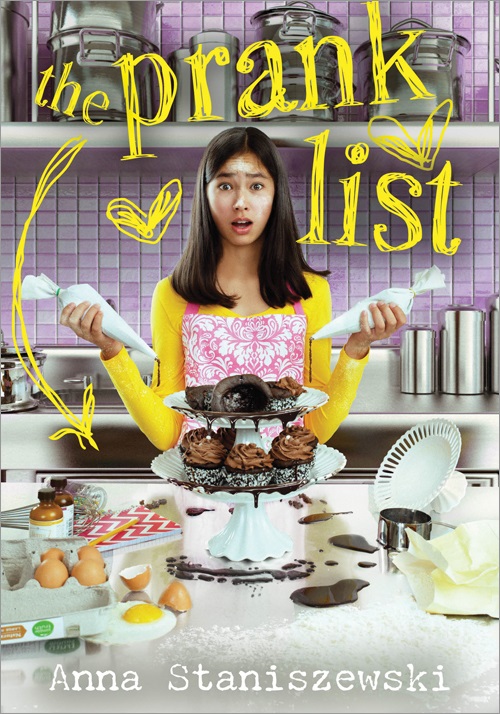
prank list cover 2What Separates Middle Grade from Young Adult Fiction?

by Anna Staniszewski

I get this question a lot, so I thought I’d tackle it here. Let’s start with a couple of definitions.

“Middle grade” is generally for ages 7-12, though it can skew a bit younger or older depending on the project (short chapter books vs. longer novels). Middle grade usually features protagonists in elementary or middle school, and if it deals with topics such as sex or violence, those tend to happen off-screen.The ending, while not necessarily happy, should be hopeful.

“Young adult” generally features teen protagonists (14-19) and is often a coming-of-age story for readers 12 and up. (The actual readership of YA varies quite a bit. You might have fifth-graders reading it, but you also have adults who read nothing else.) Issues such as sex and violence can be shown on-screen and can even be of a graphic nature, though you often won’t get as much detail as you would in adult books. Endings, while often hopeful, can sometimes be bleak.

Now that we have that out of the way, we can see that content isn’t necessarily the dividing line between MG and YA. The bigger distinction is how the content is handled, whether it’s off-screen and implied or on-screen and shown.

The protagonist’s age is often a factor, as well, although there is some wiggle room here, too. My main character in The Dirt Diary is 14, for example, but she’s in 8th grade. That puts her right smack in between the two genres, which is why I often refer to the book as “tween,” although it’s generally considered MG.

For me, the biggest difference between MG and YA is the character’s emotional journey. I’ve heard more than one person say that in MG, the character goes through lots of life-changing experiences but can still remain a child at the end. In YA, the character goes through lots of life-changing experiences that force him/her to become an adult. This might be too simplistic of an answer, but I think it goes a long way to explain the difference between the two.

In MG, you have characters exploring their worlds and experiencing what things outside of their own lives are like. In YA, you have characters exploring their own identities and figuring out where they belong in the world. The role of family is different in both; in MG, the family tends to be part of the story, both a support system and a source of conflict, whereas in YA, the family is often secondary or more a source of conflict than anything else. Again, this goes back to the idea of staying a child vs. becoming an adult. At some point, you need to find independence from your family (as many YA protagonists do) and strike out on your own.

Over the past decade or two, the MG and YA markets have changed quite a bit. It used to be that a book with a 14-year-old girl would automatically be labelled as YA, but now that you have more adults reading YA, the genre has started to focus on older and more mature protagonists. That means that MG has expanded too, including a wider range of books, sometimes those that feature younger teens.

Because the market is always shifting, I try not to drive myself too crazy with definitions, but I do try to keep in mind the general attitude in MG vs. YA. That, I think, hasn’t changed too much. In MG, we often still see characters branching out into the world, whereas in YA we see characters who want to find their places in it.

The Prank List blurb:

Rachel Lee never thought she’d fight for the right to clean toilets. But when a rival cleaning business starts stealing her mom’s clients, Rachel will do whatever it takes to save herself the horror of moving to Connecticut—which would mean giving up her almost, sort of boyfriend, her fantastic new pastry classes, and her best friend Marisol.

Operation Save Mom’s Cleaning Business is a go!

But when the series of pranks Rachel and her BFF cook up to take down the competition totally backfires, Rachel worries that her recipe for success is a dud. You know what they say—if you can’t stand the heat, stay out of the kitchen…

Anna StaniszewskiAbout the Author:

Born in Poland and raised in the United States, Anna Staniszewski grew up loving stories in both Polish and English. Currently, she lives outside Boston with her husband and their crazy dog. When she’s not writing, Anna spends her time reading, daydreaming, and challenging unicorns to games of hopscotch. She is the author of the My Very UnFairy Tale Life series and the Dirt Diary series. Her newest book, The Prank List, releases on July 1st from Sourcebooks. You can visit Anna at www.annastan.com.

The Best Part of Writing by Ally Malinenko Author of This Is Sarah

Have you heard of BookFish Books? It just so happens to be a new publishing company run, among others, by a couple of my best writing buddies, Erin Albert and Mary Waibel. And one of their new releases is This Is Sarah by Ally Malinenko. Ally is here to talk about her favorite part of the writing process. Welcome, Ally! 
THISISARAH_COVERThe best part of writing, for me, is the beginning. You know the part I’m talking about. That first moment where you see a character.

You picture her, standing on the train trestle, her hands clutching something. What? Anything. Down below someone calls her name and she starts running. Who is she? What is she running from? Why? What’s in her hand? In her head? In her heart?

That leads up to the first draft. I think a lot of people dislike the first draft. It’s full of mistakes.

Of bad writing.

Of atrocious moments of dialogue.

But I still like this part the best. The part when my brain spins faster than my fingers can slide over the keyboard. It’s all exciting and new and I’m not even sure what’s going to happen next. Look at me! I’m TELLING A STORY!

If only it was like that all the time.

Then comes editing, which should in fact be called Crippling Self Doubt. Revisions are difficult for me. Probably because I don’t take enough notes in the beginning. I don’t slow down. I don’t stop and think, say “Wait if X happens, what about Y?” I just write X X X X X X and then fall into some massive plot hole that I can’t claw my way out of. Next comes the wailing and gnashing of teeth.

And that was what I had been doing with the Sci-fi Time Travel TOME that I had been working on for years. The manuscript that no matter what I did it seemed determine to stay just inches out of my grasp.

And then something weird happened. One morning there was an image of a teenage boy, full of anger. Before he had a name I just called him “My furious boy.” And then a girl, trapped in a home she no longer knew how to navigate. In a family that was suddenly so foreign that she felt abandoned.

And the one person, his girlfriend, her sister, that they shared in common. The girl who got in her car one day and disappeared.

I slowly tried to fit them together like puzzle pieces – Colin (my furious boy) and Claire (my trapped girl), together on the good ship Heartbreak.

Like I said at the time I was (am) in the middle of a big revision on a very long, very complicated Time Travel Sci Fi TOME. But each morning, when I got up at 5 am to write, there was my furious boy and my sad girl. And over time, I started hanging out with them more.

I’m not going to say anything as ridiculous as “follow your Muse” because a) that sounds like the terrible sort of stuff that amateur (read: me) writers say and b) it makes it sound like your Muse is this elegant ghost-y thing in a white chiffon dress that sounds like Cate Blanchett when she whispers in your ear which is just ridiculous.

What I am saying is that sometimes your brain switches gears on you.

Go with it.

There’s a part of you that knows what story you want, what story you NEED to tell before you even do.

Trust that part of you. The rest is mostly typing.

This Is Sarah blurb: 

When Colin Leventhal leaned out his bedroom window on the night of May 12th and said goodbye to his girlfriend, he never expected it would be forever. But when Sarah Evans goes missing that night, Colin’s world unravels as he is transformed from the boyfriend next door to the main police suspect. Then one year later, at her memorial service, Colin makes a phone call that could change everything. Is it possible that Sarah is still alive? And if so, what is Colin willing to do to bring her back?

And as Colin struggles with this possibility, across the street, Sarah’s little sister Claire learns how to navigate this strange new land that is life without her sister. Even as her parent’s fall apart, Claire is convinced to keep on going. Even if it kills her.

THIS IS SARAH is a meditation on loss, a tale of first love, and a harrowing journey about what it is to say finally let go and say goodbye.

Excerpt:

They found her red Chuck Taylor sneakers five miles from where her car was, deep in the woods.

One was unlaced, as if she had undone it and slipped her foot out of it right there under that canopy of trees.

The other was still tied.

Snow filled them like little red candies covered in sugar.

In the police station, in that evidence bag, they seemed so small, as the snow slowly melted off them, staining the fabric and dripping into the bottom of the bag. I couldn’t imagine them fitting Sarah’s feet. I couldn’t imagine them fitting my own.

Sarah’s empty shoes.

I thought about how they’d never be worn again. How she would never slide her foot inside, how her fingers would never tug those laces and loop them closed.

Her room back home was filled with things that would go unused. They’d just sit there, waiting for Sarah to come home, collecting dust.

All the things Sarah left behind.

When I saw the shoes, sitting in the police station, a noise escaped me. Not quite a sob, but a cry—a shock of disbelief—and my hope retreated as I realized I was now one of those things. Like her clothes, her jewelry, her records or her shoes.

I was just another thing Sarah left behind.

Ally'sPictureAbout the Author:

Ally Malinenko is the author of the poetry collection The Wanting Bone (Six Gallery Press) and the children’s fantasy Lizzy Speare and the Cursed Tomb (Antenna Books). She lives in Brooklyn with her husband.

The Precipitous Birth of Baby Boy #2

Seems my boys always arrive with excitement. My first son (a.k.a The Boy, who will be three at the end of August) arrived 17 days early in the middle of Hurricane Irene (you can read his birth story here). Baby Boy #2 (which admittedly is not a great nickname…any suggestions on what his Internet name should be?) arrived during storm free weather, but with haste.

The word used by the nurses and doctors was “precipitous” and I was warned that if I should have any more children, everyone should know my last labor was fast. My water broke while we were getting The Boy ready for bed, and since my water had broken (which supposedly only happens to about 15 percent of women before labor starts…but I’m skeptical on this number b/c of my two labor experiences) with the first baby, I actually knew it was my water breaking this time (last time I was kind of hoping it was a bladder control issue!).

So we settled The Boy into bed and called the on-call doctor. Based my my history, which was a 12-hour labor with induction the first time around, she said it was up to me whether or not to labor at home or to come right to the hospital. We had to wait for my mother-in-law to come and to finish up packing the essentials in our bags, so we said we’d head to the hospital soon.

My contractions were steady at about 7 minutes and not too bad. Fast forward an hour or so and they were closer to 4 minutes apart and we were ready to go. Fast forward another few minutes while we were on the way to the hospital and they were coming hard and only 2 minutes apart. Yikes! The hubby picked up the pace and we made it to the hospital (which is several towns away) in 12 minutes, despite getting stuck behind some slooooow construction vehicles.

I had a contraction in the valet parking area and three more on the short trip up to the triage area where they check to see how far along you are. The pain was intense and there was some kind of emergency so the staff was scarce. I could barely stand and couldn’t get on the table, and the hubby was frantically trying to get someone to check me out.

It was a long few minutes until someone came in and when she checked me she was like, “The head is right there.” Then yet another contraction hit and with a panicked face, she was like, “Please, don’t push.” And I was like, “I’m trying not to push.” But this baby was coming!

Then things started happening really fast. My doctor hadn’t arrived at the hospital yet, so a bunch of nurses, a resident, a midwife, and the NICU doctor all squeezed into the tiny triage room with me, my husband, and all our bags. A handful of pushes later and an 8 lb 2 oz, 20.5 inches long baby boy was born, healthy and happy.

My two older sisters were supposed to be there for the birth. One made it in the middle and wasn’t allowed in (and couldn’t fit in the tiny room anyway) and the other arrived shortly after the birth. Needless to say, no one expected our little bundle of joy to arrive so fast. All the staff in the triage agreed it was a very exciting birth and that we certainly spiced up the night for them.

We’re home now and getting used to our new, bigger family. The Boy is such a sweet big brother, and the baby has been great so far too! Loving my time with the family, even with the expected sleep deprivation.

Crafting Stories and Laying Carpet with Ron Scheer Author of The Forager

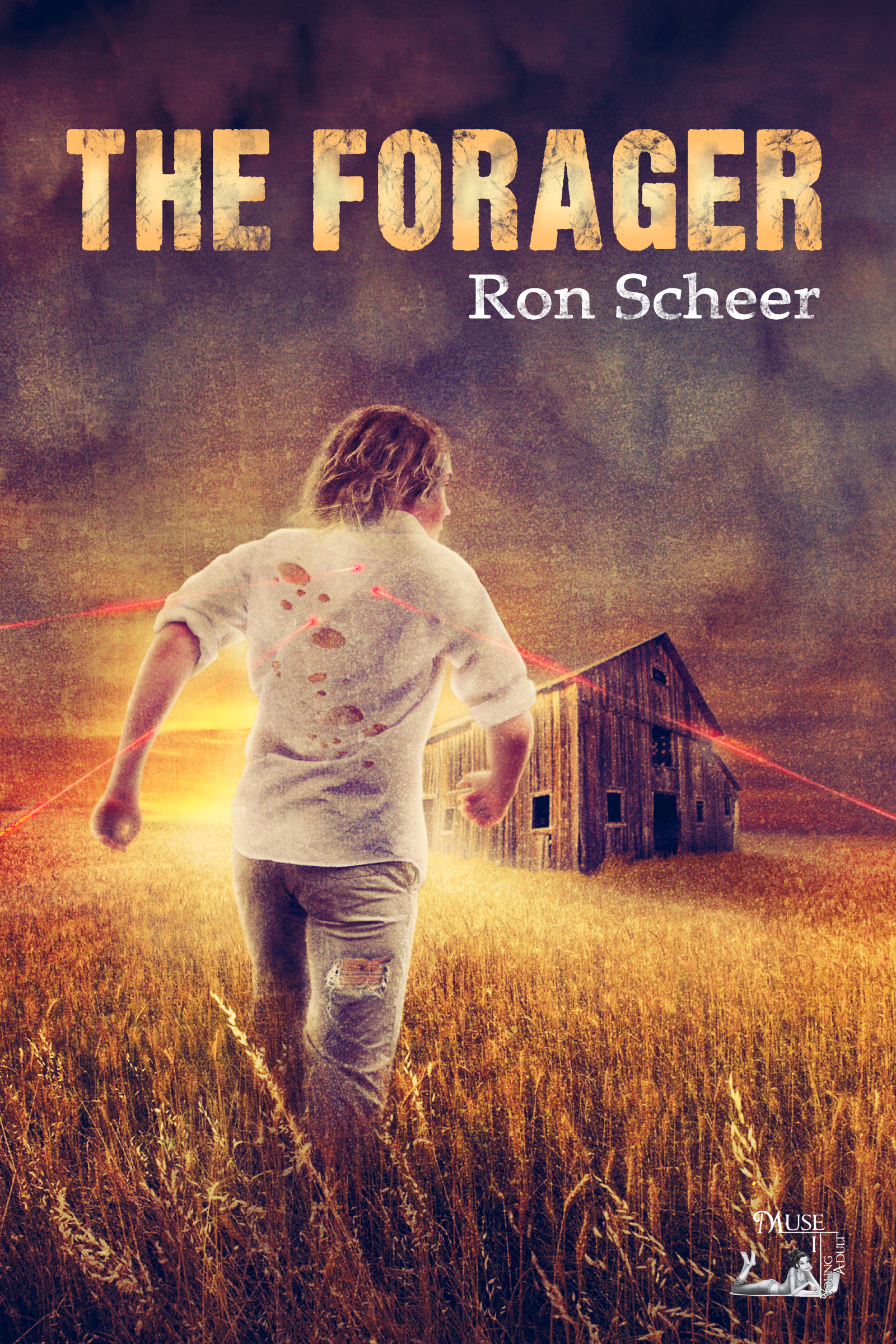
I always enjoy introducing new authors to readers and today I have the pleasure of hosting Ron Scheer, debut author of the YA dystopian The ForagerLike many of us writers, Ron works another job in addition to writing and he offered to share the unique perspective a carpet installer can bring to the writing process. Welcome, Ron!

The Forager (1)Let’s face it, I’m a carpet installer first and writer second. Someday I hope to reverse those roles, but until that happens I still have a family who thinks they need things like food, clothing, shelter, and iphones. While at first glance the two occupations may seem drastically different there are more similarities than you might think. To be good at any profession a worker must have the specific tools, skills, and knowledge required to make a customer happy.

First, a note on quality:

Whether that customer is looking to buy a book or hire the services of a tradesman, they want the highest quality workmanship. No customer is going to be happy if I leave their home with wrinkles in their brand new carpet.  A manuscript with holes in the plot, typos, changing points of view, (switching between first and third person) or submitted in any manner other than what the publisher stipulates is the same kind of unacceptable, shoddy workmanship.

Once the customer and I have established that installing carpet is hard work and deserves its fair amount of compensation the job begins. Much like the preliminary work that goes into a book, I have to do my homework. Measuring the job, figuring the square footage, and telling the customer how much carpet they’ll need. Then telling the customer that no I can’t do the job correctly with less, quit asking.

The outline of the story is the writer’s guide. If it’s done correctly the story follows in a natural flow. This is the stories tack-strip (if you’re not familiar, these are the strips with the small, really sharp nails that go next to the wall and hold the carpet tight after its stretched.) If the outline is done wrong, the story doesn’t stay tight and you’ve just wasted your time. It’s important to note while hammering in the tack-strip that at all costs avoid hitting your thumb. If you hit it hard enough, it will explode just like a smashed grape. (Believe me, I’ve done it.)

Next comes the carpet padding, or cushion if you like being precise. This is the first draft of your story. You’ve got the idea down. Its base is firm, yet there’s room for it to give a little. And let’s face it, all first drafts need to give a little (or in my case a lot).

You might think the final step is stretching in the carpet, you’d be wrong. Stretching the carpet can be compared to your second draft. Now we’re getting somewhere. The story is definitely readable, and to an unpracticed eye it might even seem presentable. But the work is not done.

The last and final step to installing a carpet, the one that makes customers stand up and take notice. The one that insures that the next time they need an install they’ll call me, is the final attention to detail. Just like carefully going over your manuscript and removing all those loose words that simply do not need to be there, a good installer will always vacuum the new carpet, removing any stray fibers and use this opportunity to give his work a final look to make sure that everything is the way it’s supposed to be. (Yes, I’m a guy, and I vacuum.)

My favorite part of the job is when the customer/publisher looks at the final product, holds their hand to their mouth and and says, “Oh Wow, I love it!”

The Forager Blurb:

It’s been thirty years since the economy collapsed, and all Dillon has ever known is a world without electricity or medicine, living in a community constantly under the threat of starvation as they struggle to feed the rest of the country.

Orphaned and alone, unsure of his future, Dillon serves as a lookout, watching for the bands of Scavengers that prey on towns like his—while also watching for the mayor’s twin sons, who are bent on terrorizing him.

When a Forager rides into town, he opens Dillon’s eyes to the possibility of a different life. And when a Scavenger attack leaves the Forager injured, he sends Dillon out on a mission that may mean the difference between life and death for the mayor’s missing daughter. Dillon is about to find more than a way to help his community—he’s about to find himself.

The Forager can be purchased at the MuseItUp bookstore.

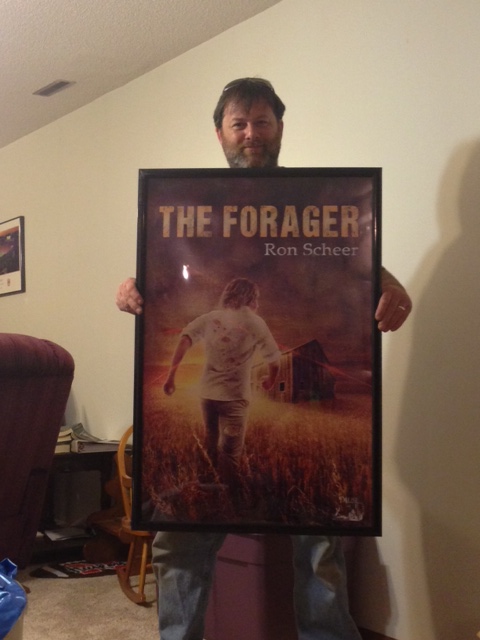
photoAbout the Author:

Ron Scheer lives in the heart of the heartland with his wonderful wife, a daughter, and a son. He spends his days selling and installing carpet. His nights, however, are devoted to books. Whether reading or writing, there are always words at his fingertips. The Forager is his first novel.

« Older posts Newer posts »

© 2026 Katie L. Carroll

Theme by Anders NorenUp ↑