Books for kids, teens, & those who are young at heart

Author: Katie L. Carroll (Page 35 of 142)

September #InkRipples: Building a Fictional World

What exactly is world building (or worldbuilding if your prefer is as one word)? Basically, it’s the creation of a fictional world. More than that, though, it’s how that world is explained within the confines of a story. The imagining and creating is the easy part (in my opinion). It’s choosing which pieces to include in the story and how to include those pieces with out a big info-dump that is the tricky part.

The reader must be grounded in the world and be able to feel like they are immersed in it, but you don’t want to bore them with too many details and world-building elements that aren’t essential to the plot and character development. It’s highly subjective, too. One reader may love lavish descriptions and explanations of how one aspect of your fictional world works, while another may skim through all that to get to the action.

And world building isn’t just for fantasy or sci-fi writers. Even if a story takes place in a high school and most of your readers are in high school or have been to one, you still need to establish the world of your high school. There’s a lot already written on ways to execute world building, so instead of me blathering on with tips, I’ll leave some links at the end of the post for you to peruse at your leisure.

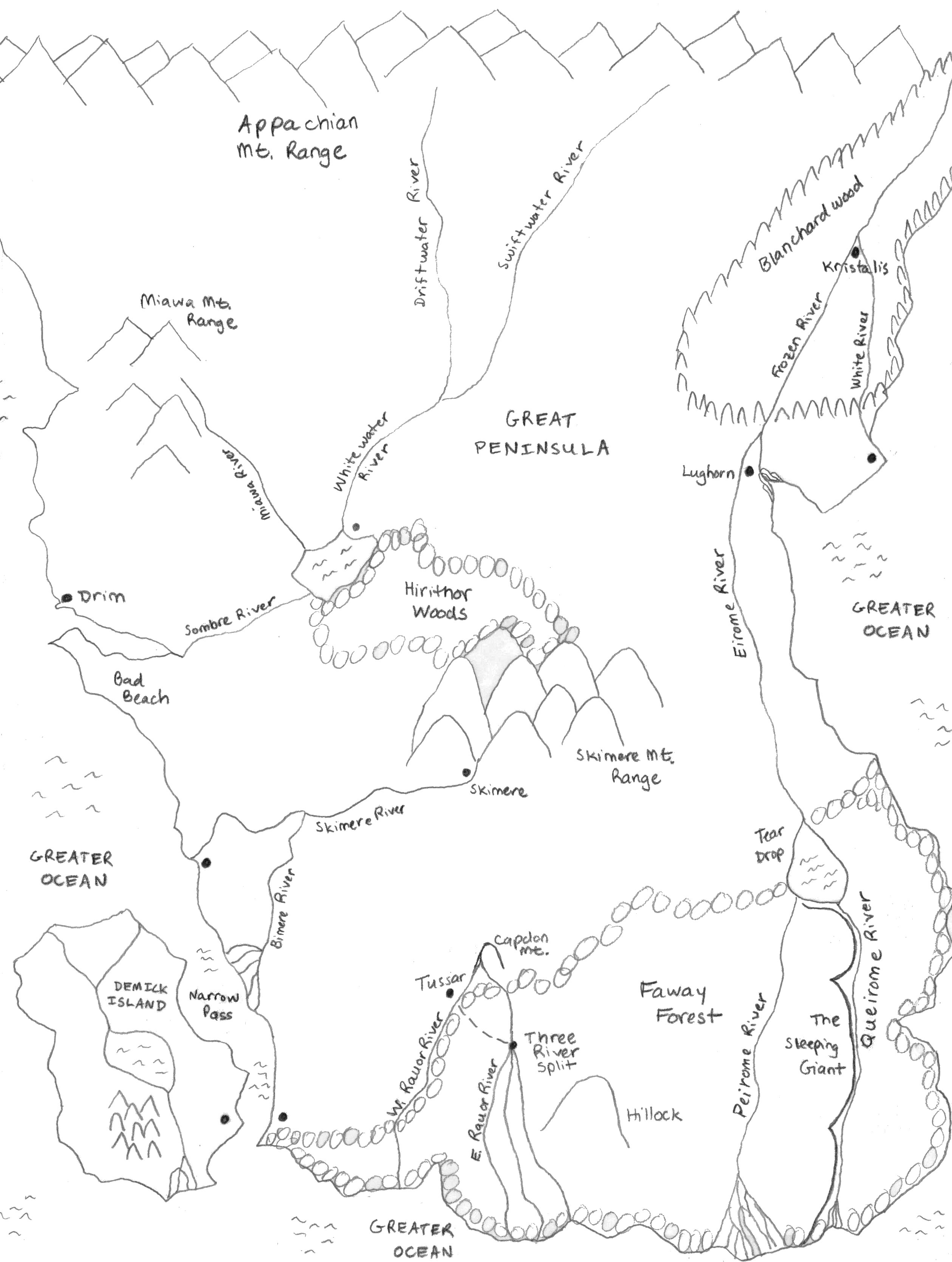
Some of my favorite world building exercises have been making a map for the ELIXIR BOUND (see the picture at the beginning of the post and the entry “Exploring the world of Elixir Bound”). For PIRATE ISLAND, part of my world building included creating a chart with realistic tides and moon cycles. So much of my world building goes on behind the scenes, but having all that information in my head makes for a rich world on the page, even if the reader only sees a small portion of what the world entails. Plus, those elements that don’t make it directly into the story are great for things like blog posts and bonuses for readers.

Okay, before we get to the links, I’d love to hear some of your world-building techniques in the comments!

“Tips on World Building for Writers — How to Make Your Imaginary World Real” by Chuck Sambuchino

“The Ultimate Guide to World-Building: How To Write Fantasy, Sci-Fi, And Real-Life Worlds” by Claire Bradshaw

“25 Things You Should Know About Worldbuilding” by Chuck Wendig

(Apparently people named Chuck have a lot to say about world building!)

#InkRipples is a monthly meme created by Katie L. Carroll, Mary Waibel, and Kai Strand. We pick a topic (September is all about world building), drop a ripple in the inkwell (i.e. write about it on our blogs), and see where the conversation goes. We’d love to have you join in the conversation on your own blogs or on your social media page. Full details and each month’s topic can be found on my #InkRipples page.

Enter to Win a Signed Paperback of PIRATE ISLAND in a Goodreads Giveaway

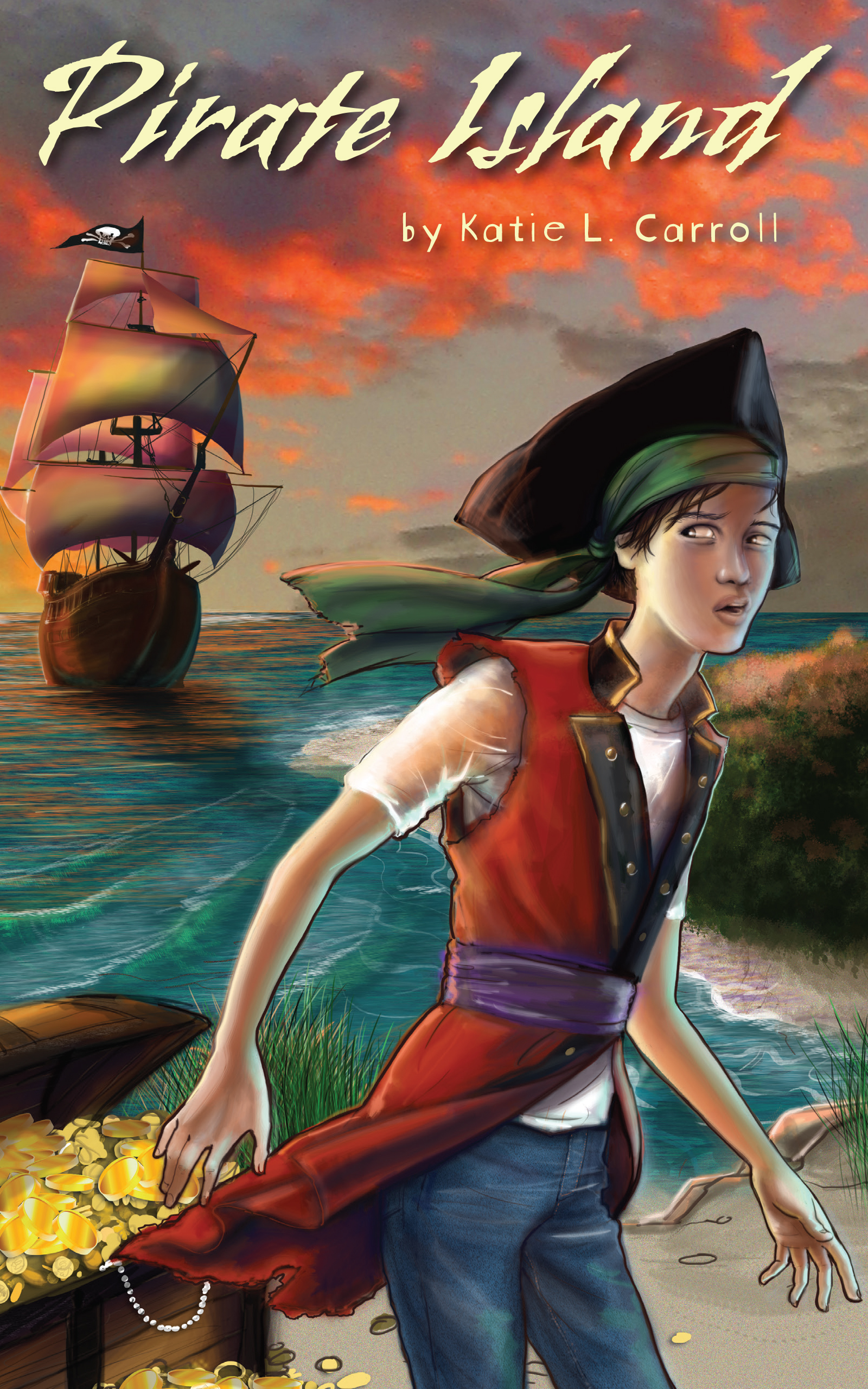
A signed paperback of my middle grade adventure PIRATE ISLAND is up for grabs on Goodreads. But if you don’t want to take a chance on winning one, you can always pre-order a copy. The paperback is on sale at Amazon for $7.07 and at Barnes & Noble for just $7.09! I’m always happy to send a signed bookplate to anyone who purchases the paperback. Use my CONTACT page to let me know you want one.

Big props to anyone who shares the giveaway to help spread the word about it!

Goodreads Book Giveaway

Pirate Island by Katie L. Carroll

Pirate Island

by Katie L. Carroll

Giveaway ends September 20, 2017.

See the giveaway details
at Goodreads.

Enter Giveaway

September 1696 to October 16, 1697 – The Bucket Incident #CaptainKiddHistory

Here is the next installment of #CaptainKiddHistory. These historical tidbits about Captain William Kidd are told by Billy, the main character of my upcoming middle grade adventure PIRATE ISLAND. Billy discovered and wrote down these tidbits while doing research to find Kidd’s lost treasure but before he actually looked for it on Pirate Island. Let’s give a big welcome to Billy!

September 1696 to October 16, 1697 – The Bucket Incident

by Billy Bonny

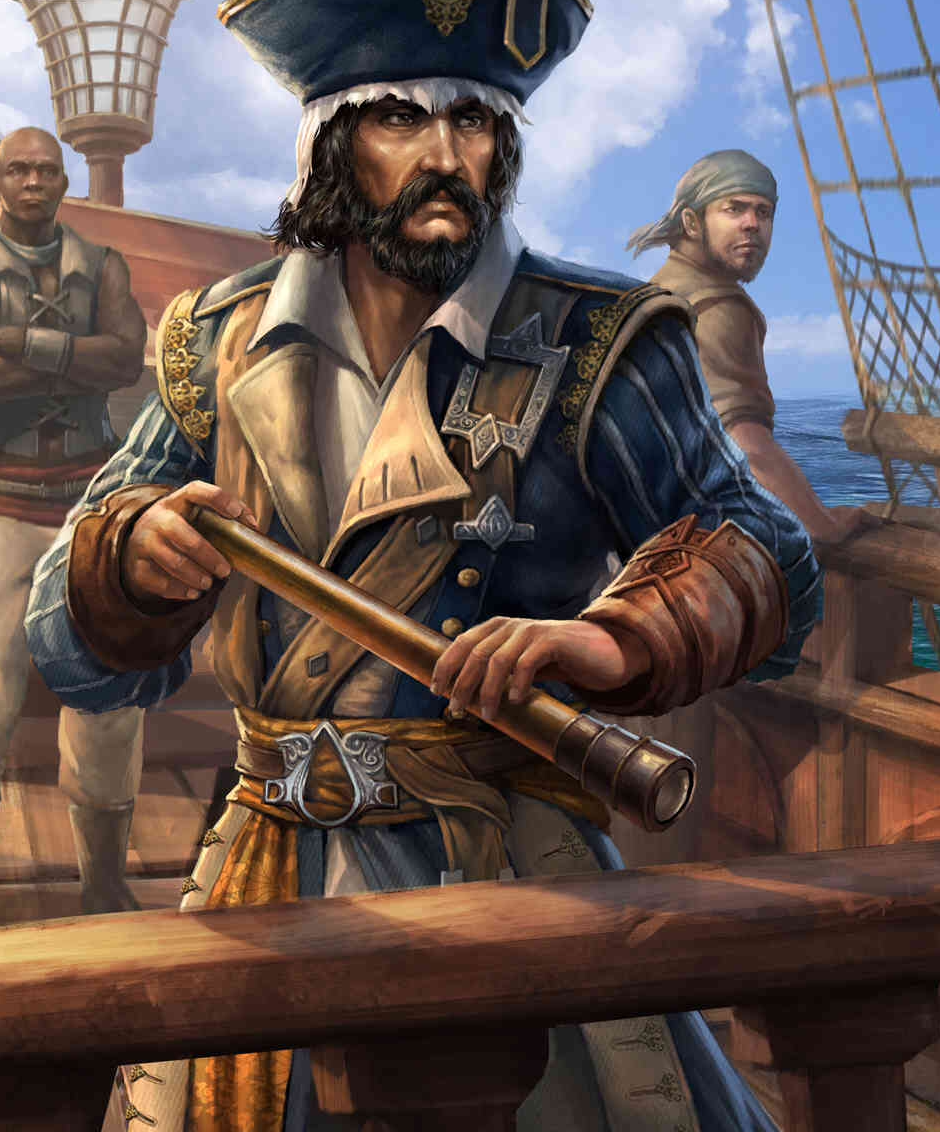
Credit: Assassin’s Creed: Memories. Creative commons license.
Billy’s comment: Yup, this image of Kidd is from a video game and it’s pretty cool!

So Kidd sets off on the Adventure Galley for Africa with a criminal crew to try and seize enemies of England and actual pirate ships. An outbreak of cholera (a really nasty disease you can get from drinking bad water) further sabotages the mission. Kidd’s rich lord backers won’t be satisfied with failure and the remaining crew is getting restless when things turn deadly.

On October 16, 1697, a Dutch ship approached the Adventure Galley. The crew urged Kidd to give the go-ahead to attack. In particular a gunner named William Moore (good first name!) challenged Kidd to let them attack. In a heated argument, Kidd ended throwing a bucket at Moore and hitting him in the head. Moore’s skull was fractured and he died the next day.

I’m not justifying killing a man, but I’m betting Kidd was afraid of outright mutiny, so trying to keep his crew from attacking a ship they had no right to attack was not out of line. Maybe he shouldn’t have thrown a bucket, but I don’t think Kidd intended to kill anyone. In addition to charges of piracy, Kidd would later be charged and convicted of murder, even though he would never know of the murder charge until his actual trail started.

And as if the proof against Kidd being a pirate isn’t already mounting up enough, think about the fact that he kept his crew from looting the Dutch ship…not something a pirate—who would attack any ship—would do but something a privateer would certainly do.

The full list of #CaptainKiddHistory posts by Billy Bonny:

January 1654? – A Legend is Born

1688 to 1689 – Mutineer and Captain 

1690 to 1695 – The Archenemy and the Wife

December 1695 to September 1696 – Privateer, Not Pirate

September 1696 to October 16, 1697 – The Bucket Incident

1698 to April 1699 – A Privateer Prize and the Return of the Archenemy

June 1699 – Proof of Treasure

July 6, 1699 to May 23, 1701 – Trial and Execution

PIRATE ISLAND blurb:

A thrice cursed island, a legendary pirate treasure, and one not-so-brave boy. What could possibly go wrong?

For centuries, the whereabouts of Captain William Kidd’s lost pirate treasure has remained a mystery. When Billy’s best friend, Andy, proposes they look for it on nearby Pirate Island, Billy thinks it’s just another one of their crazy adventures. It’s usually Billy who ends up in trouble as a result, but he goes along for the ride…like always. The more he delves into the life and death of Kidd, the more he thinks the treasure is real and that it might be buried on the small island in Long Island Sound. Billy—nope, call him William—becomes obsessed with the captain of the same first name. He even believes he’s possessed by Kidd’s restless soul. Now he and the spirit of a long-dead pirate are leading the crazy adventure on Pirate Island. And what they find is far bigger than the treasure they imagined.

Now available for pre-order! Get it on  Barnes & Noble, Amazon, Kobo, IndieBound, and many other of your favorite book sellers.

December 1695 to September 1696 – Privateer, Not Pirate #CaptainKiddHistory

Here is the next installment of #CaptainKiddHistory. These historical tidbits about Captain William Kidd are told by Billy, the main character of my upcoming middle grade adventure PIRATE ISLAND. Billy discovered and wrote down these tidbits while doing research to find Kidd’s lost treasure but before he actually looked for it on Pirate Island. Let’s give a big welcome to Billy!

December 1695 to September 1696 – Privateer, Not Pirate

by Billy Bonny

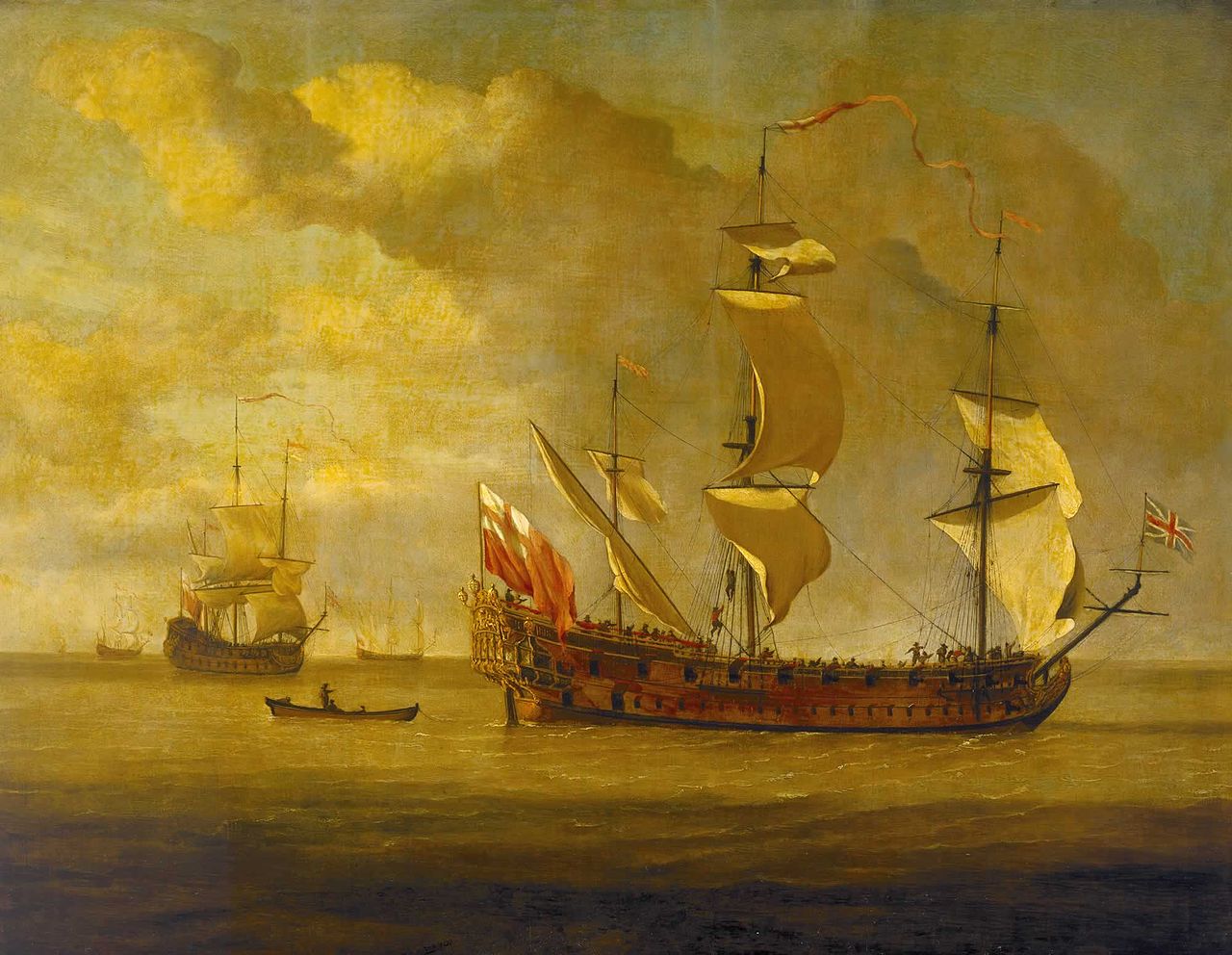
Credit: Willem van de Velde the Younger, via Wikimedia Commons. Public Domain.
Billy’s comment: This ship is actually the Charles Galley, but it was a very similar ship to Kidd’s Adventure Galley.

It was in December 1695 that Lord Bellomont, a colonial governor, hired Kidd as a privateer to try and solve the growing problem of piracy. As I mentioned in the entry “1688 to 1689 – Mutineer and Captain,” a privateer is a sort of legal pirate who is hired by a government to attack ships they are at war with and actual pirate ships. This was all financially backed by important English lords. The letter of marque, which is the official document marking Kidd as a privateer, was signed by the King of England himself! (This document was mysteriously missing during Kidd’s later trial and only turned up many years later…only more reason to believe he was wrongly convicted of being a pirate.)

Kidd’s brand-new ship was the Adventure Galley (a pretty awesome name for a ship if you ask me). A string of bad luck would start for Kidd on his way back to New York City after picking up his ship. He failed to salute a Navy vessel, a shot was fired by the Navy, and Kidd’s crew offered up a rude gesture in return. The Navy captain took most of Kidd’s crew immediately into service, leaving Kidd’s crew seriously understaffed. Back in New York, Kidd had to pick a bunch of criminals and unsavory characters to begin his journey to Africa as a privateer.

The full list of #CaptainKiddHistory posts by Billy Bonny:

January 1654? – A Legend is Born

1688 to 1689 – Mutineer and Captain 

1690 to 1695 – The Archenemy and the Wife

December 1695 to September 1696 – Privateer, Not Pirate

September 1696 to October 16, 1697 – The Bucket Incident

1698 to April 1699 – A Privateer Prize and the Return of the Archenemy

June 1699 – Proof of Treasure

July 6, 1699 to May 23, 1701 – Trial and Execution

PIRATE ISLAND blurb:

A thrice cursed island, a legendary pirate treasure, and one not-so-brave boy. What could possibly go wrong?

For centuries, the whereabouts of Captain William Kidd’s lost pirate treasure has remained a mystery. When Billy’s best friend, Andy, proposes they look for it on nearby Pirate Island, Billy thinks it’s just another one of their crazy adventures. It’s usually Billy who ends up in trouble as a result, but he goes along for the ride…like always. The more he delves into the life and death of Kidd, the more he thinks the treasure is real and that it might be buried on the small island in Long Island Sound. Billy—nope, call him William—becomes obsessed with the captain of the same first name. He even believes he’s possessed by Kidd’s restless soul. Now he and the spirit of a long-dead pirate are leading the crazy adventure on Pirate Island. And what they find is far bigger than the treasure they imagined.

Now available for pre-order! Get it on  Barnes & Noble, Amazon, Kobo, IndieBound, and many other of your favorite book sellers.

August #InkRipples: Options in Publishing – What’s Your Path?

When it comes to publishing a book, there are so many more options than there used to be. If you’re new to the business, it can be downright overwhelming and confusing to decide what publishing path is the right one for you. That is why we decided to tackle the topic in this month’s #InkRipples.

Traditional Publishing – For my intents and purposes, when I’m referring to traditional publishing, I mean a publishing house that offers advances to their authors and their books come out in print simultaneously with their ebooks (for the most part, though you may find imprints within the publishing house that deviates from this). Some publishers that don’t meet these criteria might call themselves “traditional publishers,” but I’m going to put those in another category.

  • Big 5 – Formerly the Big 6 publishing houses, when Penguin and Random House merged back in 2013, the largest 6 publishing houses became 5. So the big 5 are now Hachette Book Group, HarperCollins, Macmillan, Simon & Schuster, and Penguin Random House. These are the largest 5 publishing houses, the heavy hitters, what many authors consider the gold-standard of publishing. They each have many branches, called imprints, that specialize in certain areas of publishing. They have the ability to offer big advances for books they think will make them lots of money; they have big budgets to market and publicize those books; and they have large, influential distribution channels.
  • Medium to Small Traditional Publishers – These publishing houses are smaller than the Big 5, but they are well-known and well-respected in the industry and they have the ability to offer advances and print and ebooks release simultaneously. Sourcebooks and Charlesbridge are good examples of these smaller traditional publishers.

~Pros and Cons of Traditional Publishers – The big advantage to going with a traditional publisher is the influence they have. Your books will likely be in all the major bookstores and easily available. You’ll also have a full editorial staff to support you in making the book the best it can be and hopefully at least a small marketing push made by the publisher. There is a certain legitimacy that many still feel about traditional publishing that you won’t find with the other paths of publishing (not that this is my personal feeling, but I will admit that a stigma exists for those who chose a different publishing path). You as an author also have no monetary investment in the process of making the book when you traditionally publish.

A disadvantage is that you might end up being a small fish in a big pond. If your book isn’t of their heavy-hitters for that publishing season, it might get little attention or push from the publisher. The fact is, no matter what publishing path you chose, unless you’re a big-name author, you probably will have to do much of the marketing yourself. And if your book doesn’t sell well (the definition of a well-selling book will vary greatly depending on your situation), it might have a short self-life. It’s also really hard to break into traditional publishing, and you usually need an agent to submit to these publishers.

Hybrid Publishers – This is an emerging term in the publishing industry and may mean different things to different people. Basically what I mean by a hybrid publishers is a publisher that exists in the space between traditional and self-publishing. They may be a digital only publisher or a digital first one (where select titles come out in print only after the ebook is released), as is the case with the publisher of my YA fantasy ELIXIR BOUND, MuseItUp Publishing. They usually offer royalty-only payments with no advances. Some of the Big 5 houses have imprints that operate this way.

~Pros and Cons of Hybrid Publishers – Hybrid publishers often have long backlists that don’t get pulled because of slow sales because there is less investment up front. Generally, like traditional publishing, you as an author don’t have to put your own money into anything (until it comes to any marketing you opt to invent in), as the editing, cover art, and production of the book is handled by the publisher.

Without an advance, though, the author has to rely on royalties for payment, which can be slow in coming. Sales may also be low because hybrid publishers don’t have the clout and distribution channels of of traditional publishers. If you do have a print book, it may or may not end up on the bookshelves at bookstores.

Self-publishers – When you decide to do it all yourself and skip working with a publishing house all together, that is self-publishing. You, the author, are your own publisher. You may decide to create your own publishing company so you have a publisher’s name associated with your book and for tax purposes (as I did with PIRATE ISLAND), but it’s still self-published.

~Pros and Cons of Self-Publishing – The main pro and con of self-publishing is pretty much the same thing: you have all the control! That’s a good thing in some ways because you make all the decisions for your book and you reap all the benefits (except for what your distributing partners take). But that also means you have to make a ton of decisions and you have to be informed about all the aspects of creating a book. It’s a big learning curve, but it’s also wonderfully freeing to self-publish. You also have to put up your own money for any services (editing, cover, formatting, etc…) that you don’t decide to do on your own. And you should definitely hire out for those areas you need help. Even a great self-editor should no solely rely on their own editing skills for editing a book your going to self-publish.

*Note on Vanity Publishers – Vanity presses are where authors pay to have their books published. These are not really publishing houses in a sense that they don’t have an acquisitions process. If they do offer any kind of editing or cover services, it’s usually for an additional fee. Honestly, most vanity presses are scams, overcharging authors and giving them very little in return. These should not be confused with reputable, professional editing or formatting services that charge a fee for help with editing or formatting for authors who are interested in self-publishing or going through a round of professional editing before submitting to agents or publishing houses.

What types of publishing have you tried? How has it worked out for you?

#InkRipples is a monthly meme created by Katie L. Carroll, Mary Waibel, and Kai Strand. We pick a topic (August is all about options in publishing), drop a ripple in the inkwell (i.e. write about it on our blogs), and see where the conversation goes. We’d love to have you join in the conversation on your own blogs or on your social media page. Full details and each month’s topic can be found on my #InkRipples page.
« Older posts Newer posts »

© 2026 Katie L. Carroll

Theme by Anders Noren — Up ↑